|  |
||||||||||||||||||||||||||||||||
 |
|||||||||||||||||||||||||||||||||













Getting
Started |
Facts > Pagan Ideas > Miracles | |||
 |
The ancients invented miracle stories to add meaning to their histories |  |
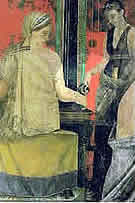
Was Christianity new? Was Christianity unique? Let's talk about miracles. Miracles persuade. People email me about miracles Jesus did; "Explain that, why don't ya?" After all, who but God could do something as rare and supernatural as turning water into wine or raising the dead? The emailers are right. For us and for the ancients, supernatural doings do imply supernatural power. But what you're about to learn is that in the ancient world supernatural doings—miracles—weren't rare. Miracles were just how the world worked. You can't explain Jesus' miracles until you understand that. Let's start with a few examples |
||||||


|
 Jesus'
  The
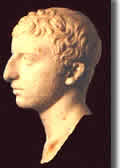
Emperor Vespasian's
The
Emperor Vespasian's
|
|
|
||||||||||||
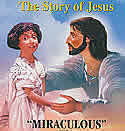
Did you see how when he raised the girl, Jesus spoke special words. Magic spells were one way ancient miracle workers raised the dead. The Apollonius story says so specifically. So does this next story, from an ancient novel called "An Etheopian Story." |
||||||||||||
 The
1st century AD godman
The
1st century AD godman |
6.13 "I cannot at the moment," replied the old woman. "I have certain rites for the dead to perform that can be performed only at night.... |
|
|
Magic words raise a man from the dead >> |
6.14 ... Supposing herself now secure against any intrusion or observation, the old woman began by digging a pit, to one side of which she lit a fire. After positioning her son's body between the two, she took an earthenware bowl from a tripod that stood beside her and poured a libation of honey into the pit, likewise of milk from a second bowl, and lastly of page 486 wine from a third. Then she took a cake made out of fine wheat flour and shaped into the effigy of a man, crowned it with bay and fennel, and flung it into the pit. Finally she picked up a sword and, in an access of feverish ecstasy, invoked the moon by a series of grotesque and outlandish names, then drew the blade across her arm. She wiped the blood onto a sprig of bay and flicked it into the fire. There followed a number of other bizarre actions, after which she knelt over the dead body of her son and whispered certain incantations into his ear, until she woke the dead man and compelled him by her magic arts to stand upright. |
|
Magic words raise a man from the dead >> |
.... the old woman had now begun to question the corpse in a somewhat louder voice. ....Then he suddenly collapsed and fell flat on his face. The old woman rolled the body over onto its back and persisted with her questions. Employing apparently more powerful spells of compulsion this time, she repeated her string of incantations into his ears, and, leaping, sword in hand, from fire to pit, from pit to fire, she succeeded in waking the dead man a second time and, once he was on his feet, began to put the same questions to him as before, forcing him to use speech as well as nods of the head to make his prophecy unambiguous. |
Heliodoros, An Ethiopian Story (Aithiopika),
6.3- 4 (3d century AD?), -- which you can find in: Reardon, B. P.. Collected
Ancient Greek Novels . (1989), pg. 185- 6
|

Did this happen in real life? No, it didn't. It's a story. A made up story. When the ancients made up stories, speaking magic words to raise eople from the dead was one of the things they put in. |
 |
While they were delayed at sea for some days and as many nights, the girl gave birth in the ninth month. But the placenta failed to be discharged, her blood clotted, her breathing became constricted, and she suddenly died. …After the coffin had been made, he adorned it with royal accoutrements, placed the girl in the coffin, and… Weeping bitterly, he ordered that the coffin be thrown into the sea. Three days later waves cast up the coffin. It came to rest on the shoreline of Ephesus, not far from the estate of a doctor… the doctor eagerly opened it, and, seeing a very beautiful girl adorned with royal ornaments and lying in a state of apparent death…ordered that a pyre be constructed immediately. |
| THE STORY OF APOLLONIUS KING OF TYRE |
But while the pyre was being carefully and expertly constructed and assembled, a medical student of youthful appearance but mature judgment arrived. When he saw the corpse of the beautiful girl being placed on the pyre, he looked at his teacher and said, "What is the cause of this recent unexplained death?" The teacher said: "Your arrival is timely; the situation requires your presence. Take a jar of unguent and pour it over the body of the girl to satisfy the last rites." |
|
|
|
| With some assistance he took the girl to his bedroom, placed her on his bed, opened her clothing, warmed oil, moistened a woolen compress with it, and placed the compress on the upper part of the girl's body. Her blood, which had congealed because of severe cold, began to flow once heat was applied, and her previously obstructed breathing began to infiltrate to her innermost organs. With the clearing up of her veins, the girl opened her eyes, recovered her breath, and said in a soft, indistinct voice, "Please, doctor, do not touch me in any way other than it is proper to touch the wife of a king and the daughter of a king." |
|
| Apollonius King of Tyre, Ch 25 - 7 (3d
century AD?), -- which you can find in: Reardon, B. P.. Collected
Ancient Greek Novels . (1989), pg. 752- 4
|
 The
young man took a jar of unguent, went to the girl's bier, pulled aside
the clothing from the upper part of her body, poured out the unguent,
ran his suspicious hands over all her limbs, and
The
young man took a jar of unguent, went to the girl's bier, pulled aside
the clothing from the upper part of her body, poured out the unguent,
ran his suspicious hands over all her limbs, and
|
||||||||||||
|
||||||||||||||||||||

|
||||||||||||
|
One more thing. Miracles are easy to think about generally, but very hard to think about rationally. Because miracles are super-natural, beyond the rules of nature, they are beyond the rules of reason and logic. For example, there can be no such thing as "evidence of a miracle." So, instead of jumping right into examples of ancient miracles, let's start by reviewing how modern people think about Jesus' miracles: Modern folks generally explain New
Testament miracles in one of three ways: |
|
|
At POCM prophesy miracles have their own page. |
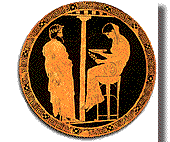 Nowadays
people seem to find prophesy miracles especially persuasive.
I don't know why. Pagan prophesy miracles were, no kidding, everyday
events. They were so common that great public institutions were built
around them. Yet, funny thing, the folks who write me persuaded by Jesus'
fulfillment of prophesy are never persuaded by pagan fulfillment
of prophesy. Why do you think that is?
Nowadays
people seem to find prophesy miracles especially persuasive.
I don't know why. Pagan prophesy miracles were, no kidding, everyday
events. They were so common that great public institutions were built
around them. Yet, funny thing, the folks who write me persuaded by Jesus'
fulfillment of prophesy are never persuaded by pagan fulfillment
of prophesy. Why do you think that is?As we'll talk about in a minute, at least one of these three explanations is not rational. Can you guess which one? |
|

 Supernaturalism
Supernaturalism was the standard explanation of Jesus' miracles all the way up to the 1700s. Then, what with science going strong and all, in the period called the Enlightenment, folks realized that probably everything in nature has a natural cause -- and if it can't have happened naturally, it can't have happened. But because everyone thought the gospels were histories, the fact they included impossible miracles meant the gospel writers were liars. That bothered people. Which led to.... |
|

 The
ancients didn't know stuff like we do—science and all—so
when Jesus was born and a comet showed up, they were suckers for
the theory that the comet showed up because He was born,
whereas smart people like us know
things like comets swinging by just happened by chance.
The
ancients didn't know stuff like we do—science and all—so
when Jesus was born and a comet showed up, they were suckers for
the theory that the comet showed up because He was born,
whereas smart people like us know
things like comets swinging by just happened by chance.
Professors call this the "rationalist" view of miracles, although "stretching to keep it sort of rational-sounding, if you don't think about it too hard" would be closer. No one seems to have noticed this until a German fellow, in 1835, published a book describing... |
|
 s
was first written about in a big way by a German guy genamened
David Strauss, in 1835, in The
Life of Jesus Critically Examined.
s
was first written about in a big way by a German guy genamened
David Strauss, in 1835, in The
Life of Jesus Critically Examined. 

 ike
watching an forty round prize fight that everyone can tell by
the first round is over, only chapter after chapter the little
guy gets dragged back into the ring and Dr. Strauss beats the
crap out of him all over again. It's a terrible thing to see—and
you can't stop watching. Rationalism is not rational.
ike
watching an forty round prize fight that everyone can tell by
the first round is over, only chapter after chapter the little
guy gets dragged back into the ring and Dr. Strauss beats the
crap out of him all over again. It's a terrible thing to see—and
you can't stop watching. Rationalism is not rational.Another
huge deal Believers who could accept the non-historicity of the gospels went on analyzing the implications of Strauss, and the implications of those implications, and so on. All the way down to form criticism, Q, an allegorical explanation of Jesus' life, and the Jesus Seminar. |
|
OK, you got
all that? That's how modern people explain early Christian miracles. The ancients saw miracles differently... |
 1835
is the year much of believing Christianity left rational analysis
of Christianity behind; they weren't willing
to accept Strauss' inevitable conclusion that the gospels are not historical.
These folks went on talking
1835
is the year much of believing Christianity left rational analysis
of Christianity behind; they weren't willing
to accept Strauss' inevitable conclusion that the gospels are not historical.
These folks went on talking  and
writing about supernaturalism and rationalism. They still do today.
and
writing about supernaturalism and rationalism. They still do today.|
For us miracles are exceptional; they need explanation. For
the ancients, miracles were just how the world worked. The ancients
didn't have Newton's laws and Maxwell's equations to explain the world.
Gods had lots of power, people had a little. People could get extra power —magicians and soothsayers had a bit extra. So did prophets: the Pythian priestess at the oracle at Delphi was just one of hundreds of examples. If a person got enough power he could become divine; in Greece the technical term was "hero." Some Gods brought divine power to their followers. Dionysus is the regulation example, but He was just one one of many. The divine ecstasy of Cybele led Her priests to take a sword and slice off their own testicles and penis. I will pause now while the men recover from reading that last sentence. Other middle eastern Gods led their priests to do the same thing—including Jesus. What, you didn't know this? Jesus' early followers didn't just borrow self-castration; the Christian Holy Spirit "indwelling" in early Christian believers, giving them power to prophesy and do miracles, that's just another example of how Gods brought believers divine power worked in the ancient world. |
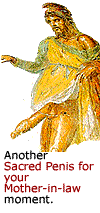 For
the ancients, miracles were just how the world worked
For
the ancients, miracles were just how the world worked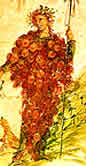 They
had spirits and powers.
They
had spirits and powers. |
One thing about miracles was the same for us and for the ancients; miracles still happened by Gods' magic. For us it's God's magic; for the ancients it was Gods' magic—only the apostrophe changed. |
|
| Actually,
it's not true that all the ancient Pagans thought Pagan miracles
happened by God's supernatural power. Some
Pagans—Cicero and Lucian come to mind—thought
they were silly superstitions. |
Making
up miracles |
|
|
At Alexandria
a commoner, whose eyes were
well known to have wasted away ...fell
at Vespasian's feet demanding with sobs a cure for his blindness, and
imploring that the Emperor
would deign to moisten his eyes and eyeballs with the spittle from his
mouth. |
How
about the connection between Pagan and Christian miracles? Let's
start with some background facts. Christian miracles |
What's more Pagan Gods did the same miracles Jesus did—and the Pagan Gods did them first. What sort of miracles are we talking about? These miracles:
|
| And Pagan - Christian borrowing wise, here's the thing: the early Christians understood that their miracles had meaning in exactly the same ways that Pagan miracles had meaning. How do we know this? They said so. |

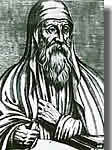
Stick with me and in a few minutes you'll read Origen, a second century Christian Father, commenting on the star that heralded Jesus' birth. Origen understands the meaning of the star with explicitly Pagan ideas. Early Christians understood that their miracles had meaning in exactly the same ways that Pagans understood their miracles had meaning. |
|
|

| Reasons |
|
Of course there is no reasoned way to analyze this theory. Supernatural goings on do not follow rules made up by measuring and testing the natural world. "God is omnipotent"—magic can do anything. Does this mean it is impossible Jesus miracles were God's magic? No. It just means there is no reasoned, reasonable analysis to get you there. You believe the miracles were God's magic? Fine. But you can't then claim the authority and dignity and believability of science and reason. You're standing on the side of the room with the naked Hottentot and the stone-age cannibal Aztec. --------------------- There's an orthodoxy to this. You're not supposed to say "They made 'em up;" on account of it points out that the stories aren't true. Of course, so does "myth," but orthodoxy has a way around that. "Myth" is good. "Myth" is "how people express meaning," etc. The handy thing about "myth", said orthodox-ularily, is that it changes the focus to the social meaning of the miracles and away from whether they really happened. Don't want to talk about that—cause they made them up. Exactly why does myth have meaning? Why aren't myths just ridiculous stories made up by credulous primitives? Are the moral and spiritual principles myths supposedly represent so weak they can't be said all on their own? I don't know. Ask your professor. Pegasus and Cupid were ancient myths too. You ever hear anyone blather over brie and Chardonnay about their inner meaning? No, you haven't. "Myth" is maybe one part "how people express meaning." The other three parts are a way to deal with sorry made up Christian miracles without giving up on Christianity. There, I said it, and I feel better. |
 Remember
how I said thinking about miracles generally was easy, but that thinking
about miracles rationally was hard? This is the hard part.
Remember
how I said thinking about miracles generally was easy, but that thinking
about miracles rationally was hard? This is the hard part.Borrowing?
 Thinking
about the reasons. Thinking
about the reasons. |
 |
|||||||
| The point of all this is that it changes the facts we have to work with. Nowadays people don't cure blindness by spitting on the blind guy. So when modern folks, try to explain Jesus doing that, we come up with theories like supernaturalism or rationalism. Turns out that in ancient times people did cure blindness by spitting on the blind guy. Or thought they did. In ancient times divine men did raise the dead by speaking magic words and letting on they were only sleeping. Just like Jesus. Our fact-set has changed. Now Jesus' miracles are nott new and they are not unique, Now Jesus is one of dozens of ancient divine men who did miracles. And now He did the same miracles the other guys did. Jesus' story fits seamlessly into ancient culture. Jesus' story comes from ancient culture. To explain the new facts, our explanation has to change.
|
 The
The

|
Why the mess? POCM 2012 |
 |
| SOP|Why
so many miracles?|Christian's
accepted Pagan miracles|Examples |
 |
 |
SOP—examples showing that miracles were a key part of the ancients' world view, and that the ancients often made up miracles to add meaning to their histories. |
|
Why so many miracles—explains why |
|
Christian accepted Pagan miracles—examples |
|
Examples—from the pens of the ancients themselves, a tiny sampling taken from the tens of thousands of recorded Pagan miracles |
|
Miracles were Standard
Operating Procedure |
|
|
Miracles were everywhere. Trying to explain how common miracles were in ancient culture is like trying to explain how stinking big the ocean is: naming wet places doesn't get the idea across. You run out of patience before you run out of ocean. It's like that with pagan miracles—there were too stinking many to count. Miracles were everywhere. Here's what I mean. This blue ancient-quote box >> has a list of miracles taken from one page of my copy of an ancient book called The Jewish War, written by a fellow named Josephus, who lived through it.
|
"the signs that were so evident, and did so plainly foretell their the Jews future desolation."Josephus, Jewish War, ,6.5.288 He goes on: "Thus there was a star resembling a sword, which stood over the city, and a comet, that continued a whole year." 6.5.289 And in the Temple, "at the ninth hour of the night of the night a great light shone round the altar....This light seemed to be a good sign to the naive, but was so interpreted by the sacred scribes as to portend the events that followed." 6.5.291- 293 And, "also, a heifer, as she was led by the high priest to be sacrificed, brought forth a lamb in the midst of the temple." 6.5.292 "Moreover, the eastern gate of the inner temple. . .was seen to be opened of its own accord. This also the vulgar thought a happy prodigy...but the men of learning understood it."6.5.293 - 295 And, "...chariots and troops of soldiers in their armor were seen running about among the clouds. 6.5.298 - 299 And "Jesus, son of Ananus...came to that feast whereon.. everyone makes tabernacles to God in the temple...and began on a sudden to cry aloud, "A voice from the east, a voice from the west, a voice from the four winds, a voice against Jerusalem and the holy house." 6.5.300- 301 |
|||||||||


Did you catch that? Those are the miracles on one page of one book. There are hundreds of books, thousands and thousands of miracles. Pick up any ancient text; Pagan or Christian, it's got miracles in it. Guaranteed. |
|
On account of which, here at POCM I can't list every pagan miracle I know about; we'll run out of patience before we run out of miracles. So I'll tell you about just a few—a few that, if you've read your Bible, are going to sound mighty familiar. Here we go. If |
|
|
You know that before Jesus, people believed in Gods. You know those pre- Christian Gods did supernatural things—that's sort of what made them Gods. The supernatural things those other Gods did—those were miracles. In fact now you think about it, it's hard to imagine a God who doesn't do miracles. Miracles are one of the things that make a God a God. Duh. Was Christianity new and unique? Nope. Jesus did miracles—but Pagan Gods did them first. So there. |
I
call upon you, demon, whoever you are, and I charge you from
this hour, from this day, from this moment—torment
and strike down the horses of the Green and White factions . Strike
down the charioteers Clarus and Felix and Primulus and Romanus, and
cause them to crash, and leave no life in them. I call
upon you by the one who loosed you for periods of time, the god of sea
and air. |
|
|
Among the many lovers
who took him the Prophet Alexander on was some quack, one
of those who offer magic, miracle working incantations, charms to snare
a lover, tricks to defeat an enemy, places to dig for buried treasure,
and ways to inherit a fortune…. The two of them
went around masquerading as magicians, pulling off swindles,
and fleecing the "fatheads", as he public is called in the
magicians' argot. |
| |
Libo was a fatuous
young man with a taste for absurdities. One of his closest friends,
a junior senator named Firmius Catus, interested him in astrologers'
predictions, magicians' rites, and readers of dreams. |
| |
67. Scythia has an abundance of soothsayers, who foretell the future by means of a number of willow wands. A large bundle of these wands is brought and laid on the ground. The soothsayer unties the bundle, and places each wand by itself, at the same time uttering his prophecy: then, while he is still speaking, he gathers the rods together again, and makes them up once more into a bundle. This mode of divination is of home growth in Scythia. The Enarees, or womanlike men, have another method, which they say Aphrodite taught them. It is done with the inner bark of the linden-tree. They take a pg 250 piece of this bark, and, splitting it into three strips, keep twining the strips about their fingers, and untwining them, while they prophesy. 68. Whenever
the Scythian king falls sick, he sends for the three soothsayers of
most renown at the time, who come and make trial of their art in
the mode above described. Generally they say that the king is ill, because
such or such a person, mentioning his name, has sworn falsely by the
royal hearth. This is the usual oath among the Scythians, when they
wish to swear with very great solemnity. Then the man accused of having
forsworn himself is arrested and brought before the king. The soothsayers
tell him that by their art it is clear he has sworn a false oath by
the royal hearth, and so caused the illness of the king-he denies the
charge, protests that he has sworn no false oath, and loudly complains
of the wrong done to him. Upon this the king sends for six new soothsayers,
who try the matter by soothsaying. If they too find the man guilty of
the offence, straitway he is beheaded by those who first accused him,
and his goods are parted among them: if, on the contrary, they acquit
him, other soothsayers, and again others, are sent for, to try the case.
Should the greater number decide in favour of the man's innocence, then
they who first accused him forfeit their lives. |
| |
4.172. The Nasamonians,
a numerous people, are the western neighbours of the Auschisae. . ...
The following are their customs in the swearing
of oaths and the practice of augury. The man, as he swears,
lays his hand upon the tomb of some one considered
to have been preeminently just and good, and so doing swears by his
name. For divination
they betake themselves to the sepulchres of their own ancestors,
and, after praying, lie down to sleep upon their graves; by the dreams
which then come to them they guide their conduct. When they
pledge their faith to one another, each gives the other to drink out
of his hand; if there be no liquid to be had, they take up dust from
the ground, and put their tongues to it. |
| |
. ...The Ausean
maidens keep year by year a feast in honour of Athena
the virgin goddess , whereat their custom is to draw up in two bodies,
and fight with stones and clubs. They say that these are rites which
have come down to them from their fathers, and that they honour with
them their native goddess, who is the same as the Athena of the Grecians.
If any of the maidens die of the
wounds they receive, the Auseans declare that such are false
virgins. |
| SOP|Why
so many miracles?|Christian's
accepted Pagan miracles|Examples |
|
| Why so many miracles? | |
| How come were miracles so common? Because the ancients didn't have science, that's how come. Inventing civilization? That the ancients got. Everyday all around you stuff like why the wind blows and what the sun is? That they didn't get.
Take away our rules and Dorothy, you're not in Kansas any more. The ancients had different rules. The sun traveled across the sky because God moved it, physically moved it. What made people sick was demon possession. And they didn't mean sissy spiritual demon possession, they meant actual, physical demons living in your body, making you sick.
So when we say an ancient God "performed a miracle"—say, raised a dead person—we mean he broke the rules of nature, and for us that's evidence he was outside nature, supernatural. But to an ancient, a God raising the dead didn't break the rules, it fit the rules perfectly. Gods had extra powers, and they used them. That's what made them Gods. Which made for a system with a lot of miracles. Cool, huh? |
| SOP|Why
so many miracles?|Christian's
accepted Pagan miracles|Examples |
|
| Christian's accepted Pagan miracles | |
| An early
Christian miracle T The second miracle, performed by Jesus' disciple, the apostle Peter, caused Simon to fall from the air—proving whose Christ had the greatest power.
|
" Now when
he Simon Magnus
was in Rome, he mightily disturbed the Church, and subverted many, and
brought them over to himself, and astonished the Gentiles with
his skill in magic, insomuch that once,...he...promised
he would fly in the air; and...indeed
he was carried up into the air by demons, and did fly on high in the
air, saying that he was returning into heaven, and that he would
supply them with good things from thence... I
Peter stretched out my hands to heaven ... and
besought God through the Lord Jesus to throw down this pestilent fellow,
and... When I had said these words,
Simon was deprived of his powers, and fell down headlong. |
 he
first miracle—flying—was
performed by the Samaritan Christ (you knew there was a Samaritan Christ,
right?), Simon Magnus.
he
first miracle—flying—was
performed by the Samaritan Christ (you knew there was a Samaritan Christ,
right?), Simon Magnus.
Those wacky ancients saw miracles as everyday events that happened when someone was tuned-in to the powers that ran the universe. It worked pretty much like Star Wars, with The Force battling The Dark Side. Simon Magnus did miracles—Christians didn't doubt it—because he was tuned in to the demonic powers. Jesus and Peter did miracles because they were tuned in to God's power. The point of Peter's story here is that his Jesus-power was greater than Simon's demon-power. The first Christians didn't invent this explanation of miracles, they inherited it from the pagan culture around them. |
By the way, this Star Wars force-and-the-dark-side explanation of miracles isn't something Christianity picked up late. It's right there in the bible. Here's Mark's gospel describing a sick woman touching Jesus' garment; the power flows out of Jesus and instantly heals her. Jesus feels His power draining away, so He turns to say, Who touched me?
|
And a
woman, who had an issue of blood twelve years, and had suffered
many things of many physicians, and had spent all that she had, and
was nothing bettered, but rather grew worse, having heard the things
concerning Jesus, came in the crowd behind, and touched
his garment. For she said, If I touch but his garments, I shall
be made whole. And straightway the fountain of her blood was dried up;
and she felt in her body that she was healed of her plague. And straightway
Jesus, perceiving in himself that
the power from him had gone forth, turned
him about in the crowd, and
said, "Who touched my garments?" |
 Friend,
it don't get no more Pagan than that.
Friend,
it don't get no more Pagan than that.
Christianity: Miracles everywhere And "the apostles" weren't just Jesus disciples (that part of the myth developed later anyway), the apostles were, basically, Jesus earliest followers who had the Force with them. That theology made for a lot of miracles. Thumb through an early Christian book; just like Pagan books it will be full of miracles. Trying to explain how common miracles were in early Christian culture is like trying to explain how stinking big the ocean is ... yadda yadda yadda. You know the drill. |
What
do I mean? |
| Here's the apostle Peter again, describing how the Samaritan Christ Simon flew, and how he, Peter, knocked Simon out of the sky with God's power. After which folks watching, seeing that Peter's Jesus-power was greater than Simon's demon-power, came over to Jesus' Christianity. That's how early Christianity used miracles. To convert. And you've already noticed, they used miracles not in our modern way-way-unusual-must-be-god sense. They used them in the ancient Pagan force-and-the-dark-side sense. Simon had miraculous power—no one denied it—but Peter's Jesus-power was greater. Better switch to Jesus. In fact force-and-the-dark-side miracle working was the main technique earliest Christianity used to get people to join up. The early Church wasn't filled by preaching. It wasn't filled by good works or living a life of holy example. It was filled by magic. Wow.
|
How Simon, Desiring to Fly by Some Magical Arts, Fell Down Headlong from on High at the Prayers of Peter, and Brake His Feet, and Hands, and Ankle-Bones. IX. Now when he Simon Magnus
was in Rome, he mightily disturbed the Church, and subverted many, and
brought them over to himself, and astonished the Gentiles with
his skill in magic, insomuch that once,...he...promised he
would fly in the air; and when all the people were in suspense at this,
I prayed by myself. And indeed he
was carried up into the air by demons, and did fly on high in the air,
saying that he was returning into heaven, and that he would supply them
with good things from thence... I
stretched out my hands to heaven, with my mind, and
besought God through the Lord Jesus to throw down this pestilent fellow,
and... When I had said these words,
Simon was deprived of his powers, and fell down headlong with
a great noise, and was violently dashed against the ground, and had
his hip and ankle-bones broken; and the
people cried out, saying, "There is one only God, whom Peter rightly
preaches in truth." And many left him; but some
who were worthy of perdition continued in his wicked doctrine. And after
this manner the most atheistical heresy of the Simonians was first established
in Rome; and the devil wrought by the rest of the false apostles
also. |
 Is
this just Greg talking? Nope. For a thorough review of the ancient evidence,
try Christianizing
the Roman Empire, by Yale's Dr. MacMullen.
Is
this just Greg talking? Nope. For a thorough review of the ancient evidence,
try Christianizing
the Roman Empire, by Yale's Dr. MacMullen.
Magic power was magic power. Even the Pagan dark-side powers could—did—prophesy Christian victory. When Constantine defeated the Emperor Maxentius, with God's help, even the Pagan Sibylline books saw it coming >> |
Discord arose in
the city and the emperor Maxentius was upbraided for abdicating responsibility…..
Disconcerted by this cry, he scurried away and, summoning some senators,
he ordered the Sibylline books to
be consulted. In them was found the statement that on
that day the enemy of Rome would perish. |
Here are a few more, from the thousands recorded, dark-side miracles in early Christianity >> |
I n the period after the emperor Alexander Severus, 193 - 211 AD ,….. There were numerous frequent earthquakes… some towns were even swallowed up by cracks opening in the ground and taken down to the depths.… Suddenly a woman came to the fore who presented herself as a prophetess experiencing states of ecstasy and acted as through filled with the Holy Spirit. But she was so overwhelmed by the onset of the leading daemons that for a long time she seduced and deceived the brethren…. that evil spirit in the woman , being able to foresee that an earthquake was about to happen, sometimes pretended that it was going to bring about what it saw would happen anyway…. He also made the woman go barefoot in the freezing snow in the harsh winter, without her being troubled or harmed in any way by the outing…. |
Demons with the power of prophecy >>. |
S uddenly there appeared before
him an exorcist, a man of proven character…. By subtle deceit,
the daemon had even foretold
shortly beforehand that an unbelieving assailant
would come against him. |
Of course the good guys had power too, and plenty of it. And they used it all the time. Here are a few miracles from the Martyrdom of Polycarp, an account of the death of one of the earliest Church Fathers. Even the fact the events were recorded at all was a miracle, revealed to the coppiest by the dead Polycarp himself >> |
This
account Gaisus transcribed …. And I Pionius, wrote it down
again…(for the blessed Polycarp
showed it to me in a revelation). |
Polycarp miraculously prophesied his martyrdom >> |
And while he Polycarp
was praying he fell into a trance
three days before his arrest, and he saw his pillow being consumed by
fire. And he turned and said to those who were with him: "It
is necessary that I be burned alive." |
As he entered the stadium to be martyred, a voice spoke to him from heaven. >> |
But as Polycarp
entered the stadium, there came a
voice from heaven: "Be strong, Polycarp, and act like a
man." |
| And when the Pagans tried to burn Polycarp, the fire miraculously would not burn him—a miracle visible only to the believers, a display of the good-power explicitly intended by God to persuade non-believers to join the Church. >> |
…the men in
charge of the fire lit the fire. And as a mighty flame blazed
up, we saw a miracle
(we, that is, to whom it was given to see), and we
have been preserved in order that we might tell what
happened. (2) For the fire, taking the shape of an arch, like the sail
of a ship filled by the wind, completely surrounded the body of the
martyr; and it was there in the middle, not like flesh burning but like
bread baking or like gold and silver being refined in a furnace. For
we also perceived a very fragrant odor, as if it were the scent of incense
or some other precious spice. |
The first Christians did more than borrow the idea of Pagan miracles, they accepted the fact that Pagan miracles were real. Wow. Bet you didn't pick that up in church. |
| SOP|Why
so many miracles?|Christian's
accepted Pagan miracles|Examples |
|
|
The next time you're in Church Wow! |
 When they get to the part about Jesus doing miracles,
remember Orpheus' chatty head and the hundreds of other pre-
Christian Pagan miracles.
When they get to the part about Jesus doing miracles,
remember Orpheus' chatty head and the hundreds of other pre-
Christian Pagan miracles. | Examples | |
| SOPWhy
so many miracles?Christian's
accepted Pagan miraclesExamples |
|
|
|
By far the most
often attested business of prayer
was health; by far the greatest number of shrines and deities
answered such prayers almost exclusively on as the principle part of
their usual benefactions. So there were hundreds of Asklepieia
in the eastern half of the empire and various adopted versions
of the god, through syncretism; . . . Silvanus cured as well
as Asclepius, unmindful of his proper raison d'e^tre; so
did Mercury, Hercules, in fact any deity one could think of.
One scholarly discussion after another will particularly given to some
pagan deity will conclude that he or she was essentially a healer; and
any number of essentially healing deities are known…
|

|
Apollonius of Tyana cures the lame, the blind, the paralysed. |
3.39 There also
arrived a man who was lame.
He was already thirty years old and was a keen hunter of lions ; but
a lion had sprung upon him and dislocated his hip so that he limped
with one leg. However when they massaged with their hands his hip, the
youth immediately recovered his upright gait. And another
man had had his eyes put
out, and he went away having recovered the sight
of both of them. page 318 Yet another man had his
hand paralysed, but left their presence in full poscession
of the limb. And a certain woman
had suffered in labour already seven times, but was healed in
the following way through the intercession of her husband. He bade the
man, of whenever his wife should be about to bring forth her next child,
to enter her chamber carrying in his bosom a live hare ; then he was
to walk once round her and at the same moment to release the hare; for
that the womb would be extruded together with the fetus, unless the
hare was at once driven out. |
|
Vespasian cures blindness with his spittle.
|
4.81 During the months which Vespasian spent at Alexandria waiting for the regular season of the summer winds* to ensure a safe voyage, there occurred many miraculous events manifesting the goodwill of Heaven and a certain favour of Providence towards him. At Alexandria a commoner, whose eyes were well known to have wasted away, on the advice of Serapis (whom this superstitious people worship as their chief god) fell at Vespasian's feet demanding with sobs a cure for his blindness, and imploring that the Emperor would deign to moisten his eyes and eyeballs with the spittle from his mouth. Another man with a maimed hand, also inspired by Serapis, besought Vespasian to imprint his footmark on it. At first Vespasian laughed at them and refused, but they insisted. He half-feared a reputation for gullibility, but was half-moved to hope by their petition and the flattery of his courtiers. He eventually told the doctors to form an opinion whether such cases of blindness and deformity could be remedied by human aid. The doctors discussed the question pg 229 from various angles, saying that in the one case the power of sight was not extinct and would return if the impediments were removed; in the other case the limbs were distorted and could be set right again by the application of an effective remedy: this might be the will of Heaven and the Emperor had perhaps been chosen as the divine instrument. They added that he would gain all the credit if the cure were successful, while, if it failed, the ridicule would fall on the unfortunate patients. This convinced Vespasian
that there were no limits to his destiny: nothing now seemed incredible.
To the great excitement of the bystanders, he stepped forward with a
smile on his face and did as the
men desired him. Immediately the hand recovered its functions and daylight
shone once more in the blind man's eyes. Those who were present
still attest both miracles today, when there is nothing to gain by lying. |
| By the way the Gospel of John, Chapter 9 | |
1 And as Jesus passed by, he saw a man which was blind from his birth.... 6 When he had thus spoken, he spat on the ground, and made clay of the spittle, and he anointed the eyes of the blind man with the clay, 7 And said unto him, Go, wash in the pool of Siloam, (which is by interpretation, Sent.) He went his way therefore, and washed, and came seeing. |
Jesus' spittle cures a blind man |
The Emperor |
|
| 1 And as Jesus passed by, he saw a man which was blind from his birth.... 6 When he had thus spoken, he spat on the ground, and made clay of the spittle, and he anointed the eyes of the blind man with the clay, 7 And said unto him, Go, wash in the pool of Siloam,
(which is by interpretation, Sent.) He
went his way therefore, and washed, and came seeing. |
|
At
Alexandria a commoner, whose eyes
were well known to have wasted away ...fell at Vespasian's feet
demanding with sobs a cure for his blindness, and imploring
that the Emperor would deign to moisten his eyes and eyeballs with the
spittle from his mouth. |
|
| Asclepius healed the sick and raised the dead.
|
"Asclepius was the son of Apollo a god and Coronis a mortal woman—is the pattern sinking in here? ...he healed many sick whose lives had been despaired of, and... he brought back to life many who had died." Diodorus Siculus, The Library of History, 4.7.1.1- 2 |
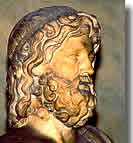

| Asclepius raised at least six dead men:
|
"I found in writing this history some who are reported to have been raised by him Asclepius , to wit, Capaneus and Lycurgus, as Stesichorus 645- 555 BC says... Hippolytus, as the author of the Naupactica reports6th century BC , Tyndareus, as Panyasis c. 500 BC says; Hymnaneus, as the Orphics report; and Glaucus...as Melasogoras 5th century BC relates." Apollodorus, The Library, 3.1.3- 3 |
and |
"When Hippolytus was killed,...Asclepius raised him from the dead." Pausanias, Corinth, Description of Greece, 1.27.5 |
|
Asclepius healed blindness |
"Alcetas of Halieis. The blind man saw a dream while sleeping in Asclepius' temple . It seemed to him the god came up to him and with his fingers opened his eyes....At daybreak he walked out sound." Inscriptiones Graecae, 4.1.121 - 122, Stele 1.18 |
and |
" Hermon of Thasus. His blindness was cured by Asclepius." Inscriptiones Graecae, 4.1.121 - 122, Stele 2.22 |
and |
"To Valerius Aper, a blind soldier, the god revealed that he should go and take the blood of a white cock along with hone and compound and eye salve and for three days should apply it to his eyes. And he could see again and went and publicly offered thanks to the god." Inscriptiones Graecae, 14.96 |
|
Asclepius heals a mute boy |
"A voiceless boy. He came as a supplicant to the Temple of Asclepius ...the temple servant demanded the boys father...to bring...the thank offering for the cure. But the boy suddenly said, "I promise." His father was startled at this and asked him to repeat it. The boy repeated the words and after that became well." Inscriptiones Graecae 4.1.121- 122; Stele 1.5 |
|
Asclepius heals a lame man |
"Nicanor, a lame man. While he was sitting wide-awake in Asclepius' temple , a boy snatched his crutch from him and ran away. but Nicanor got up, pursued him, and do became well." Inscriptiones Graecae 4.1.121- 122; Stele 1.16 |
And |
"Cleimenes of Argus, paralyzed in body. He came to the Abaton and slept there and saw a vision... When he woke up he took a bath and walked out unhurt." Inscriptiones Graecae 4.1.121- 122; Stele 2.37 |
|
|
| Isis healed the sick
|
"Isis...finds her greatest delight in the healing of mankind... In proof of this...they advance not legends...but manifest facts...For standing above the sick in their sleep she gives them aid for their diseases and works remarkable cures upon such as submit themselves to her..." Diodorus Siculus, The Library of History, 1.25.2 -5 |


| Isis cures blindness
|
"Numbers who have lost the use of their eyes or of some other part of their body, whenever they turn for help to this goddess, are restored to their previous condition. ." Diodorus Siculus, The Library of History, 1.25.5 |
Isis and immortality |
"Furthermore, she Isis discovered also the drug which gives immortality." Diodorus Siculus, The Library of History, 1.25.6 |
| HealingControlling
natureDreamsPunishmentSpecialGodmen'sEarly ChristianOther |
|
| SOP|Why
so many miracles?|Christian's
accepted Pagan miracles|Examples |
|
| HealingExorcismControlling
natureDreamsPunishmentSpecialGodmen'sEarly ChristianOther |
|
Apollonius of Tyana cures demon posession The nature of the demon described. |
THIS discussion
was interrupted by the appearance among the sages of the messenger bringing
in certain Indians who were in want of succour. And he brought forward
a poor woman who interceded in behalf
of her child, who was, she said, a boy of sixteen years of age,
but had been for two years possessed
by a devil. Now the character of the devil was that of a mocker
and a liar. Here one of the sages asked, why she said this, and she
replied : "This child of mine is extremely good-looking, and therefore
the devil is amorous of him and will not allow him to retain his reason,
nor will he permit him to go to school, or to learn archery, nor even
to remain at home, but drives him out into desert places. And the boy
does not even retain his own voice, but speaks in a deep hollow tone,
as men do ; and he looks at you with other eyes rather than wit11 his
own. As for myself I weep over all this, and I tear my cheeks, and I
rebuke my son so far as I well may ; but he does not know me. And I
made up my mind to repair hither, indeed I planned to do so a year ago
; only the demon discovered himself, using my child as a mask, and what
he told me was this, that he was the ghost of a man, who fell long ago
in battle, but that at death he was passionately page 316 attached
to his wife. Now he had been dead for only three days when his wife
insulted their union by marrying another man, and the consequence was
that he had come to detest the love of women, and had transferred himself
wholly into this boy. But he promised, if I would only not denounce
him to yourselves, to endow the child with many noble blessings As for
myself, I was influenced by these promises; but he has put me off and
off' for such a long time now, that he has got sole control of my household,
yet has no honest or true intentions." Here the
sage asked afresh, if the boy was at hand ; and she said not,
for, although she had done all she could to get him to come with her,
the demon had threatened her with steep places and precipices and declared
that he would kill her son, "in case," she added, " I
haled him hither for trial." "Take courage," said the
sage, '' for he will not slay him when he has read this." And so
saying he drew a letter out of his
bosom and gave it to the woman ; and the letter, it appears, was addressed
to the ghost and contained threats of an alarming kind. |
| SOP|Why
so many miracles?|Christian's
accepted Pagan miracles|Examples |
|
| Controlling nature | |
| HealingControlling
natureDreamsPunishmentSpecialGodmen'sEarly ChristianOther |
|
| Pythagoras: prophecy, healing, calming storms
|
"Verified predictions by Pythagoras of earthquakes are handed down, also, that he immediately chases away pestilence, suppressed violent winds and hail, and calmed storms o both rivers and seas. Porphyry, Life of Pythagoras 29 |


(pg 91) Many other more admirable and divine particulars are likewise unanimously and uniformly related of the man, such as infallible predictions of earthquakes, rapid expulsions of pestilences, and hurricanes, instantaneous cessations of hail, and tranquillizations of the waves of rivers and seas, in order that his disciples might more easily pass over them. |
|
The power of effecting miracles
of this kind was achieved by Empedocles
of Agrigentum, Epimenides
the Cretan, and Abaris the
Hyperborean, and these they performed in many places. Their deeds were
so manifest that Empedocles was surnamed a _wind-stiller_, Epimenides
an _expiator_, and Abaris an _air-walker_, because, carried
on the dart given him by the Hyperborean Apollo, he passed over
rivers, and seas and inaccessible places like one carried on air. |
| HealingControlling
natureDreamsPunishmentSpecialGodmen'sEarly ChristianOther |
|
| SOP|Why
so many miracles?|Christian's
accepted Pagan miracles|Examples |
|
|
| HealingControlling
natureDreamsPunishmentSpecialGodmen'sEarly ChristianOther |
|
Thunderbolt at Apollonius' birth—and it's meaning explained. |
But the people of
the country say that just at the
moment of the birth of Apollonius ,
a thunderbolt seemed about to fall to earth and then rose up
into the air and disappeared aloft; and the
gods thereby indicated, I think, the
great distinction to which the sage was to attain, and
hinted in advance how he should transcend all things upon earth and
approach the gods, and signified all the things that he would
achieve. |
| HealingControlling
natureDreamsPunishmentSpecialGodmen'sEarly ChristianOther |
|
6.27. It mostly happens that there is some warning when great misfortunes are about to befall a state or nation; and so it was in this instance, for the Chians had previously had some strange tokens sent to them. A choir of 100 of their youths had been dispatched to Delphi, and of these only two had returned, the remaining ninety-eight having been carried off by a pestilence. Likewise, about the same time, and very shortly before the sea-fight, the roof of a school-house had fallen in upon a number of their boys, who were at lessons, and out of 120 children there was but one left alive. Such were the signs which God sent to warn them. |
|
It was very shortly afterwards
that the sea-fight happened, which brought the city down upon its knees;
and after the sea-fight came the attack of Histiaeus and his Lesbians.
to whom the Chians, weakened as they were, furnished an easy conquest. |
| HealingControlling
natureDreamsPunishmentSpecialGodmen'sEarly ChristianOther |
|
1.58 ... The star that was seen in the east we consider to have been a new star, unlike any of the other well-known planetary bodies, either those in the firmament above or those among the lower orbs, but partaking of the nature of those celestial bodies which appear at times, such as comets, or those meteors which resemble beams of wood, or beards, or wine jars, or any of those other names by which the Greeks are accustomed to describe their varying appearances. And we establish our position in the following manner. 1.59 It has been observed that, on
the occurrence of great events, and of mighty changes in terrestrial
things, such stars are wont to appear,
indicating either the removal of dynasties or the breaking
out of wars, or the happening of such circumstances as may
cause commotions upon the earth. But we have read in the Treatise
an Comets by Chaeremon the Stoic, that on some occasions also,
when good was to happen, comets made their appearance; and he gives
an account of such instances. If, then, at the commencement of new dynasties,
or on the occasion of other important events, there arises a comet so
called, or any similar celestial body, why
should it be matter of wonder that at the birth of Him who was to introduce
a new doctrine to the human race, and to make known His teaching
not only to Jews, but also to Greeks, and to many of the barbarous nations
besides, a star should have arisen? |
7.37. And now when all was prepared-the bridges, and the works at Athos, the breakwaters about the mouths of the cutting, which were made to hinder the surf from blocking up the entrances, and the cutting itself; and when the news came to Xerxes that this last was completely finished, then at length the host, having first wintered at Sardis, began its march towards Abydos , fully equipped, on the first approach of spring. At the moment of departure, the sun suddenly quitted his seat in the heavens, and disappeared, though there were no clouds in sight, but the sky was clear and serene. Day was thus turned into night; whereupon Xerxes, who saw and remarked the prodigy, was seized with alarm, and sending at once for the Magians, inquired of them the meaning of the portent. They replied, "God is foreshowing to the Greeks the destruction of their cities; for the sun foretells for them and the moon for us." So Xerxes, thus instructed, proceeded on his way with great gladness of heart. Editor Godolphin notes: 'There was no eclipse
of the sun visible in Western Asia this year (480 BC) ... |
| HealingControlling
natureDreamsPunishmentSpecialGodmen'sEarly ChristianOther |
|
King Tarquin,
judging that his cavalry was a particular weakness, decided to add new
centuries units of cavalry to the existing ones - Ramnes, Titienses,
Luceres - created by Romulus, to which he would leave the distinction
of his own name. Because Romulus had created his three tribes by means
of the auguries,' a distinguished
augur at that time, called Attus Navius, declared
that no change or innovation could be made to them without the consent
of the birds. That moved King Tarquin to anger. To make fun of
the augur's art, the story goes, he said to Navius: 'Come then,
prophet, divine by your augural art whether it is possible to do what
I am thinking of at this moment.' Navius took the auspices
and announced that what the King was thinking of would in fact come
to pass. 'Well', said Tarquin, 'I was thinking of your cutting a whetstone
in half with a razor. Fetch them and perform what your birds
declare can be done.' Without delay Navius cut the whetstone in half.
A statue of Navius with his head veiled used to stand in the place where
this happened - in the comitium, on the steps to the left of the senate
house. The whetstone was also supposed to have been preserved at the
same spot, to provide a memorial for posterity of the miracle. Such
great honour was brought to the auguries that no action was taken, in
war or in the city, without the auspices: assemblies of the people,
levies of the troops, all the greatest affairs would be broken up if
the birds did not approve.' |
| HealingControlling
natureDreamsPunishmentSpecialGodmen'sEarly ChristianOther |
|
3.86. And now, when
the morning broke, the six Persians, according to agreement, met together
on horseback, and rode out to the suburb. As they went along they neared
the spot where the mare was tethered the night before, whereupon the
horse of Darius sprang forward and neighed. Just at the same time, though
the sky was clear and bright, there was a flash of lightning, followed
by a thunder-clap. It seemed as if the heavens conspired with Darius,
and hereby inaugurated him king: so the five other nobles leaped
with one accord from their steeds, and bowed down before him and owned
him for their king. |
| HealingControlling
natureDreamsPunishmentSpecialGodmen'sEarly ChristianOther |
|
In former times
the city has been saved from many
great and constant dangers by the providence of its protective
and mighty deities, Zeus of Panamara
and Hekate, whose sanctuaries were recognized by a decree
of the sacred Roman Senate as being inviolable and possessing
the right to receive suppliants, on account of the manifest
miracles which they performed for the safety of the eternal empire of
our lords the Romans. |
| HealingControlling
natureDreamsPunishmentSpecialGodmen'sEarly ChristianOther |
|
5.85. After this the Athenians relate that they sent a trireme to Aegina with certain citizens on board, and that these men, who bore commission from the state, landed in Aegina, and sought to take the images away, considering them to be their own, inasmuch as they were made of their wood. And first they endeavoured to wrench them from their pedestals, and so carry them off, but failing herein, they in the next place tied ropes to them, and set to work to try if they could haul them down. In the midst of their hauling suddenly there was a thunderclap with the thunderclap an earthquake; and the crew of the forthwith seized with madness, and, like enemies, began to kill one another until at last there was but one left, who returned alone to Phalerum. . ... 5.87.... According to the Athenians,
it was the god who destroyed their troops; and even this one
man did not escape |
| HealingControlling
natureDreamsPunishmentSpecialGodmen'sEarly ChristianOther |
|
| SOP|Why
so many miracles?|Christian's
accepted Pagan miracles|Examples |
|
|
| HealingControlling
natureDreamsPunishmentSpecialGodmen'sEarly ChristianOther |
|
| SOP|Why
so many miracles?|Christian's
accepted Pagan miracles|Examples |
|
|
| HealingControlling
natureDreamsPunishmentSpecialGodmen'sEarly ChristianOther |
|
| SOP|Why
so many miracles?|Christian's
accepted Pagan miracles|Examples |
|
|
| HealingControlling
natureDreamsPunishmentSpecialGodmen'sEarly ChristianOther |
|
Poseidon crossed the water: |
"Then gamboled the sea beasts beneath him Poseidon on every side from out of the deep, for well they knew their lord, and in gladness the sea parted before him." Homer, Iliad, 29 |
| HealingControlling
natureDreamsPunishmentSpecialGodmen'sEarly ChristianOther |
|
| Alexander the Great parts the sea |
Quoting Callisthenes now lost , "the sea withdrew from before his Alexander's march as though recognizing him, and that it too did not fail to know its lord. " Eustathius, On the Iliad, 29 |
| HealingControlling
natureDreamsPunishmentSpecialGodmen'sEarly ChristianOther |
|
Lucian describes men running on the sea and walking on water |
"We came in sight of many men running over the sea..." Lucian, A true Story, 2.4 and: "I saw him soar through the air in broad daylight and walk on water..." Lucian, The Lover of Lies, 13 |
| HealingControlling
natureDreamsPunishmentSpecialGodmen'sEarly ChristianOther |
|
|
"At fixed times in their city a fountain of wine, of unusually sweet fragrance, flows of its own accord from the earth." Diodorus Siculus, The Library of History 3.66.3 "The water
flowing from a spring in the temple of Father Liber Dionysus
on the island of Andros always has the
flavor of wine on January 5th: the day is called
God's Gift Day. |
| Dionysus turns a water into a wine-spring |
One woman bacchant
|
… (712) If
you had been there and seen these wonders for yourself, |
|
The place where
they hold the festival they name the Thyia is about eight stades from
the city. Three pots are brought into the building
by the priests and set down empty in the presence of the citizens and
of any strangers who may chance to be in the country. The doors
of the building are sealed by the priests themselves and by
any others who may be so inclined. On the morrow they are allowed to
examine the seals, and on going into the building they
find the pots filled with wine.
I did not myself arrive at the time of the festival, but the most respected
Elean citizens, and with them strangers also, swore that what I have
said is the truth. |
 Dionysus
Speaking in tongues |
Very often, when
people submitted questions in a native tongue, Syrian or Galatians,
for example, Alexander would prophesy
in a foreign language. |
| HealingControlling
natureDreamsPunishmentSpecialGodmen'sEarly ChristianOther |
|
| SOP|Why
so many miracles?|Christian's
accepted Pagan miracles|Examples |
|
|
| HealingControlling
natureDreamsPunishmentSpecialGodmen'sEarly ChristianOther |
|
| Pythagoras: prophecy, healing, calming storms
|
"Verified predictions
by Pythagoras of earthquakes
are handed down, also, that he immediately
chases away pestilence, suppressed
violent winds and hail, and
calmed storms o both rivers
and seas. |
The river answers Pythagoras |
Again, once passing over the river Nessus along with many associates, he addressed the river, which, in a distance and clear voice, in the hearing of all his associates, answered, "Hail, Pythagoras!" |
In two cities at once |
Further, all his biographers insist that during the same day he was present in Metapontum in Italy, and at Tauromenium in Sicily, discoursing with his disciples in both places, although these cities are separated, both by land and sea by many stadia, the traveling over which consumes many days. |
(pg 91) Many other more admirable and divine particulars are likewise unanimously and uniformly related of the man, such as infallible predictions of earthquakes, rapid expulsions of pestilences, and hurricanes, instantaneous cessations of hail, and tranquillizations of the waves of rivers and seas, in order that his disciples might more easily pass over them. |
|
The power of effecting miracles
of this kind was achieved by Empedocles
of Agrigentum, Epimenides
the Cretan, and Abaris the
Hyperborean, and these they performed in many places. Their deeds were
so manifest that Empedocles was surnamed a _wind-stiller_, Epimenides
an _expiator_, and Abaris an _air-walker_, because, carried
on the dart given him by the Hyperborean Apollo, he passed over
rivers, and seas and inaccessible places like one carried on air. Many
think that Pythagoras did the same thing, when in the same day he discoursed
with his disciples at Metapontum and Tauromenium. It is also said that
he predicted there would be an earthquake from the
water of a well which he had tasted; and that a ship sailing with a
prosperous wind would be submerged in the sea. These are sufficient
proofs of his piety. |
| HealingControlling
natureDreamsPunishmentSpecialGodmen'sEarly ChristianOther |
|
| SOP|Why
so many miracles?|Christian's
accepted Pagan miracles|Examples |
|
|
|
An early Christian miracle T The second miracle, performed by Jesus' disciple, the apostle Peter, caused Simon to fall from the air—proving whose Christ had the greatest power. |
" Now when
he Simon Magnus
was in Rome, he mightily disturbed the Church, and subverted many, and
brought them over to himself, and astonished the Gentiles with
his skill in magic, insomuch that once,...he...promised
he would fly in the air; and...indeed
he was carried up into the air by demons, and did fly on high in the
air, saying that he was returning into heaven, and that he would
supply them with good things from thence... I
Peter stretched out my hands to heaven ... and
besought God through the Lord Jesus to throw down this pestilent fellow,
and... When I had said these words,
Simon was deprived of his powers, and fell down headlong. |
| HealingControlling
natureDreamsPunishmentSpecialGodmen'sEarly ChristianOther |
|
| SOP|Why
so many miracles?|Christian's
accepted Pagan miracles|Examples |
|
|
W hen Sanacharib,
king of the Arabians and Assyrians, marched his vast army into
Egypt, the warriors one and all refused to come to his aid. On this
the monarch, greatly distressed, entered into the inner sanctuary,
and before the image of the god, bewailed the fate which impended over
him. As he wept he fell asleep, and dreamt that the
god came and stood at his side, bidding him be of good cheer,
and go boldly forth and meet pg 149 the Arabian host, which would
do him no hurt, as he himself would
send those who should help him. Sethos, then, relying on the
dream, collected such of the Egyptians as were willing to follow him,
who were none of them warriors, but traders, artisans, and market-people;
and with these marched to Pelusium, which commands the entrance into
Egypt, and there pitched his camp. As the two armies lay here opposite
one another, there came in the night
a multitude of field-mice, which devoured all the quivers and bow-strings
of the enemy, and ate the thongs by which they managed their shields.
Next morning they commenced their flight, and great multitudes fell,
as they had no arms with which to defend themselves. There stands
to this day in the temple of Hephaestus, a stone statue of Sethos,
with a mouse in his hand, and an inscription to this effect, "Look
on me, and learn to reverence the gods." |
| HealingControlling
natureDreamsPunishmentSpecialGodmen'sEarly ChristianOther |
|
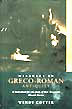
Good Books for this section
Miracles
in Greco-Roman Antiquity
|
Lousy with miracles Like chocolate chips in mama's cookies, miracles were a basic ingredient in ancient people's understanding of how the world works. Every bite—another miracle. The ancient world was lousy with miracles. Don't believe me, believe the ancients. This excellent sourcebook gives hundreds of examples—250 pages—of ancient miracles recorded by the pens of ancients themselves. You'll read short excerpts from ancient texts describing Pagan Gods who healed the sick (blindness, paralysis, lameness), raised the dead, exorcised demons, controlled nature, turned water into wine, walked on water, calmed storms, and more. Well organized, easy to read. Highly recommended.
|


|
|
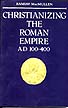
Christianizing
the Roman Empire (A.D. 100-400)
|
A solid scholarly look at the reasons Pagans converted to Christianity in the period before Christianity took over the central government of the Roman Empire. You'd think the main tool of conversion was preaching, or maybe people telling how their conversion had changed their lives. It wasn't. The main tool of conversion was magic! The ancient evidence shows the first Christian evangelism was based on miracle working and miracle healing—basically saying 'Hey Presto! My God is stronger than your Gods.' By the end of this period about ten percent of the Empire was Christian. By a famous Yale historian. Highly recommended for serious
students.
|
|
|