|  |
||||||||||||||||||||||||||||||||
 |
|||||||||||||||||||||||||||||||||













| Facts > Pagan Ideas > God | ||||
 |
"We are indeed His offspring" |  |
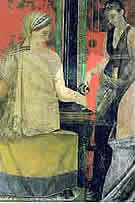 |
a Do
not follow other
gods,
|
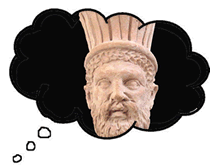
|
|
...every street, every marketplace is full of Zeus.
Even the sea and the harbor are full of this deity.
Everywhere everyone is indebted to Zeus, |
In Him Yahweh/
Jesus we live and move and have our being; as
even some of your poets have said, |
| God
as an idea |
Lots of Gods 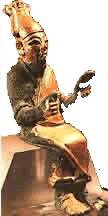 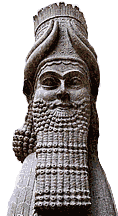  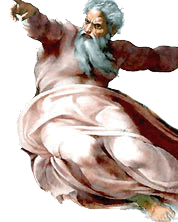 |
||
|
Yahweh/Jesus is/are a God. So was Baal. So was El. So were Tammuz and Ishtar. And Bal, El, Tammuz and Ishtar were all Gods before Yahweh was a gleam in some bronze age goatherd's eye. Pagans had Gods first. Our guys had Gods second. How could that happen? The believer's first answer is, "It didn't. Our God is so much way totally cooler than their gods that our God is in a whole other category." Only the thing is, see, the people who were there at the time didn't see it that way. Let us ennoble our brains by reading the actual ancient evidence. The blue box quotes what the Old Testament says about Yahweh and other ancient Gods. Turns out that away back in the BCs, the people who developing what became our ideas about the God Yahweh/Jesus were not mono-theists, they were heno-theisits. Mono-theists believe there is one God. Heno-theists acknowledge lots of Gods, but recognize that their God is much way totally cooler than everybody else's. |
|
|
Now I know that
the Lord is greater than all
other gods,
for he did this to those who had treated Israel arrogantly.
You shall have no
other gods before me. Be careful to do everything I have said to you. Do
not invoke the names
of other gods; do not let them be heard on your
lips. What other nation is so great as to have
their gods near them the way the Lord our God
is near us whenever we pray to him? You shall have no
other gods before me. Do not follow other gods, the
gods of the peoples around you; for they will turn your sons away from following me
to serve other gods,
and the Lord's anger will burn against you and will
quickly destroy you. If you ever forget the Lord your God and
follow other gods and worship and bow down to
them, I testify against you today that you will surely
be destroyed. Be careful, or you will be enticed to turn away and
worship other gods
and bow down to them. the curse if you disobey the commands of the Lord
your God and turn from the way that I command you today
by following other
gods, which you have not known. and if the sign or wonder of which he has spoken takes
place, and he says, Let us
follow other gods (gods you have not known) and
let us worship them, gods of the peoples
around you, whether near or far, from one end of the
land to the other), that wicked men have arisen among you and have led
the people of their town astray, saying, Let us go and
worship other gods
(gods you have not known), and contrary to my command has worshiped
other gods, bowing down to them or to the sun
or the moon or the stars of the sky, But a prophet who presumes to speak in my name anything
I have not commanded him to say, or a prophet who speaks
in the name of other
gods, must be put to death. Do not turn aside from any of the commands I give
you today, to the right or to the left, following
other gods and serving them. The Lord will drive you and the king you set over
you to a nation unknown to you or your fathers. There
you will worship other gods, gods of wood and
stone. Then the Lord will scatter you among all nations, from one end of the earth to the other. There you will worship other gods They went off and
worshiped other gods and bowed down to them,
gods they did not know, gods he had not given them.
|

|
|
Recognition that Pagan godness and Yahweh/ Jesus godness are alike is a conclusion of mainstream scholarship. Here's how the editor of Britannica's Great Books describes the "fundamental agreements" between Yahweh/ Jesus and the Pagan Gods |
|
|
The Great
Ideas, 1952, Ch. 29 |
 "There
are ...fundamental agreements between
paganism and Judeo-Christian
regarding the nature of the divine....The deities are
conceived personally, not in terms
of impersonal, brute forces. Conceived as beings with
intelligence and will,
the Gods concern themselves with earthly society;
the aid or oppose man's plans
and efforts; they reward men for fidelity
and virtue and punish them for impiety
and sin."
"There
are ...fundamental agreements between
paganism and Judeo-Christian
regarding the nature of the divine....The deities are
conceived personally, not in terms
of impersonal, brute forces. Conceived as beings with
intelligence and will,
the Gods concern themselves with earthly society;
the aid or oppose man's plans
and efforts; they reward men for fidelity
and virtue and punish them for impiety
and sin."
|

| Some also of the Epicurean and Stoic philosophers met him. And some said, "What would this babbler say?" Others said, "He seems to be a preacher of foreign divinities" --because he preached Jesus and the resurrection.19 And they took hold of him and brought him to the Are-op'agus, saying, "May we know what this new teaching is which you present? 20 For you bring some strange things to our ears; we wish to know therefore what these things mean." 21 Now all the Athenians and the foreigners who lived there spent their time in nothing except telling or hearing something new. |
|
| And Paul knew what the Greeks meant by "God." What the Greeks meant was the same thing Paul meant. Only, Paul liked his God better. The Greeks "unknown God" was not, he said, as good as his "God who made the world and everything in it." >> But—this is the point—they were both Gods. Paul's God and the Greeks' God were both Gods. Everyone knew what "God" meant. The Greeks had 'em. Paul had one. The Athenians liked theirs better. Paul liked his better. Go figure. Or at least, Paul liked Yahweh/ Jesus better most of the time. Other times Yahweh/ Jesus was so much like the Greek Zeus, that Paul (or, to be accurate, "Luke") explained Yahweh/ Jesus by comparing Him/ Them with Zeus, quoting verbatim from Greek religious writing... |
22
So Paul, standing in the middle of
the Are-op'agus, said: "Men of
Athens, I perceive that in every way you are very religious.
23 For as I |
...ideas the Greeks had about Zeus , said "Luke"/ Paul, are exactly the ideas Christians have about Yahweh/ Jesus: "For we are indeed his offspring." >>
|
|
| Because God was a Pagan idea, it won't surprise you to learn that, according to Acts, the part of Paul's marketplace arguing the Athenians sniggered at wasn't God, it was the rising up of dead bodies. |
32 Now when
they heard of the resurrection of the dead, some mocked; but
others said, "We will hear you again about this." 33 So Paul
went out from among them. |
|
New Testament Book of Acts, Chapter 17, RSV
|
 passed
along, and observed the objects of your worship, I found
also an altar with this inscription, '
passed
along, and observed the objects of your worship, I found
also an altar with this inscription, '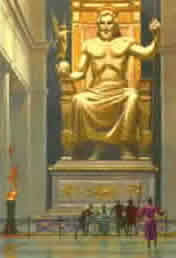 27
that they should seek God, in the hope that they might feel after him
and find him. Yet he is not far from each one of us,
28 for 'In him we live and move and have our being'; as even some of
your poets have said, '
27
that they should seek God, in the hope that they might feel after him
and find him. Yet he is not far from each one of us,
28 for 'In him we live and move and have our being'; as even some of
your poets have said, 'That's how it was, back at the founding of our religion. Pagans recognized Yahweh/ Jesus as a God, like other Gods. Christians saw Yahweh/ Jesus as a God, like other Gods. You got that? God was a Pagan idea. |
|
Brain s t r e t c
h 
It's different with God. The notion that western culture's God—our God—was borrowed, that's way hard to get your brain around.
The reason it's hard is not that we're talking about our real God, as opposed to some little brown persons' mythical god. The reason is more fundamental than that. It's that we're talking about God. God isn't an idea, God is a thing. God may not be the bronze age goatherds' tribal Yahweh, but God is the creator, the prime mover, the ultimate good. A thing, not an idea.
Listen, you get to believe whatever you want about the Truth of spiritual forces and beings; we can still be friends. POCM isn't about divine truth. POCM is about the history of ideas. What you'll learn here is that modern western ideas about God, Jewish and Christian ideas, developed from ancient ideas about ancient Pagan Gods. We're gonna learn a bit about ourselves. |
 God
is phony, therefore there is no creator, no prime mover, no ultimate
good. Atheists don't accept the fact
of Yahweh/ Jesus, but they accept the idea that
meaning and purpose can only exist in connection with the Yahweh/
Jesus myths.
God
is phony, therefore there is no creator, no prime mover, no ultimate
good. Atheists don't accept the fact
of Yahweh/ Jesus, but they accept the idea that
meaning and purpose can only exist in connection with the Yahweh/
Jesus myths.  Even
if you don't believe in Yahweh God, chances are pretty
good you believe in God in some way, as creator, as
prime mover, as the spiritual force behind right and
wrong.
Even
if you don't believe in Yahweh God, chances are pretty
good you believe in God in some way, as creator, as
prime mover, as the spiritual force behind right and
wrong.
| You
can't understand the history of God until you unlearn some stuff.
It wasn't. Ancient religion was more than that. Sure, like our religion the ancients' had talking animals, and divine floods, and magic prophecies. But like us, the ancients found in their religion beauty, nobility, truth, purpose, and mystic transcendence. Did I mention eternal salvation? That too. Now, I know you're not going to take my word for this. I'm not asking you to believe me. Here's a description, written in the late first or early second century AD, of the rites of the great empire-spanning religion of Isis and Osiris. Or rather, of the religious meaning that explains those rights—why the priests did what they did.
|

 The
guy who wrote this was for thirty years a priest at
the temple of Apollo in Delphi, Greece. By his time
Isis and Osiris had been in Greece for more than four
hundred years, and it's a good bet he was initiated
into their
The
guy who wrote this was for thirty years a priest at
the temple of Apollo in Delphi, Greece. By his time
Isis and Osiris had been in Greece for more than four
hundred years, and it's a good bet he was initiated
into their Look, I know you don't read most
of these blue boxes. This one you ought to |
||
| Plutarch, who knew his way around a scroll with a reed pen, didn't have words to say how very very nice the worship of Isis was, so he settled for some hi-tone superlatives--"pure", "shining through the soul", like that. >> Lucky us, Plutarch didn't stop there. He went on to explain that the theology of Isis worship was mystic union with the immaterial, eternal "Reason." The Greek word was "Logos." -- the same word, and the same idea of an eternal divine being you'll find in our Gospel of John. "In the beginning was the word logos , ... and the word logos was God." The Isis-priests' God wasn't a magical godman (at least He wasn't only that), He was this eternal, immaterial, simple, shining, pure, spirit thing. The kind of transcendent God-thing I don't have words for, and I bet you don't either. According to Plutarch, who should'a know 'cause he was there, the worship of Isis and Osiris wasn't about magic fables, it was about mystic union of the striving human soul with eternal, transcendent God. >> |
|
|
| God, says Plutarch, is pure, uncontaminated by matter (the ancients understood matter as impure). Man is trapped in the impure world, only man's soul is divine. It strives for union with God.
|
|
|
| Your soul can union-ate with God through philosophy—which for the ancients worked like revealed religion (which they didn't have, much) works for us. >> |
||
| And when we die, our
souls leave our bodies and travel to be with God, >> where...
...your soul will spend eternity contemplating the unutterable, indescribable niceness of God. >> Sound familiar? I thought so.
|
But when
these souls are set free and migrate into the realm of the invisible
and the unseen, the |
|
|
Plutarch, Isis and Osiris, 382.D - 383.A (first or second century AD), -- which
you can find in: Babbitt, Frank.
Plutarch Moralia, volume 5 (1936/ 1999), pg. 181- 5 |

 But
the apperception of the
But
the apperception of the  ....
this god Osiris .... is far removed
from the earth, uncontaminated and
unpolluted and pure from all
matter that is subject to destruction and death
; but for the
....
this god Osiris .... is far removed
from the earth, uncontaminated and
unpolluted and pure from all
matter that is subject to destruction and death
; but for the 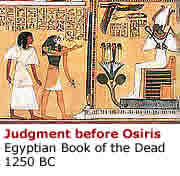
|
The reason the Greeks in the Athenian market called Paul's Yahweh/ Jesus a foreign God, and the reason Paul described Yahweh/ Jesus by quoting directly from Pagan religious writing is the same reason you maybe felt a prickle at the back of your neck when you just read Plutarch describe the worship of Isis and Osiris. The ideas were the same. Our God was a God in exactly the way Pagans understood God. God is a Pagan idea. The Pagans had it first. We got it second. |
 Our souls are divine, and strive for union
with God. After we die we travel to heaven to spend
eternity contemplating the unutterable, indescribable glory of God.
That was ancient religion? Yup. That was ancient religion.
Who'd a thunk it?
Our souls are divine, and strive for union
with God. After we die we travel to heaven to spend
eternity contemplating the unutterable, indescribable glory of God.
That was ancient religion? Yup. That was ancient religion.
Who'd a thunk it?We've just seen that the Christian apostle Paul, who wrote more of the New Testament than anyone else, thought the Pagan idea of God and the Christian idea of God were similar. The Pagan author and priest Plutarch described the worship of Isis and Osiris in terms of morality, transcendence and eternal life. Now, in case you're thinking maybe Greg picked out the two bits in all of ancient literature that make the Pagan Gods look like, well, God, here's more of the same; more ancients who though the Jewish/Christian Yahweh was a God exactly as Pagans understood the idea. Like "Luke," the ancient Pagans also saw Yahweh not as something new, but as just another God. |
|
|
Quoting Hesiod "The gods, too, may be turned from their purpose; and men pray to them and avert their wrath by sacrifices and soothing entreaties, and by libations and the odor of fat, when they have sinned and transgressed." |
|||||||
Just as the New Testament gospel writer "Luke" saw Yahweh/Jesus as similar to Pagan Gods, Plato also saw Moses' God Yahweh and Orpheus' God as both Gods.
|
And they produce a host of books written by Mousaios and Orpheus, … according to which they perform their ritual, and persuade not only individuals, but whole cities, that expiations and atonements for sin may be made by sacrifices and amusements which fill a vacant hour, and are equally at the service of the living and the dead; the latter sort they call mysteries, and they redeem us from the pains of hell, but if we neglect them no one knows what awaits us. |
|||||||
| Plato, The Republic, Book 2.7,
(4th century BC)
|
 Here's
how Plato (yes, that Plato) in the fourth
century BC, quoting Hesiod, from the eighth
century BC, described the pagan Gods as beings people
prayed to when they sinned.
Here's
how Plato (yes, that Plato) in the fourth
century BC, quoting Hesiod, from the eighth
century BC, described the pagan Gods as beings people
prayed to when they sinned.

Plato (yes that Plato) knew about Yahweh. And Plato recognized Yahweh as just another God. To Plato, to the ancients -- who should'a know, cause they were there -- our God was a God in exactly the way Pagans understood God. God is a Pagan idea. The Pagans had it first. We got it second. |
And it wasn't just Plato and Paul who saw it that way. Other folks also saw Yahweh as just another God. Here's the Roman emperor Augustus speaking in a decree allowing the Jewish nation to follow its own customs. |
The Jews have a high priest too, a priest of the Most High God.
|
Caesar
Augustus, Pontifex Maximus, with tribunician power, decrees:
since the Jewish nation has
been found well disposed towards the Roman people not only at the present
time but also in the past, and especially in the time of my father the
Imperator Caesar, as has their High Priest Hyrkanos, it has been decided
by me and my council under oath, with the consent of the Roman people,
that the Jews are to follow their own customs in accordance
with their ancestral law, just as they did in the time of Hyrkanus,
High Priest of the Most High God,
and their sacred monies are to be inviolable and dispatched to Jerusalem
and handed over to the treasurers in Jerusalem. |
Josephus, Antiquities of the
Jews, 16.162 ff (late first century AD |
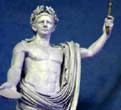
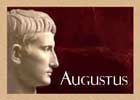 In
this religion related decree, Augustus points out that he himself
is the Pontifex Maximus, Rome's high
priest
In
this religion related decree, Augustus points out that he himself
is the Pontifex Maximus, Rome's high
priest
The Roman emperor Claudius knew plenty about Gods (he became one himself! —a ridiculous legend, till you realize it's also our legend). Claudius knew about Yahweh. As far as Claudius could see, the Jewish Yahweh God was just another God. |
With regard to
the disturbances and rioting .... I earnestly beg the Alexandrians to
behave gently and in a kindly manner towards the Jews
who have long been living in the same city and not dishonor any of the
traditional practices connected with
the worship of their god, but to allow them to observe their
customs as they did under the deified Augustus, customs, which I, having
listened to both sides, have confirmed. |
||||
| Claudius, Roman emperor; from his
letter to the city of Alexandria, 10 November, 41 CE, Corpus Papyrorum
Judaicarum, 153 (1957- 64), -- which you can find in: Williams, Margaret.
The Jews Among the Greeks and Romans, A Diasporan Sourcebook (1998),
pg. 133
|
| It didn't take emperor-osity to understand that Yahweh was a god. Here's a decree published by the good people in the city of Halicarnassas, over on the right side of your map of the Roman empire. The Halicarnassasasonionites had a deep regard for piety toward the divine.
So they granted the Jews' the privilege of celebrating the Jewish
sacred rites,
|
Decree
of the people of Halikarnassos. 'In the priesthood of Memnon,
son of Aristeides ... the people passed the following decree on the
motion of Markos Alexander. Since we
at all times have the deepest
regard for piety towards the divine
and holiness, following the example of the people of Rome, who
are the benefactors of all mankind, and in conformity with what they
have written to our city about their friendship and alliance
with the Jews, namely
that their religious rites and their
customary festivals and their meetings are to be carried on,
we have deemed it right that those Jewish men and women who
so wish may keep the Sabbath and carry out their sacred rites in accordance
with Jewish Laws, and build prayer-houses by the sea, as is their native
custom. If anyone, whether community official or private person
prevents them, he shall be liable to this fine and owe it to the city.' |
| Josephus, Antiquities of the Jews,
14.256 ff, first century AD.
|
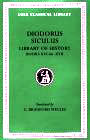
| Here's the ancient historian Diodorus Siculus (1st century BC) describing the origins of various country's divine laws: Diodorus says: For Diodorus and his readers, the Jewish tribal God Yahweh was one of a set, a tribal God just as Hermes, Zeus, Apollo, Ahura Mazda and Hestia were tribal Gods. To the ancients—who should'a know, cause they were there—Yahweh was just another God. |
|
| Diodorus of Sicily, Library
of History, 1.94 (1st century BC),—which you can find in: Oldfather,
C. H. Diodorus
of Sicily, The Library of History, Books I - ii.34 (Loeb Classical Library
#279) (1933 (1998)) , pg. 319- 21
|
 After
the establishment of settled life in Egypt in early
times. . . the first, they say, to persuade the multitudes to use written
laws was Mneves, a man not only great of soul but also
in his life the most public spirited of all lawgivers whose names are
recorded. According to the tradition he claimed that
After
the establishment of settled life in Egypt in early
times. . . the first, they say, to persuade the multitudes to use written
laws was Mneves, a man not only great of soul but also
in his life the most public spirited of all lawgivers whose names are
recorded. According to the tradition he claimed that God is a Pagan idea. And according to people who were there—Paul the apostle, the Pagan priest Plutarch, Augustus, Claudius, and the Rotary Club of Halicarnassas, and the historian Diodorus of Sicily—the Jewish/ Christian God(s) Yahweh/ Jesus was a God in the same way Pagan God(s) were God(s). The ideas were the same. Are there other ancients who confirm this? Sure. But the point is made. Enough said. |
| The inscription is to
Sound familiar?
But the God named is Zeus |
|
Now look at the book you're going to ask the libarian to help you find if you decide to confirm my quotation of this inscription: the Corpus Inscriptionum Iudaicarum (even libarians have trouble saying that three times, fast)—the "Body of ancient Jewish Inscriptions." Even though the God named is Zeus, scholars of Judaism classify this inscription as Jewish. |
Corpus Inscriptionum Iudaicarum
I, number 690 (first century AD)
|
 To
God, Most High, All-powerful and Blessed.
To
God, Most High, All-powerful and Blessed.
|
"The Jewish
identity of the next two inscriptions has been inferred mainly from
the divine epithets that appear in them.
|
 As
Dr. Williams explains about this
very inscription
As
Dr. Williams explains about this
very inscription Is the Gorgippia inscription Jewish for sure? No, it isn't. That's not the point. The point is their Pagan Gods and our God are so close, so similar, so alike, even hot shot scholars with coffee mugs that say World's Best Department Head can't be sure. Wow. |
So
far The ancient Pagans had Gods. The ancients Pagans knew about our God, Yahweh. The ancient Pagans—emperors, historians, philosophers, theologians, and Halicarnassasasonionite Rotary Clubs—all saw our Yahweh as just one more God. And the bible agrees; remember "Luke's" Acts chapter 17, quoting Pagan religious writing, saying Yahweh/ Jesus is like the Pagan God, like Zeus. After Jesus Nope. Didn't happen. After Jesus the Pagans and the Christians all agreed -- Yahweh/ Jesus was/ were Gods in the traditional Pagan sense. |
|
|
And so, too, Plato,
when He says, "The blame is his who chooses, and God is
blameless," took this
from the prophet Moses and uttered it. For Moses is more ancient
than all the Greek writers. And whatever both philosophers and poets
have said concerning the immortality
of the soul, or punishments after death, or contemplation of things
heavenly, or doctrines of the like kind, they have received such suggestions
from the prophets as have enabled them to understand and interpret
these things. And hence there seem to be seeds of truth among
all men; but they are charged with not accurately understanding
the truth when they assert contradictories. |
| Justin Martyr, First Apology,
44
|
|
|
HEATHEN ANALOGIES TO CHRISTIAN DOCTRINE. And the Sibyl and Hystaspes said that there should
be a dissolution by God of things corruptible. And the philosophers
called Stoic teach that even God Himself shall be resolved into fire,
and they say that the world is to be formed anew by this revolution;
but we understand that God, the Creator of all things, is superior to
the things that are to be changed. If, therefore, on some points we
teach the same things as the poets and philosophers whom you
honor, and on other points are fuller and more divine in
our teaching, and if we alone afford proof of what we assert, why are
we unjustly hated more than all others? For while we say that
all things have been produced and arranged into a world by God,
we shall seem to utter the doctrine
of Plato; and while we say that there will be a burning
up of all, we shall seem
to utter the doctrine of the Stoic: and while we affirm that
the souls of the wicked, being endowed with sensation even after death,
are punished, and that those of the good being delivered from punishment
spend a blessed existence, we
shall seem to say the same things as the poets and philosophers;
and while we maintain that men ought not to worship the works of their
hands, we say the very things which have been said by the comic poet
Menander, and other similar writers, for they have declared that
the workman is greater than the work. |
|
|
We have now, then, to refute that statement of his which runs as follows: "O Jews and Christians, no God or son of a God either came or will come down (to earth). But if you mean that certain angels did so, then what do you call them? Are they gods, or some other race of beings? Some other race of beings (doubtless), and in all probability demons.".... |
|
We shall mention, however, a
few considerations out of a greater number, such as we deem in harmony
with our former arguments, but which have not altogether the same bearing
as they, and by which we shall show that in asserting generally that
no God, or son of God, ever descended (among men), He
overturns not only the opinions entertained by the majority of mankind
regarding the manifestation of Deity, but also what was formerly
admitted by himself. For if the general statement, that "no God
or son of God has come down or will come down," be truly maintained
by Celsus, it is manifest that we have here overthrown the belief
in the existence of gods upon the earth who had descended from heaven
either to predict the future to mankind or to heal them by means of
divine responses; and neither the Pythian
Apollo, nor Aesculapius,
nor any other among those supposed to have done so, would be a God descended
from heaven. He might, indeed, either be a God who had obtained as his
lot (the obligation) to dwell on earth for ever, and be thus a fugitive,
as it were, from the abode of the gods, or He might be one who had no
power to share in the society of the gods in heaven; or else Apollo,
and AEsculapius, and those others who are believed to perform acts on
earth, would not be gods, but only certain demons, much inferior
to those wise men among mankind, who on account of their virtue ascend
to the vault of heaven. |
In the next
place, ridiculing after his usual style the race of Jews and Christians,
He Celsus,
a Pagan critic of Christianity compares them all "to a flight
of bats or to a swarm of ants issuing out of their nest, or to frogs
holding council in a marsh, or to worms crawling together in the comer
of a dunghill, and quarrelling with one another as to which of them
were the greater sinners, and asserting that
God shows and announces to us all things beforehand;
and that, abandoning the whole world, and the regions of heaven, and
this great earth, He becomes a citizen among us alone, and to us alone
makes his intimations, and does not cease sending and inquiring, in
what way we may be associated with him for ever." |
 |
Book 4, Chapter
XIV. …. several chapters of refutation by Origen ... Book 4, Chapter XVIII. Origen, Against Celsus, 4.14 |
|
|
M an is the noblest of creatures and an image of God. The Christians seem to endorse this when they conceive of God as having fingers which he sometimes uses in order to write, as when it is said, "He gave the two tables to Moses, which were written by the finger of God." And the Christians, imitating our ways, erect temples and build great houses in which they assemble for prayer, even though they are enjoined to do this in their own houses -- since the Lord can hear them wherever they are. Porphyry of Tyre, Against the Christians, (third Century AD), -- which you can find in: Hoffmann, R. Joseph, Porphyry's Against the Christians; the Literary Remains (1994), pg. 85 |
| |
Let us explore completely this matter of the monarchy of the only God and the manifold rule polyarchy of those who are revered as gods. Your Christian idea of the single rule monarchy is amiss, for a monarch is not the only man alive but the only man who rules… Take for example the emperor Hadrian: he was a monarch because he ruled over those who were like him by race and nature -- not because he existed alone somewhere or lorded it over oxen and sheep… In the same way, the supreme God would not be supreme unless he ruled over other gods. Only this sort of power would do justice to the greatness of God and redound to his honor. Porphyry of Tyre, Against the Christians, apocrit
4.20 (third Century AD), -- which you can find in: Hoffmann, R. Joseph.
Porphyry's Against the Christians; the Literary Remains (1994), pg.
83 - 84 |
RE: Mt 22.29-30;
Exodus 31.18 Porphyry of Tyre, Against the Christians, (third Century AD), -- which you can find in: Hoffmann, R. Joseph, Porphyry's Against the Christians; the Literary Remains (1994), pg. 84- 5 |
| |
The Edict of Milan:
Lactantius, On the Death of the Persecutors, 48.2
(310s AD), -- which you can find in: Lee, A.D.. Pagans & Christians
in Late Antiquity (2000), pg. 84 |
|
The idea of God—of one or many supernatural beings who look like us and think like us, and care about us, and interact with us, and reward and punish us—is universal and way older than Christianity or Judaism. You know this. |
To the
supreme god, as a wise man said, we
offer nothing that is accessible to the senses, neither
burnt offerings nor reciting names; for there is nothing material which,
to the immaterial being, in not immediately impure. That is
why for this god no language is appropriate,
neither spoken aloud or even within, since it is defiled by emotion
in the soul; but we worship him through
pure silence and pure thoughts about him. Uniting
ourselves with him and making
ourselves like him, then, we must offer god the lifting
up of our soul as a holy sacrifice, which is both a hymn of praise
for him and salvation for us.
|
|
To the ancients the Gods were a daily presence, a force controlling their lives. A few examples, not from archaic poets but from everyday ancient authors—historians, playwrights, novelists > > |
All the more amazed
at this outburst the young man asked what it was all about; and then,
after imploring the gods and
goddesses for mercy and forgiveness
if under compulsion of her love for him she uttered what should be kept
secret… |
Metaneira had a child late in life—a gift of the Gods. |
Metaneira to the goddess Demeter Nurse this child for me, whom the immortals have given me, late-born and unexpected, but much prayed for ... Homeric Hymn to Demeter, (7th century BC) |
All good things—gifts of the Gods.
|
Then Demeter of the fair crown said to her, "May you also be of good cheer, woman, and may the gods grant you all good things; Homeric Hymn to Demeter, (7th century BC) |
For a son born late in life, prayer and rejoicing.
|
Kallidike, speaking to Demeter A favorite son, born to her late, is being nursed in the strongly built palace; she prayed much for him, and rejoiced in him. Homeric Hymn to Demeter, 165 (7th c BC) |
The Gods help those who pray.
|
... the fame has traveled wide of how the gods appear to mankind and bring unexpected aid to their initiates of theirs who call upon them in the midst of perils. Diodorus Siculus, Library of History, 5.49.5 (1st century AD) |
Miracles justify faith.
|
If you had been there and seen these wonders for yourself, you would have gone down on your knees and prayed to the god you now deny. Euripides, The Bacchae, 703 - 707 (5th century BC) |
| Christianity has the idea of God, but Paganism had the idea first. |
|
First, of course, every culture, even illiterate stone age ones, has the idea of Gods, of unseen beings with special powers who create and order the world and direct what happens to people.
|
They the Comanches,
into whose people Lee was adopted
believe in God, a great spirit, who created and governs the earth, sun,
moon, and stars. They have an unwavering and undoubting faith
in a future state of existence, and
in future rewards and punishments. Lee,
Nelson. Three
Years Among the Comanches (1859/ 2001), pg. 123- 4 |
So maybe what we're talking about, Yahweh and Jesus-ly speaking, is not borrowing. Maybe what we've got Christian-God wise is the all-on-its-own, all-by-itself development of a basic human idea. Maybe the bible story is right. Maybe Christians got their ideas about divinity from Jesus and Judaism, and Judaism got it's ideas all alone, out in the desert, from Moses and the prophets. And those voices from Heaven. And that burning bush. Through most of modern history that's been a fair way to explain things. But it isn't any more. Here's why.... |
 Some
apologists find their way around this by claiming
Judaism and Christianity didn't borrow, they came
up with their ideas all on their own, as an expression
of basic human spiritual understanding.
Some
apologists find their way around this by claiming
Judaism and Christianity didn't borrow, they came
up with their ideas all on their own, as an expression
of basic human spiritual understanding. I myself think the evidence is otherwise, but
fine. We can still be friends.
I myself think the evidence is otherwise, but
fine. We can still be friends.|
The next time you're in Church Wow! |
 When they get to the part about a personal God interested in
the affairs of individual men and women, a God who
rewards and punishes us according to the lives we lead here
on earth, remember the Greek and Roman Gods. You'll
know
When they get to the part about a personal God interested in
the affairs of individual men and women, a God who
rewards and punishes us according to the lives we lead here
on earth, remember the Greek and Roman Gods. You'll
know |
Reasons preview |
|
Israel came up with the idea on it's own. If you\ |
|
Greggy's Guesses |
|
People say "There's only one God" because
they have to. Because So what the-others-are-phony-mine-is-real believers do is change the subject. They say, "There is only one God." But if it were true, no one would ever say it. For another, it's just not true. The truth is we
know there were lots of Gods. Ra was a God.
Baal was a God. Ishtar was a God. When people say "There is only one God," what they really mean is, "There are lots of made up Gods, but one of them is real." You will be shocked, shocked! to learn that very often the one real God happens to be the very one they believe in. What are the odds? |

 For
one thing, people say it a lot. That's your
tip off. When's the last time you heard anyone
say, "There is only one gravity." You never
have. Because there is only one gravity,
and everyone knows it. So you don't have to say it.
For
one thing, people say it a lot. That's your
tip off. When's the last time you heard anyone
say, "There is only one gravity." You never
have. Because there is only one gravity,
and everyone knows it. So you don't have to say it.
 everyone knows there are in fact lots of Gods. If you
think your God is real and all the others aren't,
and you said it like that, "There are scads of
Gods, bucketsful, and they're all phony. Except mine.
Mine is real," folks, even nice folks, would laugh
at you. "You're kidding me, right?" That's
what they'd say. To your face I bet.
everyone knows there are in fact lots of Gods. If you
think your God is real and all the others aren't,
and you said it like that, "There are scads of
Gods, bucketsful, and they're all phony. Except mine.
Mine is real," folks, even nice folks, would laugh
at you. "You're kidding me, right?" That's
what they'd say. To your face I bet.  Innana,
Enkidu, Geb, Nut, Turducken. You get the picture.
Innana,
Enkidu, Geb, Nut, Turducken. You get the picture. Good Books for this section
| The
Early History of God
|
Like Christianity, Judaism had Pagan origins. Sound kooky? It's mainstream scholarship, though you don't come across it often. This well written, easy to read book is by one of the preeminent experts in the field. Jewish ritual and mythology developed directly from Canaanite ritual and mythology. Yahweh was originally the son of the Canaanite God El and brother of the Canaanite God Baal. How do we know this? Ugarit. In 1927 they dug up a Canaanite clay tablet library buried at Ugarit, an ancient city along the northern coast of Syria. Hundreds of ancient texts. Same myths. Same rituals. Same Gods. Only centuries earlier than Judaism. Who knew?
|



|
|

| The Origins
of Biblical Monotheism
|
What you'll find:
For example: "[T]he priestly theological treatment of Israel's early religious history in Exodus 6:2-3 identifies the old god El Shadday with Yahweh:
This passage shows that Yahweh was unknown to the patriarchs. Rather, they are depicted as worshipers of El. In Israel El's characteristics and epithets became part of the repertoire of descriptions of Yahweh. Like El in the Ugaritic texts, Yahweh is described as an aged, patriarchal god ..., enthroned amidst the assembly of divine beings" [pg 141] It helps to know a bit about Ugarit before you start. Exhaustive, exhausting. Expensive—but worth every penny. HIghly re commented.
|

|
|
| Pagan Monotheism
in Late Antiquity
|
What you'll find:
|

|
|
|
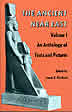
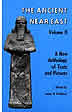
The Ancient Near East, Volume II)
Ancient Near East in Pictures Relating to the
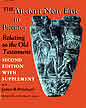
Old Testament. With Supplement
Ancient Near Eastern Texts Relating to the Old
Testament with Supplement   |
What you'll find:
A famous scholarly work, accessible to laymen.
|
|
|
|
|
|