|  |
||||||||||||||||||||||||||||||||
 |
|||||||||||||||||||||||||||||||||













| Facts > Pagan Ideas > Dreams | ||||
 |
Dreams |  |
|
Providence
sometimes foreshews the future to men in dreams. ...an
angel of the Lord appeared to Joseph in a dream and said, "Rise,
take the child and his mother, and flee to Egypt, and remain there till
I tell you; for Herod is about to search for the child, to destroy him."
And he rose and took the child and his mother by night, and departed
to Egypt, and remained there until the death of Herod. |
 |
||
| Was Christianity new? Was Christianity unique? Let's talk about dreams. For the ancients, dreams weren't what your brain did when you slept; dreams were physical events—visions sent by God. People didn't have dreams, they saw dreams. Dreams were real. In ancient cultures around the Mediterranean, dreams were visions sent by God. Pagans had prophetic dreams. Christians had prophetic dreams. Pagans had prophetic dreams first; Christians had prophetic dreams second. So do you think Christianity borrowed the idea of prophetic dreams from Paganism? Or did Christianity come up with the idea of prophetic dreams all on its own? Are Christian ideas new and unique, or did Christianity borrow ideas from Paganism? Here at Pagan Ideas > Dreams, the ancient evidence shows that:
|
 1
1  rom
their earliest days, our Christian ideas about Jesus' divine origins
included the magic dream-prophecy of the Jewish fellow
rom
their earliest days, our Christian ideas about Jesus' divine origins
included the magic dream-prophecy of the Jewish fellow | Reasons |
|
The evidence is clear, the New Testament's idea of God-sent prophetic dreams is not unique or isolated. Pretty much everybody back then believed in prophetic God-sent dreams. POCM's question is, How can those facts be explained? The point is not for me to tell you what to think. The point is to work out the possible explanations, and then look at the reasonableness of each one.
We want an explanation that is consistent, that explains similar facts similarly. It's no good using one set of criteria to decide our magic prophetic dreams are real God-sent visions, and a different set of criteria to decide their magic prophetic dreams are primitive superstitions. Our conclusions are only believable if we pick one set of rules, one set of criterions, and stick with it. Otherwise, we're just fooling ourselves.
Where did the Jews (Did I mention they were captives in Babylon at the time, with Jewish guys working for the king? They were.) get their idea that Babylonian kings had prophetic dreams? Did they come up with this idea all on their own? Or did they borrow it from the Babylonians? And where did the Babylonians get their idea that Babylonian kings had prophetic dreams?
POCM's question is, By what criteria can we decide when a group invented the idea of magic, prophetic, God-sent dreams all on their own, and when a group just borrowed the idea from the culture around them? Where do those criteria come from? What answers do we get when we apply those criterions to the Jews, to the Babylonians, and to all the other ancient peoples who believed in magic dreams> If you know any criteria that lead to the conclusion that the Christian
idea of magic dreams developed all on it's own, we'd all love to hear
it. |
 We'll
talk about what all these facts mean when we get to POCM's Reasons
tab. For now, here are some quick thoughts for your cogitational pleasure.
We'll
talk about what all these facts mean when we get to POCM's Reasons
tab. For now, here are some quick thoughts for your cogitational pleasure.


 Dreams
in the New Testament Dreams
in the New Testament Let's start by reviewing dreams in the New Testament. You'll read the gospel's dream stories, and I'll point out features you maybe haven't noticed before. Features that tie the magic divine dreams of early Christianity with the magic divine dreams of ancient Paganism.
|
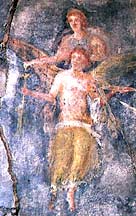 God
sends the dream in the form of an angel (the
Greek word means "messenger").
God
sends the dream in the form of an angel (the
Greek word means "messenger"). Matthew
1: 18 Now the birth of Jesus Christ took place in this way. When his
mother Mary had been betrothed to Joseph, before they came together
she was found to be with child of the Holy Spirit; 19 and her husband
Matthew
1: 18 Now the birth of Jesus Christ took place in this way. When his
mother Mary had been betrothed to Joseph, before they came together
she was found to be with child of the Holy Spirit; 19 and her husband
|
But the wise men have met Herod, and (showing how important Jesus is) Herod has asked them to have their people set up a meeting with his people —and Jesus. If the meeting happens, Jesus will be killed. How can the story dig its way out of this hole? Re-enter the ancient tradition of Dream as Plot Device: A dream warns the wise men not to return to Herod. Problem solved. |
Matthew 2: .... 7 Then Herod summoned the wise men secretly and ascertained from them what time the star appeared; 8 and he sent them to Bethlehem, saying, "Go and search diligently for the child, and when you have found him bring me word, that I too may come and worship him." 9 When they had heard the king they went their way; and lo, the star which they had seen in the East went before them, till it came to rest over the place where the child was. 10 When they saw the star, they rejoiced exceedingly with great joy; 11 and going into the house they saw the child with Mary his mother, and they fell down and worshiped him. Then, opening their treasures, they offered him gifts, gold and frankincense and myrrh. 12 And being warned in a dream not to return to Herod, they departed to their own country by another way. |
| Right away another unmotivated plot detail is worked out with a divine dream. God sends a dream in the form of an angel
(the Greek word means "messenger"). The angel appears
to Joseph and Things turn out swell. Not only does baby Jesus get away from Herod, but a prophecy is fulfilled. Everybody's happy. |
|
 In
the next chapter "Matthew" shows details proving how
important Jesus is....
In
the next chapter "Matthew" shows details proving how
important Jesus is.... speaks
in concise detail "Matthew" is somehow able to
quote word for word. Joseph wakes up, follows the instructions
the God gave in the dream.
speaks
in concise detail "Matthew" is somehow able to
quote word for word. Joseph wakes up, follows the instructions
the God gave in the dream. 13
Now when they had departed, behold, an
13
Now when they had departed, behold, an |
And when the story gets to the part where Jesus is on trial, with this
Roman guy Pilate as the judge, The dream confirms Jesus righteous-uosity. It also follows, as we'll see, the ancient tradition of important events being touched, through dreams, by the divine. |
Matthew 27: ....11 Now Jesus
stood before the governor; and the
governor asked him, "Are you the King of the Jews?" Jesus
said, "You have said so." 12 But when he was accused by the
chief priests and elders, he made no answer. 13 Then Pilate
said to him, "Do you not hear
how many things they testify against you?" 14 But he gave him no
answer, not even to a single charge; so that the governor wondered greatly.
15 Now at the feast the governor was accustomed to release for the crowd
any one prisoner whom they wanted. 16 And they had then a notorious
prisoner, called Barab'bas. 17 So when they had gathered, Pilate said
to them, "Whom do you want me to release for you, Barab'bas or
Jesus who is called Christ?" 18 For he knew that it was out of
envy that they had delivered him up. 19 Besides,
while he was sitting on the judgment seat, his wife sent word to him,
"Have nothing to do with that righteous man, for
I have suffered much over him today in a dream." |
 "Matthew"
puts in a bit about how
"Matthew"
puts in a bit about how |
Paul does what the dream tells him to. And things turn out swell. |
Acts 16: And a vision
appeared to Paul in the night: a man
of Macedo'nia was standing beseeching him and saying, "Come
over to Macedo'nia and help us." 10 And when he had
seen the vision, immediately we sought to go on into Macedo'nia, concluding
that God had called us to preach the gospel to them. |
 The
early Christian missionary
The
early Christian missionary | The evidence is clear. Early Christians believed in divine dreams in which:
Now let's compare early Christian divine dreams with Pagan divine dreams. |
|
|
Dreams in the other ancient religions
|
Esarhaddon was the king of Assyria in the early 7th century BC. A famous treaty of Esarhaddon, the Vassal treaties, survives. Here's a snippet from the treaty.>> Esarhaddon was worried about sedition, about people plotting against him and his family. If people involved in the treaty heard any seditious talk, they were to report it.
What kind of people might say reportable things? The treaty gives a list. The list included prophets and dream-interpreters. Pagan magic dreams were so common, you could get a job as a dream interpreter. |
.. 10. (108) If any (of you) hears some wrong, evil, unseemly plan which is improper or detrimental to the crown prince designate Ashurbanipal, son of your lord Esarhaddon, king of Assyria, whether they be spoken by his enemy or his ally, by his brothers, by his sons, by his daughters, by his brothers, his father's brothers, his cousins, or any other member of his father's lineage, or by your own brothers, sons, or daughters, or by a - prophet, an ecstatic, a dream-interpreter, or by any human being whatsoever, and conceals it, does not come and report it to the crown prince designate Ashurbanipal, son of Esarhaddon, king of Assyria .... |
||||
ANET, Ancient Near Eastern
Texts Relating to the Old Testament, 534- 41, which you can find in: Pritchard,
James. The
Ancient Near East Volume II A New Anthology of Texts and Pictures (1975),
pg. 54, 
|
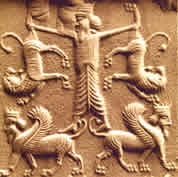 ..
1.(1)
..
1.(1) Prophetic dreams in
the middle east, 650 BC The God appears to the queen, standing close enough to put his hands on her, and speaks in concise detail the queen is able to quote word for word. |
Sin, the king of all the gods, looked with favor upon me and called Nabonidus, my only son, whom I bore, to kingship and entrusted him with the kingship of Sumer and Akkad, (also of) all the countries from the border of Egypt, on the Upper Sea, to the Lower Sea. Then I lifted my hands to Sin, the king of all the gods, [I asked] reverently and in a pious mood: (ii) "Since you have called to kingship [Nabonidus, my son, whom I bore, the beloved of his mother,] and have elevated his status, let all the other gods—upon your great divine command— help him (and) make him defeat his enemies, do (also) bring to completion the (re)building of the temple Ehulhul and the performance of its ritual!" In a dream Sin, the king of all the gods, put his hands on me saying: "The gods will return on account of you! I will entrust your son, Nabonidus, with the divine residence of Harran; he will (re)build the temple Ehulhul and complete this task. He will restore and make Harran more (beautiful) than it was before! He will lead Sin, Ningal, Nusku and Sadarnunna in solemn procession into the temple Ehulhul!" |
And, get this, the prophecy the God gave in the dream came true!
|
I heeded the words which Sin, the king of all the gods, had spoken to me and I saw (them come true). Nabonidus, the only son whom I bore, performed indeed all the forgotten rites of Sin, Ningal, Nusku and Sadarnunna, he completed the rebuilding of the temple Ehulhul, led Sin, Ningal, Nusku and Sadarnunna in procession from Babylon (Shuanna), his royal city, installed (them again) in gladness and happiness into Harran, the seat which pleases them. |
| ANET, Ancient Near Eastern
Texts Relating to the Old Testament, 560-62, which you can find in: Pritchard,
James. The
Ancient Near East Volume II A New Anthology of Texts and Pictures (1975),
pg. 104,106.
|
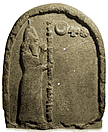
An Oracular Dream Concerning Ashurbanipal: ANET 606 Ashurbanipal was another 7th century BC Assyrian king. Back then Ishtar was an important Goddess. Here's a report of a dream, seen by one of the king's priests, in which the Goddess tells Ashurbanipal She'll help him win a battle. The priest lay down to dream. The Goddess caused him to have a vision in the night >> |
|
The Goddess stood near enough for the priest to give a good description of her >> |
He reported to me as follows: "The goddess Ishtar who dwells in Arbela came in. Right and left quivers were suspended from her. She was holding a bow in her hand, (55) and a sharp sword was drawn to do battle. You were standing in front of her and she spoke to you like a real mother. |
The Goddess spoke in concise detail the account reports word for word. >>
The Goddess made a prophesy that came true.>> |
Ishtar called to you, she who is most exalted among the gods, giving you the following instructions: 'Wait with the attack; (for) wherever you intend to go, I am also ready to go.' You said to her, 'Wherever you go, I will go with you, O goddess of goddesses!' She repeated her command to you as follows: 'You shall stay here where you should be. (65) Eat, drink wine, make merry, praise my divinity, while I go and accomplish that work to help you attain your heart's desire. Your face will not be pale, nor your feet shaky, and you need not wipe off your (cold) sweat in the height,of battle.' She wrapped you in her lovely babysling, protecting your entire body. Her face shone like fire. Then [she went out in a frightening way] to defeat your enemies, (75) against Teumman, king of Elam, with whom she was angry." |
| [ANET, Ancient Near Eastern
Texts Relating to the Old Testament, 534- 41, which you can find in: Pritchard,
James. The
Ancient Near East Volume II A New Anthology of Texts and Pictures (1975),
pg. 170-1,]
|
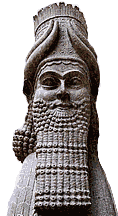
|
|||
Are you with me so far? The ancients believed in prophetic dreams. |
|
Second, Homer was as close to a bible as ancient culture got. Everyone who could read read it, quoted it and believed it—or didn't. People who could read and write got that way by reading and writing Homer. From hundreds of years BC down to the Christian extermination of ancient culture, everybody who could read read from the book you're about to. Ready? Here we go. From the Iliad... |
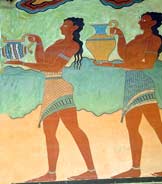 Prophetic
Dreams in the earliest Greek writing
Prophetic
Dreams in the earliest Greek writing
Dreams came from God. |
Now
when they were all assembled in one place together, |
 Like
the Babylonians, the Greeks believed prophetic dreams were so important,
you could get a job as a dream interpreter.
Like
the Babylonians, the Greeks believed prophetic dreams were so important,
you could get a job as a dream interpreter.Zeus sends a dream to Agamemnon. |
Now the rest of the gods,
and men who were lords of chariots, |
Zeus sends the dream. |
He
cried out to the dream and addressed him in winged words: |
Bid him arm the flowing-haired
Achaians for battle |
|
| The dream came down from heaven. And stood at Agamemnon's (the dreamer's) head. |
So he spoke, and Dream
listened to his word and descended. |
And spoke in dactylic hexameter Homer was able to quote word for word.
|
Neleus'
son, whom Agamemnon honoured beyond all |
 Dreams,
the ancients believed, are sent by God.
Dreams,
the ancients believed, are sent by God.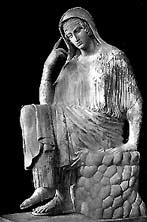
There are plenty more God-sent, vision-standing-over-the-dreamer, concise-converstation-quoted-word-for-word, prophecy-comes-true magic dreams in Homer. I expect you'll excuse me if I don't repeat them all. |
|
Are you with me so far? The ancients believed in prophetic dreams. |
Dreams mark a world event. Herodotus,
5th century BC. This is a long passage, but since it comes from one of the coolest books ever written, I know you'll have fun. Or just skip it. No hard feelings. Here we go, from Herodotus... |
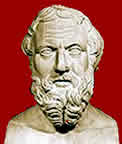
Xerxes had been thinking about invading Greece, and getting advice from his advisors.
As Xerxes slept, a beautiful man stood over him, and spoke in concise prose Herodotus was able to quote word for word. |
7.12. Thus far did
the speaking proceed. Afterwards evening fell, and Xerxes
began to find the advice of Artabanus greatly disquiet him. So he thought
upon it during |
The next day Xerxes kept the dream on the QT. |
13. Day dawned, and the king made no account of this dream, but called together the same Persians as before, and spoke to them as follows: "Men of Persia, forgive me if I alter the resolve to which I came so lately. Consider that I have not yet reached the full growth of my wisdom, and that they who urge me to engage in this war leave me not to myself for a moment. When I heard the advice of Artabanus, my young blood suddenly boiled, and I spoke words against him little befitting his years; now however I confess my fault, and am resolved to [page 397] [page 397] follow his counsel. Understand then that I have changed my intent with respect to carrying war into Greece, and cease to trouble your selves." When they heard these words, the Persians were full of joy, and falling down at the feet of Xerxes, made obeisance to him. |
And the same dream/ vision came back, and stood over Xerxes as he slept, and spoke concise prose Herodotus was able to quote word for word. |
14. But when night came, again the same vision stood over Xerxes as he slept, and said, "Son of Darius, it seems you have openly before all the Persians renounced the expedition, making light of my words, as though you had not heard them spoken. Know therefore and be well assured, that unless you go forth to the war, this thing shall happen to you-as you are grown mighty and puissant in a short space, so likewise shall you within a little time be brought low indeed." |
This time Xerxes tells his advisor about the dream, and they chat about what it means.
God sends dreams. |
15. Then Xerxes, greatly frightened at the vision which he had seen, sprang from his couch, and sent a messenger to call Artabanus, who came at the summons, when Xerxes spoke to him in these words: "Artabanus, at the moment I acted foolishly, when I gave you ill words in return for your good advice. However I soon repented, and was convinced that your counsel was such as I ought to follow. But I may not now act in this way, greatly as I desire to do so. For ever since I repented and changed my mind a dream has haunted me, which disapproves my intentions, and has now just gone from me with threats. Now if this dream is sent to me from god, and if it is indeed his will that our troops should march against Greece, you too will have the same dream come to you and receive the same commands as myself. And this will be most sure to happen, I think, if you put on the dress which I wear, and then, after taking your seat upon my throne, lie down to sleep on my bed." |
16. Such were the words of Xerxes. Artabanus would not at first yield to the command of the king, for he considered himself unworthy to sit upon the royal throne. At the last however he was forced to give way, and did as Xerxes bade him; but first he spoke thus to the king: |
|
Blah, blah, blah. |
"To me, sire,
it seems to matter little whether a man is wise himself or willing to
hearken to such as give good advice. In you truly are found both tempers,
but the counsels of evil men lead you astray; they are like the gales
of wind which vex the sea---else the most useful thing for man in the
whole world-and suffer it not to follow the bent of its own nature.
For myself, it irked me not so much to be reproached by you, as to observe,
that when two courses were placed before the Persian people, one of
a nature to increase their pride, the other to humble it, by showing
them how hurtful it is to allow one's heart always to covet more than
one at present possesses, you chose that which was the worse both for
yourself and for the Persians. Now you say, that from the time when
you |
So the advisor sleeps in the king's bed—and lo, the same dream appearethed to him. Stood over, concise prose, word for word, etc. |
|
Blah, blah, blah. |
18. In such words, as Artabanus thought, the vision threatened him, and then endeavored to burn out his eyes with red-hot irons. At this he shrieked, and leaping from his couch, hurried to Xerxes, and, sitting down at his side, gave him a full account of the vision; after which he went on to speak in the following words: [page 399] "I, O King, am a man who have seen many mighty empires overthrown by weaker ones; and therefore it was that I sought to keep you from being carried away by your youth; since I knew how evil a thing it is to covet more than one possesses. I could remember the expedition of Cyrus against the Massagetae, and what was the issue of it; I could recollect the march of Cambyses against the Ethiops; I had taken part in the attack of Darius upon the Scyths; bearing therefore all these things in mind, I thought with myself that if you should remain at peace, all men would count you fortunate. But as this impulse has plainly come from above, and a heaven-sent destruction seems about to overtake the Greeks, behold, I change to another mind, and alter my thoughts upon the matter. Therefore make known to the Persians what the god has declared, and bid them follow the orders which were first given, and prepare their levies. Be careful to act so, that the bounty of the god may not be hindered by slackness on your part." |
So now even this advisor was for the invasion. |
Thus these two spoke together; and Xerxes, encouraged by the vision, when day broke, laid all before the Persians, while Artabanus, who had formerly been the only person openly to oppose the expedition, now showed as openly that he favored it. |
And thus is was that Xerxes, the great king of the great empire, determined to begin his war against the Greeks.
|
19. After
|
| Herodotus,
The
Persian Wars, 7.12 - 19 (c 440 BC),
-- which you can find in: Googling, Francis. The Greek Historians (1942),
pg. 396- 9
|
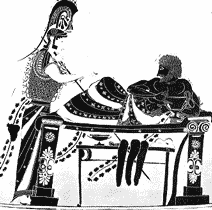 the
night, and concluded at last that it was not for his advantage to lead
an army into Greece. When he had thus made up his mind anew, he
the
night, and concluded at last that it was not for his advantage to lead
an army into Greece. When he had thus made up his mind anew, he  approved
the better course, and gave up the thought of warring against Greece,
approved
the better course, and gave up the thought of warring against Greece,
 17.
Thus Artabanus spoke; and, thinking to show Xerxes that his words were
nought, he obeyed his orders. Having put on the garments which Xerxes
was wont to wear, and, taken his seat upon the royal throne, he lay
down to sleep upon the king's own bed.
17.
Thus Artabanus spoke; and, thinking to show Xerxes that his words were
nought, he obeyed his orders. Having put on the garments which Xerxes
was wont to wear, and, taken his seat upon the royal throne, he lay
down to sleep upon the king's own bed. 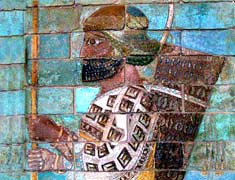
Herodotus and his readers believed that great world events are marked by God-sent dreams. You got that? There are plenty more God-sent, vision-standing-over-the-dreamer, concise-converstation-quoted-word-for-word, prophecy-comes-true magic dreams in Herodotus. I expect you'll excuse me if I don't repeat them all. |
|
Are you with me so far? The ancients believed in prophetic dreams. |
Pliny T. Younger and Suetonius worry about their own dreams, Rome, first - second century AD |
Here's a letter from Pliny T. Younger to his pal Suetonius. They're discussing their dreams—by which I mean their actual night time dreams, not their someday-I-hope dreams. Pliny is a little to sophisticated to think the Iliad's verse about dreams coming from Zeus is inerrant scripture, but he's still certain some dreams are magically prophetic. I'll let you enjoy the letter yourself. >> |
1.18 To Suetonius
Tranquillus See then if you can follow my example, and give a happy interpretation to your dream; but if you still think there is more safety in the warning given by all cautious folk, 'when in doubt do nothing', you can write and tell me. I will find some way out and deal with the case so that you can take it up when you wish. I admit that your position is different from mine; adjournments are never granted in the Centumviral Court, but in your case it is possible though not easy. |
| [Pliny the Younger, Pliny
the Younger, Letters, 1.18 (before 113 AD), -- which you can find in: Radice,
Betty. The
Letters of the Younger Pliny (1963 / 1969),
pg. 50- 1]
|
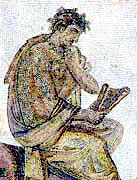 Pliny
T. Younger and Suetonius were Roman guys. They were born so rich they
didn't get up in the morning and have to go to work. Being rich gave
them time to write books and stuff. Suetonius wrote
a history of the Roman emperors. Pliny wrote, for example,
letters to friends, which he kept in a box (the letters) for later.
Eventually Pliny published his letters in a book, which
you can buy
and read.
Pliny
T. Younger and Suetonius were Roman guys. They were born so rich they
didn't get up in the morning and have to go to work. Being rich gave
them time to write books and stuff. Suetonius wrote
a history of the Roman emperors. Pliny wrote, for example,
letters to friends, which he kept in a box (the letters) for later.
Eventually Pliny published his letters in a book, which
you can buy
and read.Are you with me so far? The ancients believed in prophetic dreams. |
On a marble plaque found near the Roman emperor Hadrian's villa, we find this record of a dream, sent by the God Mithras to one of the emperor's stewards. >> |
To Sun unconquerable Mithras, just as he himself ordered in a dream his image (?) to be repaired, Victorinus a slave steward of our emperor undertook its repair for the ever present deity at his own expense and dedicated it. Hail < Namal> to all. The attendant was. . . Ilius Magnus. |
| [ILS 4237; [Inscriptiones
Latinae Selectae, ed H. Dessau, Berlin, 1892- 1916], or: CIMRM 214 [ Corpus
Inscriptionum et Monumentorum Religionis Mithrate, ed M.J. Vermaseren (Leiden,
1956), or: Insc. Italiae iv.67 You can find it in Beard, Mary Religions of Rome, Volume 2, A Sourcebook, (1998 / 2003), pg. 308]
|

Are you with me so far? The ancients believed in prophetic dreams. |
Dream
interpretation as a profession |
Aristides grandson (late 5th century BC) made his living as dream interpreter. This is reported by Plutarch, in the 2d century AD. |
And the Phalerean says, in his "Socrates," that he remembers a grandson of Aristides, Lysimachus, a very poor man, who made his own living by means of a sort of dream-interpreting tablet, his seat being near the so-called Iaccheium. |
Plutarch, Plutarch's
Lives: Aristides 27 (1st or 2d century AD), -- which you can find in:
Perrin, Bernadotte. Plutarch's Lives II (1914), pg. 297 |
Here's Herodotus again, this time describing the Athenian leader Hipparchus' dream that foretold his assassination in 514 BC. |
55. When Aristagoras left Sparta he hastened to Athens, which had been freed of its tyrants in the way that I will now describe. After the death of Hipparchus (the son of Pisistratus, and brother of the tyrant Hippias), who, in spite of the clear warning he had received concerning his fate in a dream, was slain by Harmodius and Aristogeiton (men both of the race of the Gephyraeans), the oppression of the Athenians continued for the space of four years; and they gained nothing, but were worse used than before. 56. Now the dream
of Hipparchus was the following: The night be- [page 314] fore
the Panathenaic festival, he thought he
saw in his sleep a tall and beautiful man, who stood over him, and read
him the following riddle: |
Worried by the dream, he consulted dream interpreters. But their help didn't do him any good. 5th century BC Greeks belief in dreams was so widespread, you could make a living interpreting them. |
As soon as day dawned he
sent and submitted his dream to the
interpreters, after which he offered the averting sacrifices,
and then went and led the procession in which he perished. |
Here's the Old Testament book Jeremiah, quoting God (!), confirming that like the powerful people who conquered and ruled them, the Jews had magic prophets and diviners who dreamed magic dreams. |
|
 Jeremiah
29:8 For thus says the LORD of hosts, the God of Israel: Do
not let your
Jeremiah
29:8 For thus says the LORD of hosts, the God of Israel: Do
not let your Chaldea was part of Babylon, in Mesopotamia. Chaldean
astrologers, soothsayers ...which included the interpretation of dreams. |
2.28.29. But to us it seems not inappropriate to speak briefly of the Chaldaeans of Babylon and of their antiquity, that we may omit nothing which is worthy of record. Now the Chaldaeans, belonging as they do to the most ancient inhabitants of Babylonia, have about the same position among the divisions of the state as that occupied by the priests of Egypt; for being assigned to the service of the gods they spend their entire life in study, their greatest renown being in the field of astrology. But they occupy themselves largely with soothsaying as well, making predictions about future events, and in some cases by purifications, in others by sacrifices, and in others by some other charms they attempt to effect the averting of evil things and the fulfilment of the good. They are [page 447] also skilled in soothsaying by the flight of birds, and they give out interpretations of both dreams and portents. They also show marked ability in making divinations from the observation of the entrails of animals, deeming that in this branch they are eminently successful. |
| [Diodorus
of Sicily, Library of History, 2.28.29 (1st century BC), -- which you
can find in: Oldfather, C. H.. Diodorus
of Sicily, The Library of History, Books I - II.34 (Loeb Classical Library
#279) (1933 /1998), pg. 445- 9]
|
 and
dream interpreters were famous throughout the ancient world for the
excellence of their prophetic art. Here's the Greek historian Diodorus
of Sicily describing the powers and abilities of
and
dream interpreters were famous throughout the ancient world for the
excellence of their prophetic art. Here's the Greek historian Diodorus
of Sicily describing the powers and abilities of Are you with me so far? The ancients believed in prophetic dreams. |
Incubation As you'll see in the blue boxes, many Gods sent dreams to folks sleeping in their temples, but the God Asclepius institutionalized the rite. Asclepius sent visions to people at big time Vision Centers ("Asclepia") in cites like Cos, Epidaurus, and Pergamum, and in smaller Asclepia around the Mediterranean: Thessaly, Attica, the Peloponnese, Bythnia, Phonecia, Egypt, Carthage, Spain, Sicily, Rome. [for primary evidence of these, see Edelstein Emma & Ludwig. Asclepius: Collection and Interpretation of the Testimonies (1945 / 1998), T 707 - 861] Many sick people traveled to Asclepius Vision Centers and, sleeping in Asclepius' sacred precincts, dreamed the God came to them, and cured them. And lo, many awoke to discover the God had in fact cured them. Some people the God had cured were grateful enough to carve their stories in stone monuments. Some of those monuments survive. Here are some healing-dream miracle stories, recorded (with the help of professional stone carvers) by the very people the God cured. Here we go, from Inscriptiones Graecae, IV... |
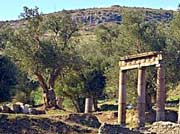
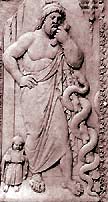 |
1. Cleo was with child for five years. After she had been pregnant for five years she came as a suppliant to the God and slept in the Abaton. As soon as she left it and got outside the temple precincts she bore a son who, immediately after birth, washed himself at the fountain and walked about with his mother. In return for this favor she inscribed on her offering: " Admirable is not the greatness of the tablet, but the Divinity, in that Cleo carried the burden in her womb for five years, until she slept in the Temple and He made her sound." 2. A three-years' pregnancy. Ithmonice of Pellene came to the Temple for offspring. When she had fallen asleep she saw a vision. It seemed to her that she asked the God that she might get pregnant with a daughter and that Asclepius said that she would be pregnant and that if she asked for something else he would grant her that too, but that she answered she did not need anything else. When she had become pregnant she carried in her womb for three years, until she approached the God as a suppliant concerning the birth. When she had fallen asleep she saw a vision. It seemed to her that the God asked her if she had not obtained all she had asked for and was pregnant; about the birth she had added nothing, and that, although he had asked if she needed anything else, she should say so and he would grant her this too. But since now she had come for this as a suppliant to him, he said he would accord even it to her. After that, she hastened to leave the Abaton, and when she was outside the sacred precincts she gave birth to a girl. 3. A man whose fingers, with the exception of one, were paralyzed, came as a suppliant to the God. While looking at the tablets in the temple he expressed incredulity regarding the cures and scoffed at the inscriptions. But in his sleep he saw a vision. It seemed to him that, as he was playing at dice below the Temple and was about to cast the dice, the God appeared, sprang upon his hand, and stretched out his [the patient's] fingers. When the God had stepped aside it seemed to him [the patient] that he [the patient] bent his hand and stretched out all his fingers one by one. When he had straightened them all, the God asked him if he would still be incredulous of the inscriptions on the tablets in the Temple. He answered that he would not. " Since, then, formerly you were incredulous of the cures, though they were not incredible, for the future," he said, " your name shall be ' Incredulous.' " When day dawned he walked out sound. 4. Ambrosia of Athens, blind of one eye. She came as a suppliant to the God. As she walked about in the Temple she laughed at some of the cures as incredible and impossible, that the lame and the blind should be healed by merely seeing a dream. In her sleep she had a vision. It seemed to her that the God stood by her and said that he would cure her, but that in payment he would ask her to dedicate to the Temple a silver pig as a memorial of her ignorance. After saying this, he cut the diseased eyeball and poured in some drug. When day came she walked out sound. 5. A voiceless boy. He came as a suppliant to the Temple for his voice. When he had performed the preliminary sacrifices and fulfilled the usual rites,' thereupon the temple servant who brings in the fire for the God, looking at the boy's father, demanded he should promise to bring within a year the thank offering for the cure if he obtained that for which he had come. But the boy suddenly said, "I promise." His father was startled at this and asked him to repeat it. The boy repeated the words and after that became well. 6. Pandarus, a Thessalian, who had marks on his forehead. He saw a vision as he slept. It seemed to him that the God bound the marks round with a headband and enjoined him to remove the band when he left the Abaton and dedicate it as an offering to the Temple. When day came he got up and took off the band and saw his face free of the marks; and he dedicated to the Temple the band with the signs which had been on his forehead. 7. Echedorus received the marks of Pandarus in addition to those which he already had. He had received money from Pandarus to offer to the God at Epidaurus in his name, but he failed to deliver it. In his sleep he saw a vision. It seemed to him that the God stood by him and asked if he had received any money from Pandarus to set up as an offering an Athena in the Temple. He answered that he had received no such thing from him, but if he [the God] would make him well he would have an image painted and offer it to him [the God]. Thereupon the God seemed to fasten the headband of Pandarus round his marks, and ordered him upon leaving the Abaton to take off the band and to wash his face at the fountain and to look at himself in the water. When day came he left the Abaton, took off the headband, on which the signs were no longer visible. But when he looked into the water he saw his face with his own, marks and the signs of Pandarus in addition. 8. Euphanes, a boy of Epidaurus. Suffering from stone he slept in the temple. It seemed to him that the God stood by him and asked : "What will you give me if I cure you ? " "Ten dice," he answered. The God laughed and said to him that he would cure him. When day came he walked out sound. 9. A man came as a suppliant to the God. He was so blind that of one of his eyes he had only the eyelids left-within them was nothing, but they were entirely empty. Some of those in the Temple laughed at his silliness to think that he could recover his sight when one of his eyes had not even a trace of the ball, [232] but only the socket. As he slept a vision appeared to him. It seemed to him that the God prepared some drug, then, opening his eyelids, poured it into them. When day came he departed with the sight of both eyes restored. 10. The goblet. A porter, upon going up to the Temple, fell when he was near the ten-stadia stone. When he had gotten up he opened his bag and looked at the broken vessels. When he saw that the goblet from which his master was accustomed to drink was also broken, he was in great distress and sat down to try to fit the pieces together again. But a passer-by saw him and said: "Foolish fellow, why do you put the goblet together in vain? For this one not even Asclepius of Epidaurus could put to rights again." The boy, hearing this, put the pieces back in the bag and went on to the Temple. When he got there he opened the bag and brought the goblet out of it, and it was entirely whole; and he related to his master what had happened and had been said; when he [the master] heard that, he dedicated the goblet to the God. 11. Aeschines, when the suppliants were already asleep, climbed up a tree and tried to see over into the Abaton. But he fell from the tree on to some fencing and his eyes were injured. In a pitiable state of blindness, he came as a suppliant to the God and slept in the Temple and was healed. 12. Euhippus had had for six years the point of a spear in his jaw. As he was sleeping in the Temple the God extracted the spearhead and gave it to him into his hands. When day came Euhippus departed cured, and he held the spearhead in his hands. 13. A man of Torone with leeches. In his sleep he saw a dream. It seemed to him that the God cut open his chest with a knife and took out the leeches, which he gave him into his hands, and then he stitched up his chest again. At daybreak he departed with the leeches in his hands and he had become well. He had swallowed them, having been tricked by his stepmother who had thrown them into a potion which he drank. 14. A man with a stone in his membrum. He saw a dream. It seemed to him that he was lying with a fair boy and when he had a seminal discharge he ejected the stone and picked it up and walked out holding it in his hands. 15. Hermodicus of Lampsacus was paralyzed in body. This one, when he slept in the Temple, the God healed and he ordered him upon coming out to bring to the Temple as large a stone as he could. The man brought the stone which now lies before the Abaton. |
I hope you'll forgive me for stopping early. Ludwig's sourcebook goes on reciting these first hand dream-healing miracle accounts for sixteen pages. |
[Inscriptiones Graecae
IV, numbers 121 - 22, -- which you can find in: Edelstein Emma and Ludwig.
Asclepius:
Collection and Interpretation of the Testimonies (1945
/ 1998), pg. 221-37]]
|
Asclepius wasn't the only God to appear to believers sleeping in His sacred places. Here are a more accounts, involving other Gods. >> |
The contest thus
begun in two places, the Lacedaemonians were first to repulse the Persians.
Mardonius was slain by a man of Sparta named Arimnestus, who crushed
his head with a stone, even as was
foretold him by the oracle in the shrine of Amphiaraus. Thither
he had sent a Lydian man, and a Carian besides to the oracle of Trophonius.
This latter the prophet actually addressed
in the Carian tongue; but the Lydian, on lying
down in the precinct of Amphiaraiis, dreamed that an attendant of the
god stood by his side and bade him be gone, and on his refusal,
hurled a great stone upon his head, insomuch that he died from the blow
(so ran the man's dream). These things are so reported. |
And from Virgil's account of Rome's early history >> |
The king, troubled by the portents, goes to visit the oracle of Faunus, his prophet father, and consults the groves beneath lofty Albunea - greatest of forests, resounding with its holy cascade and exhaling its deadly vapour from the darkness. Here the Italian tribes and all the land of Oenotria seek counsel in times of uncertainty. Here the priest brings offerings, lies beneath the silent night on the outspread fleeces of the sheep killed in sacrifice and woos slumber; he sees many visions flying about him in wondrous fashion [page 102] and hears voices of all kinds, as he holds converse with the gods and addresses Acheron in deepest Avernus. |
The God speaks in concise prose Virgil is able to quote word for word. |
Here then too the venerable Latinus himself came to seek counsel; and after duly sacrificing a hundred sheep laden with wool, he lay couched on their hides and outspread fleeces. Suddenly from deep in the grove a voice came: 'Seek not to join your daughter in marriage to a man of the Latin race, o my son, and trust not in the wedding that is to hand. Strangers will come to wed our daughters and carry their name into the stars by union with us. The descendants of this line shall behold the whole world turning obediently beneath their feet - wherever the sun looks down upon in its course." |
| [Virgil, Aeneid, 7.81-
101]
|
The first century AD godman Apollonius gave Asclepius' incubators hints on how to get the best results. >> |
|
| [Philostratus,
The Life of Apollonius of Tyana, 4.11 (2d century AD), -- which you can
find in: Conybeare, F. C.. Philostratus I: The
Life of Apollonius of Tyana, Books I - V (Loeb Classical Library #16)
(2000), pg. 367]
|
 Having
purged the Ephesians of the plague, and having had enough of the people
of Ionia, he [
Having
purged the Ephesians of the plague, and having had enough of the people
of Ionia, he [Dream messages from Gods were so much a part of the ancients' world view, the practice was institutionalized. Wow. |
|

|
And more than this, as a faculty of divination by means of dreams, which is the divinest and most god- like of human faculties, the soul detects the truth all the more easily when it is not muddied by wine, but accepts the message unstained and scans it carefully. Anyhow, the explainers of dreams and visions, those whom the poets call interpreters of dreams, will never undertake to explain any vision to anyone without having first asked the time when it was seen. For if it was at dawn and in the sleep of morningtide, they calculate its meaning on the assumption that the soul is then in a condition to divine soundly and healthily, because by then it has cleansed itself of the stains of wine. But if the vision was seen in the first sleep or at midnight, when the soul is still immersed in the lees of wine and muddied thereby, they decline to make any suggestions, and they are wise. |
| [Philostratus,
The Life of Apollonius of Tyana, 2.37 (2d century AD), -- which you can
find in: Conybeare, F. C. Philostratus I:The
Life of Apollonius of Tyana, Books I - V (Loeb Classical Library #16)
(2000), pg. 215]
|
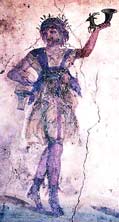 Lot's
of writers included short passages explaining dreams. Here's one from
Lot's
of writers included short passages explaining dreams. Here's one from
Aristotle wrote a long analysis of dreams in general, then another long analysis of how dreams got their prophetic power. The point here isn't what Aristotle wrote. The
point is that he thought dreams were important enough to write
about at all. I'll just link you to a modern translation. |
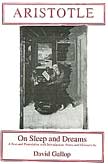 |
| Aristotle:
On
Sleep and Dreams (Translated by D. Gallop
|
In the second century AD a fellow named Artemidorus wrote a handbook on the interpretation of dreams. Professor Beard explains: >>
|
Professional
dream-interpretation . |
| [Beard,
Mary.
Religions of Rome, Volume 2, A Sourcebook,
(1998 / 2003), pg. 192] |

And, from Artemidorus, here's a really icky excerpt: >> Which I include so you don't have to take my word for it, or Professor Beard's, that the thing exists. |
The discourse about the mother has many different aspects, sections and subsections not noticed by many interpreters so far. It goes like this. Sexual intercourse as such is not enough to indicate the meaning, but the different forms of embrace and positions of the bodies refer to different outcomes. First of all we ought to speak of intercourse in the 'body to body' position if the mother is still alive, for if she has died then the dream means something different. If someone dreams of having intercourse with his mother 'body to body', in the position called by some natural, when she is still alive and the father healthy, that means he will have hatred against his father, as a result of the normal [page 193] jealousy amongst men. If the father is in bad health, he will die; for the son dreaming will be taking over his mother both as her son and as her husband. For a craftsman or artisan it is a fortunate dream, because it is usual to call one's trade one's 'mother', so having intercourse with one's mother could only mean working constantly and making a living. For political leaders and politicians it is a favorable dream also, for the mother then signifies the fatherland. Just as the man who has intercourse by Aphrodite's rule has power over the woman's whole body, if she consents willingly, so the dreamer will have power over the political life of his city. |
| Artemidorus,
Dream Book, 1.79 (2d century AD), -- which you can find in: Beard, Mary.
Religions of Rome, Volume 2, A Sourcebook,
(1998 / 2003), pg. 192- 3 |
How
Dreams Worked |
Here's Philostratus in his book about Apollonius.
|
1.23 And as he advanced into the Cissian country and was already close to Babylon, he was visited by a dream, and the god who revealed it to him fashioned its imagery as follows : there were fishes which had been cast up from the sea on to the land, and they were gasping, and uttering a lament almost human, and bewailing that they had quitted their element ; and they were begging a dolphin that was swimming past the shore to help them in their misery, just like human beings who are weeping in a foreign land. Apollonius was not in the least frightened by his dream, and proceeded to conjecture its meaning and drift ; but he was determined to give Damis [His disciple] a shock, for he found that he was the most nervous of men. So he related his vision to him, and feigned as if it foreboded evil. But Damis began to bellow as if he had seen the dream himself, and tried to dissuade Apollonius from going any further, "Lest," he said, "we also like the fishes get thrown out of our element and perish, and have to weep and wail in a foreign land. Nay, we may even be reduced to straits, and have to go down on our knees to some potentate or king, who will flout us as the dolphins did the fishes." |
Dreams were messages from god... |
Then Apollonius laughed and said: "You've not become a philosopher yet, if you are afraid of this sort of thing. But I will explain to you the real drift of the dream. For this land of Cissia is habited by the Eretrians, who were brought up here from Euboea by Darius five hundred years ago, and they are said to have been treated at their capture like the fishes that we saw in the dream; for they were netted in, so they say, and captured on and all. It would seem then that the gods are instructing me to visit them and tend their needs, supposing I can do anything for them. And perhaps also the souls of the Greeks whose lot was cast in this part of the world are enlisting my aid for their land. Let us then go on and diverge from the high road, and ask only about the well, hard by which their settlement is." |
| [Philostratus,
The Life of Apollonius of Tyana, 1.23 (2d century AD), -- which you can
find in: Conybeare, F. C. Philostratus I: The
Life of Apollonius of Tyana, Books I - V (Loeb Classical Library #16)
(2000), pg. 67-9]
|
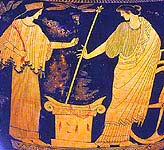
Diodorus |
53. Sesoosis, they say, who became king seven generations later, performed more renowned and greater deeds than did any of his predecessors..... First of all Sesoosis, his companions also accompanying him, was sent by his father with an army into Arabia, where he was subjected to the laborious training of hunting wild animals and, after hardening himself to the privations of thirst and hunger, conquered the entire nation of the Arabs, which had never been enslaved before his day; and then, on being sent to the regions to the west, he subdued the [page 187] larger part of Libya, though in years still no more than a youth. And when he ascended the throne upon the death of his father, being filled with confidence by reason of his earlier exploits he undertook to conquer the inhabited earth. |
 |
There are those who say that he was urged to acquire empire over the whole world by his own daughter Athyrtis, who, according to some, was far more intelligent than any of her day and showed her father that the campaign would be an easy one, while according to others she had the gift of prophecy and knew beforehand, by means both of sacrifices and the practice of sleeping in temples, as well as from the signs which appear in the heavens, what would take place in the future. |
Dreams foretold great events |
Some have also written that, at the birth of Sesoosis, his father had thought that Hephaestus had appeared to him in a dream and told him that the son who had been born would rule over the whole civilized world ; and that for this reason, therefore, his father collected the children of the same age as his son and granted them a royal training, thus preparing them beforehand for an attack upon the whole world, and that his son, upon attaining manhood, trusting in the prediction of the god was led to undertake this campaign. |
| Diodorus
of Sicily, Library of History, 1.53 (1st century BC), -- which you can
find in: Oldfather, C. H. Diodorus
of Sicily, The Library of History, Books I - II.34 (Loeb Classical Library
#279) (1933 /1998), pg. 187- 9.
|
Philostratus explaining the miraculous birth of Apollonius. |
Now he is said to have been born in a meadow, hard by which there has been now erected a sumptuous temple to him ; and let us not pass by the manner of his birth. For just as the hour of his birth was approaching, his mother was warned in a dream to walk out into the meadow and pluck the flowers; and in due course she came there and her maids attended to the flowers, scattering themselves over the meadow, while she fell asleep lying on the grass. Thereupon the swans who fed in the meadow set up a dance around her as she slept, and lifting their wings, as they are wont to do, cried out aloud all at once, for there was somewhat of a breeze blowing in the meadow. She then leaped up at the sound of their song and bore her child, for any [page 14] sudden fright is apt to bring on a premature delivery. |
But the people of the country say that just at the moment of the birth, a thunderbolt seemed about to fall to earth and then rose up into the air and disappeared aloft; and the gods thereby indicated, I think, the great distinction to which the sage was to attain, and hinted in advance how he should transcend all things upon earth and approach the gods, and signified all the things that he would achieve. |
|
| [Philostratus,
The Life of Apollonius of Tyana, 1.5 (2d century AD), -- which you can
find in: Conybeare, F. C. Philostratus I:The
Life of Apollonius of Tyana, Books I - V (Loeb Classical Library #16)
(2000), pg. 13- 4]
|
|
And here's how our bible explains dreams—messages from our God.
|
Matthew 1: 18 Now
the birth of Jesus Christ took place in this way. When his mother Mary
had been betrothed to Joseph, before they came together she was found
to be with child of the Holy Spirit; 19 and her husband Joseph,
being a just man and unwilling to put her to shame, resolved to divorce
her quietly.
|

Dreams
in folklore |
|
This Stratonice, while she was still living with her first husband, had a dream. In it Hera ordered her to build her a temple in the Holy City and threatened her with many dire consequences if she disobeyed. Stratonice paid no attention at first, but afterwards, when a serious illness afflicted her, she described the vision to her husband, propitiated Hera, and promised to erect the temple. Immediately she became healthy, and her husband sent her to the Holy City. |
| [Lucian, The
Syrian Goddess (De Dea Syria), 19 (2d century AD), -- which you can find
in: Attridge, Harold; Oden, Robert. The
Syrian Goddess (De Dea Syria); Attributed to Lucian (1976),
pg. 29]
|
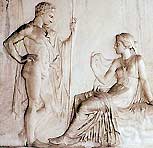
|
Sure enough, a storm destroyed the invader's army. After the battle, Athena appears to many townsfolk in dreams, telling them what she's just done.
|
And again, the goddess appeared in a dream to Aristagoras, the town-clerk, saying : "Lo, here am I, and I bring the Libyan fifer against the Pontic trumpeter. Bid the citizens therefore be of good cheer." While the Cyzicenes were lost in wonder at the saying, at daybreak the sea began to toss under a boisterous wind, and the siege-engines of the king along the walls, the wonderful works of Niconides the Thessalian, by their creaking and cracking showed clearly what was about to happen; then a south wind burst forth with incredible fury, shattered the other engines in a short space of time, and threw down with a great shock the wooden tower a hundred cubits high. It is related, too, that the goddess Athena appeared to many of the inhabitants of Ilium in their sleep, dripping with sweat, showing part of her peplus [dress] torn away, and saying that she was just come from assisting the Cyzicenes. And the people of Ilium used to show a stele which had on it certain decrees inscriptions relating to this matter. |
| [Plutarch,
Plutarch's Lives: Cimon and Lucullus, Lucullus 10 (1st or 2d century
AD), -- which you can find in: Perrin, Bernadotte. Plutarch's Lives
II (1914), pg. 501-3] |
 In
this one, about 5th century BC Greece, was recorded by
In
this one, about 5th century BC Greece, was recorded by Here's Diodorus recounting an old legend from Egypt, about a legendary early king named Sabaco.
The set up is, Sabaco was a good guy. >> |
1.65 Much later Egypt was ruled by Sabaco, who was by birth an Ethiopian and yet in piety and uprightness far surpassed his predecessors. A proof of his goodness may be found in his abolition of the severest one of the customary penalties (I refer to the taking of life); for instead of executing the condemned he put them in chains at forced labor for the cities, and by their services constructed many dykes and dug out not a few well placed canals; for he held that in this way he had reduced for those who were being chastised the severity of their punishment, while for the cities he had procured, in exchange for useless penalties, something of great utility. |
|||
| In fact, he was such a good guy that when the God of Thebes told him, in a dream, he'd have to cut up some priests, Sabaco wouldn't do it.
|
And the excessiveness of his piety may be inferred from a vision which he had in a dream and his consequent abdication of the throne. For he thought that the god of Thebes told him while he slept that he would not be able to reign over Egypt in happiness or for any great length of time, unless he should cut the bodies of all the priests in twain and accompanied by his retinue pass through the very midst of them. And when this dream came again and again, he summoned the priests from all over the land and told them that by his presence in the country he was offending the god ; for were that not the case such a command would not be given to him in his sleep. And so he would rather, he continued, departing pure of all defilement from the land, deliver his life to destiny than offend the Lord, stain his own life by an impious slaughter, and reign over Egypt. And in the end he returned the kingdom to the Egyptians and retired again to Ethiopia. |
|||
| [Diodorus
of Sicily, Library of History, 1.65 (1st century BC), -- which you can
find in: Oldfather, C. H. Diodorus
of Sicily, The Library of History, Books I - II.34 (Loeb Classical Library
#279) (1933 /1998), pg. 225- 6]
|
In this story the Persian king has dream letting him know Apollonius is an OK guy. >>
|
When these tidings were brought to the king, he happened to be sacrificing in company with the Magi, for religious rites are performed under their supervision. And he called one of them and said "The dream is come true, which I narrated to you to-day when you visited me in my bed." Now the dream which the king had dreamed was as follows: he thought that he was Artaxerxes, the son of Xerxes, and that he had altered and assumed the latter's form; and he was very much afraid lest some change should come over the face of his affairs, for so he interpreted his change of appearance. But when he heard that it was a Hellene, and a wise man, that had come, he remembered about Themistocles of Athens, who had once come from Greece and had lived with Artaxerxes, and had not only derived great benefit from the king, but had conferred great benefit himself. So he held out his right hand and said: "Call him in, for it will make the best of beginnings, if he will join with me in my sacrifice and prayer." |
| Philostratus,
The Life of Apollonius of Tyana, 1.29 (2d century AD), -- which you can
find in: Conybeare, F. C. Philostratus I: The
Life of Apollonius of Tyana, Books I - V (Loeb Classical Library #16)
(2000), pg. 85
|

In this story, Philostratus explains why Apollonius dreams are more often true: Apollonius sleeping in animal-free linen. >> |
8.5 Nor even is my mode of dress protected from their calumnies, for the accuser is ready to steal even that off my back, because it has such vast value for wizards. And yet apart from my contention about the use of living animals and lifeless things, according as he uses one or the other of which I regard a man as impure or pure, in what way is linen better than wool ? Was not the latter taken from the back of the gentlest of animals, of a creature beloved of the gods, who do not disdain themselves to be shepherds, and, by Zeus, once held the fleece to be worthy of a golden form, if it was really a god that did so, and if it be not a mere story ? On the other hand linen is grown and sown anywhere, and there is no talk of gold in connection with it. Nevertheless, because it is not plucked from the back of a living animal, the Indians regard it as pure, and so do the Egyptians, and I myself and Pythagoras on this account have adopted it as our garb when we are discoursing or praying or offering sacrifice. And it is a pure substance under which to sleep of a night, for to those who live as I do dreams bring the truest of their revelations. |
| [Philostratus,
The Life of Apollonius of Tyana,8.5(2d century AD), -- which you can find
in: Conybeare, F. C. Philostratus I: The
Life of Apollonius of Tyana, Books I - V (Loeb Classical Library #16)
(2000), pg. 307]
|

Pagans had prophetic dreams. Jews had prophetic dreams. Does that mean there was a connection between Pagan and Jewish ideas about prophetic dreams? Conservative believers say, "No, similarity doesn't prove connection. Jewish ideas developed independently, parallel, separately, etc." —all the regulation no-Christian-borrowing reasons, polished up to defend Jewish uniqueness. The evidence says otherwise. The evidence says Pagan and Jewish ideas
about magic, God-sent prophetic dreams overlapped. Sure, In a minute you'll read stories from the Jewish scriptures. These stories record that Pagan Pharaohs and Pagan Kings had dreams they themselves understood as divine. And in the Jewish scripture the Jewish guy in the story, and the Jewish guy writing the story, always saw those dreams the same way, as magic God-sent visions. Ancient Jewish scripture makes no distinction between the Pagan idea of magic prophetic dreams and the Jewish idea of magic prophetic dreams. Because, of course, there was no difference. Ready? Here we go, from the Old Testament... |


 Jews
had dreams other Jews thought were divine messages. But so did Pagans.
I mean, Pagans had dreams that were understood as magic God-sent
visions by Pagans and by Jews.
Jews
had dreams other Jews thought were divine messages. But so did Pagans.
I mean, Pagans had dreams that were understood as magic God-sent
visions by Pagans and by Jews. Actually, let's start with a non-biblical text taken from a stone inscription found in central Greece. Professor Williams describes. >>
Near Athens, Jews sought the guidance of Pagan Gods by sleeping in their sanctuary, hoping the Pagan God would send them a magic dream. What? You mean they didn't tell you this in Sunday school? |
Incubation at the Amphiareion
at Oropos |
Phrynidas (will release) Moschos to be free, dependent on no one. If anything happens to Phrynidas before the time (of the paramone) elapses, let Moschos go free, wherever he wishes. With good fortune. Witnesses: Athenodoros, son of Mnasikon, of Oropos; Biottos, son of Eudikos, of Athens; Charinos, son of Anticharmos, of Athens; Athenades, son of Epigonos, of Oropos; Hippon, son of Aischylos, of Oropos. Moschos, son of Moschion, a Jew, as a result of a dream (has set up this stele) at the command of the god Amphiaraos and Hygeia, in accordance with the orders of Amphiaraos and Hygeia to write these things on a stele and set (it) up by the altar. |
|
 |
[CIJ 12 no.
711b (3d century BC), -- which you can find in: Williams, Margaret.
The
Jews Among the Greeks and Romans, A Diasporan Sourcebook
(1998), pg. 122- 3]
|

Dreams in the Old Testament |
We read in Genesis that... |
Genesis 20: 1 From there Abraham journeyed toward the territory of the Negeb, and dwelt between Kadesh and Shur; and he sojourned in Gerar. 2 And Abraham said of Sarah his wife, "She is my sister." And Abim'elech king of Gerar sent and took Sarah. |
God-sent dream, concise, word for word. >>
|
3 But God came to Abim'elech in a dream by night, and said to him, "Behold, you are a dead man, because of the woman whom you have taken; for she is a man's wife." 4 Now Abim'elech had not approached her; so he said, "Lord , wilt thou slay an innocent people? 5 Did he not himself say to me, 'She is my sister'? And she herself said, 'He is my brother.' In the integrity of my heart and the innocence of my hands I have done this." 6 Then God said to him in the dream, "Yes, I know that you have done this in the integrity of your heart, and it was I who kept you from sinning against me; therefore I did not let you touch her. 7 Now then restore the man's wife; for he is a prophet, and he will pray for you, and you shall live. But if you do not restore her, know that you shall surely die, you, and all that are yours." |
| [Old Testament,
Genesis 20] |
God-sent dream, concise, word for word. >> |
At Gibeon the Lord appeared to Solomon in a dream by night; and God said, "Ask what I shall give you." |
| [Old Testament,
1 Kings 3:5]
|
This particular vision isn't a dream, but what God says explains how ancient Jewish prophets got their prophecy—God spoke to them in dreams. Sound familiar? The story ends with a little magic flourish. |
5 And the Lord came down in a pillar of cloud, and stood at the door of the tent, and called Aaron and Miriam; and they both came forward. 6 And he said, "Hear my words: If there is a prophet among you, I the Lord make myself known to him in a vision, I speak with him in a dream. 7 Not so with my servant Moses; he is entrusted with all my house. 8 With him I speak mouth to mouth, clearly, and not in dark speech; and he beholds the form of the Lord . Why then were you not afraid to speak against my servant Moses?" 9 And the anger of the Lord was kindled against them, and he departed; 10 and when the cloud removed from over the tent, behold, Miriam was leprous, as white as snow. |
| [Old Testament,
Numbers 12] |
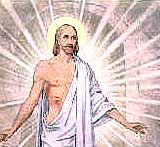 In
the book
In
the book The book Jeremiah confirms it: ancient Jewish prophets got their stuff through dreams. >>
|
"Am I a God at hand, says the Lord , and not a God afar off? 24 Can a man hide himself in secret places so that I cannot see him? says the Lord . Do I not fill heaven and earth? says the Lord . 25 I have heard what the prophets have said who prophesy lies in my name, saying, 'I have dreamed, I have dreamed!' 26 How long shall there be lies in the heart of the prophets who prophesy lies, and who prophesy the deceit of their own heart, 27 who think to make my people forget my name by their dreams which they tell one another, even as their fathers forgot my name for Ba'al? 28 Let the prophet who has a dream tell the dream, but let him who has my word speak my word faithfully. What has straw in common with wheat? says the Lord . 29 Is not my word like fire, says the Lord , and like a hammer which breaks the rock in pieces? 30 Therefore, behold, I am against the prophets, says the Lord , who steal my words from one another. 31 Behold, I am against the prophets, says the Lord , who use their tongues and say, 'Says the Lord .' 32 Behold, I am against those who prophesy lying dreams, says the Lord , and who tell them and lead my people astray by their lies and their recklessness, when I did not send them or charge them; so they do not profit this people at all, says the Lord . |
| [Old Testament,
Jeremiah 23] |
Again, Jeremiah confirms: ancient Jewish prophets got their stuff through dreams. >> |
8 For thus says the LORD of hosts, the God of Israel: Do not let your prophets and your diviners who are among you deceive you, and do not listen to the dreams which they dream, 9 for it is a lie which they are prophesying to you in my name; I did not send them, says the LORD. |
| [Old Testament,Jeremiah
29]
|
In the book Judges, God speaks to Gideon through someone else's dream. >>
|
12 And the Mid'ianites and the Amal'ekites and all the people of the East lay along the valley like locusts for multitude; and their camels were without number, as the sand which is upon the seashore for multitude. 13 When Gideon came, behold, a man was telling a dream to his comrade; and he said, "Behold, I dreamed a dream; and lo, a cake of barley bread tumbled into the camp of Mid'ian, and came to the tent, and struck it so that it fell, and turned it upside down, so that the tent lay flat." 14 And his comrade answered, "This is no other than the sword of Gideon the son of Jo'ash, a man of Israel; into his hand God has given Mid'ian and all the host." |
15 When Gideon heard the telling of the dream and its interpretation, he worshiped; and he returned to the camp of Israel, and said, "Arise; for the LORD has given the host of Mid'ian into your hand." |
|
| |
[Old Testament,
Judges 7]
|
|
Pagan Dreams in Jewish Scripture Because, of course, there was no difference. Anyway, here we go, from the famous story in Genesis about the Jewish lad named Joseph. |
We pick up the story with Joseph in prison. Conveniently for the plot, the king tosses two of his men in the pokey, where they meet up with our hero. >>
|
Genesis 40 : 1 Some time after this, the butler of the king of Egypt and his baker offended their lord the king of Egypt. 2 And Pharaoh was angry with his two officers, the chief butler and the chief baker, 3 and he put them in custody in the house of the captain of the guard, in the prison where Joseph was confined. 4 The captain of the guard charged Joseph with them, and he waited on them; and they continued for some time in custody. |
The Pagan officers have magic dreams, which they don't know how to interpret. The Jewish lad (our hero, did I mention?) shares the Pagan's notion that dreams are just the sort of thing that need interpreting. |
5 And one night they both dreamed--the butler and the baker of the king of Egypt, who were confined in the prison--each his own dream, and each dream with its own meaning. 6 When Joseph came to them in the morning and saw them, they were troubled. 7 So he asked Pharaoh's officers who were with him in custody in his master's house, "Why are your faces downcast today?" 8 They said to him, "We have had dreams, and there is no one to interpret them." And Joseph said to them, "Do not interpretations belong to God? Tell them to me, I pray you." |
The butler tells his dream. Joseph interprets it. Joseph—and the Jews who added this story to scripture—shared the Pagan's notion that dreams are magic visions that can be interpreted. BTW, are you noticing all this word for word quoting? How do you think the author got the exact words? |
9 So the chief butler told his dream to Joseph, and said to him, "In my dream there was a vine before me, 10 and on the vine there were three branches; as soon as it budded, its blossoms shot forth, and the clusters ripened into grapes. 11 Pharaoh's cup was in my hand; and I took the grapes and pressed them into Pharaoh's cup, and placed the cup in Pharaoh's hand." 12 Then Joseph said to him, "This is its interpretation: the three branches are three days; 13 within three days Pharaoh will lift up your head and restore you to your office; and you shall place Pharaoh's cup in his hand as formerly, when you were his butler. 14 But remember me, when it is well with you, and do me the kindness, I pray you, to make mention of me to Pharaoh, and so get me out of this house. 15 For I was indeed stolen out of the land of the Hebrews; and here also I have done nothing that they should put me into the dungeon." |
Ditto the baker. |
16 When the chief baker saw that the interpretation was favorable, he said to Joseph, "I also had a dream: there were three cake baskets on my head, 17 and in the uppermost basket there were all sorts of baked food for Pharaoh, but the birds were eating it out of the basket on my head." 18 And Joseph answered, "This is its interpretation: the three baskets are three days; 19 within three days Pharaoh will lift up your head--from you! --and hang you on a tree; and the birds will eat the flesh from you." |
|
Now Pharaoh is dreaming...
..but no one can interpret the dream. |
Genesis 41: 1 After two
whole years, Pharaoh dreamed
that he |
| The butler tells Pharaoh he knows a good dream interpreter. You wanna guess? Joseph!! Joseph and the Pharaoh—and the Jews who added this story to scripture—share the Pagan's notion that dreams are magic visions that can be interpreted. |
9 Then the chief butler said to Pharaoh, "I remember my faults today. 10 When Pharaoh was angry with his servants, and put me and the chief baker in custody in the house of the captain of the guard, 11 we dreamed on the same night, he and I, each having a dream with its own meaning. 12 A young Hebrew was there with us, a servant of the captain of the guard; and when we told him, he interpreted our dreams to us, giving an interpretation to each man according to his dream. 13 And as he interpreted to us, so it came to pass; I was restored to my office, and the baker was hanged." 14 Then Pharaoh sent and called Joseph, and they brought him hastily out of the dungeon; and when he had shaved himself and changed his clothes, he came in before Pharaoh. 15 And Pharaoh said to Joseph, "I have had a dream, and there is no one who can interpret it; and I have heard it said of you that when you hear a dream you can interpret it." 16 Joseph answered Pharaoh, "It is not in me; God will give Pharaoh a favorable answer." |
Pharaoh tells his dream. |
17 Then Pharaoh said to Joseph, "Behold, in my dream I was standing on the banks of the Nile; 18 and seven cows, fat and sleek, came up out of the Nile and fed in the reed grass; 19 and seven other cows came up after them, poor and very gaunt and thin, such as I had never seen in all the land of Egypt. 20 And the thin and gaunt cows ate up the first seven fat cows, 21 but when they had eaten them no one would have known that they had eaten them, for they were still as gaunt as at the beginning. Then I awoke. 22 I also saw in my dream seven ears growing on one stalk, full and good; 23 and seven ears, withered, thin, and blighted by the east wind, sprouted after them, 24 and the thin ears swallowed up the seven good ears. And I told it to the magicians, but there was no one who could explain it to me." |
| Joseph interprets. |
25 Then Joseph said to Pharaoh, "The dream of Pharaoh is one; God has revealed to Pharaoh what he is about to do. 26 The seven good cows are seven years, and the seven good ears are seven years; the dream is one. 27 The seven lean and gaunt cows that came up after them are seven years, and the seven empty ears blighted by the east wind are also seven years of famine. 28 It is as I told Pharaoh, God has shown to Pharaoh what he is about to do. 29 There will come seven years of great plenty throughout all the land of Egypt, 30 but after them there will arise seven years of famine, and all the plenty will be forgotten in the land of Egypt; the famine will consume the land, 31 and the plenty will be unknown in the land by reason of that famine which will follow, for it will be very grievous. 32 And the doubling of Pharaoh's dream means that the thing is fixed by God, and God will shortly bring it to pass. |
| [Old Testament
Genesis 40, 41] |
I'm not sure I mentioned this. Did you notice how Joseph and the Pharaoh—and the Jews who added this story to scripture—share the Pagan's notion that dreams are magic visions that can be interpreted? They did. Prophetic dreams were part of ancient culture, Pagan and Jewish. This next Old Testament story has the same theme, our God is better than your God, but slightly different details. Here we go, from the book Daniel... |
| King Neb. had dreams... |
|
4 Then the Chalde'ans said to the king, "O king, live for ever! Tell your servants the dream, and we will show the interpretation." 5 The king answered the Chalde'ans, "The word from me is sure: if you do not make known to me the dream and its interpretation, you shall be torn limb from limb, and your houses shall be laid in ruins. 6 But if you show the dream and its interpretation, you shall receive from me gifts and rewards and great honor. Therefore show me the dream and its interpretation." 7 They answered a second time, "Let the king tell his servants the dream, and we will show its interpretation." |
|
Only the Gods can interpret the king's dream. |
8 The king answered, "I know with certainty that you are trying to gain time, because you see that the word from me is sure 9 that if you do not make the dream known to me, there is but one sentence for you. You have agreed to speak lying and corrupt words before me till the times change. Therefore tell me the dream, and I shall know that you can show me its interpretation." 10 The Chalde'ans answered the king, "There is not a man on earth who can meet the king's demand; for no great and powerful king has asked such a thing of any magician or enchanter or Chalde'an. 11 The thing that the king asks is difficult, and none can show it to the king except the gods, whose dwelling is not with flesh." |
12 Because of this the king was angry and very furious, and commanded that all the wise men of Babylon be destroyed. 13 So the decree went forth that the wise men were to be slain, and they sought Daniel and his companions, to slay them. |
|
14 Then Daniel replied with prudence and discretion to Ar'i-och, the captain of the king's guard, who had gone out to slay the wise men of Babylon; 15 he said to Ar'i-och, the king's captain, "Why is the decree of the king so severe?" Then Ar'i-och made the matter known to Daniel. 16 And Daniel went in and besought the king to appoint him a time, that he might show to the king the interpretation. 17 Then Daniel went to his house and made the matter known to Hanani'ah, Mish'a-el, and Azari'ah, his companions, 18 and told them to seek mercy of the God of heaven concerning this mystery, so that Daniel and his companions might not perish with the rest of the wise men of Babylon. |
|
(Our) God revealed the interpretation of the king's dream to Daniel—in a dream. |
19 Then the mystery was revealed to Daniel in a vision of the night. Then Daniel blessed the God of heaven. 20 Daniel said: "Blessed be the name of God for ever and ever. to whom belong wisdom and might. 21 He changes times and seasons; he removes kings and sets up kings; he gives wisdom to the wise and knowledge to those who have understanding; 22 he reveals deep and mysterious things; he knows what is in the darkness, and the light dwells with him. 23 To thee, O God of my fathers, I give thanks and praise, for thou hast given me wisdom and strength, and hast now made known to me what we asked of thee, for thou hast made known to us the king's matter." |
24 Therefore Daniel went in to Ar'i-och, whom the king had appointed to destroy the wise men of Babylon; he went and said thus to him, "Do not destroy the wise men of Babylon; bring me in before the king, and I will show the king the interpretation." 25 Then Ar'i-och brought in Daniel before the king in haste, and said thus to him: "I have found among the exiles from Judah a man who can make known to the king the interpretation." 26 The king said to Daniel, whose name was Belteshaz'zar, "Are you able to make known to me the dream that I have seen and its interpretation?" |
|
27 Daniel answered the king, "No wise men, enchanters, magicians, or astrologers can show to the king the mystery which the king has asked, 28 but there is a God in heaven who reveals mysteries, and he has made known to King Nebuchadnez'zar what will be in the latter days. Your dream and the visions of your head as you lay in bed are these: 29 To you, O king, as you lay in bed came thoughts of what would be hereafter, and he who reveals mysteries made known to you what is to be. 30 But as for me, not because of any wisdom that I have more than all the living has this mystery been revealed to me, but in order that the interpretation may be made known to the king, and that you may know the thoughts of your mind. |
|
Daniel is so good at this, he tells the king what the king's dream was. How cool is that? |
31 "You saw, O king, and behold, a great image. This image, mighty and of exceeding brightness, stood before you, and its appearance was frightening. 32 The head of this image was of fine gold, its breast and arms of silver, its belly and thighs of bronze, 33 its legs of iron, its feet partly of iron and partly of clay. 34 As you looked, a stone was cut out by no human hand, and it smote the image on its feet of iron and clay, and broke them in pieces; 35 then the iron, the clay, the bronze, the silver, and the gold, all together were broken in pieces, and became like the chaff of the summer threshing floors; and the wind carried them away, so that not a trace of them could be found. But the stone that struck the image became a great mountain and filled the whole earth. |
Daniel interprets.
|
36 "This was the dream; now we will tell the king its interpretation. 37 You, O king, the king of kings, to whom the God of heaven has given the kingdom, the power, and the might, and the glory, 38 and into whose hand he has given, wherever they dwell, the sons of men, the beasts of the field, and the birds of the air, making you rule over them all--you are the head of gold. 39 After you shall arise another kingdom inferior to you, and yet a third kingdom of bronze, which shall rule over all the earth. 40 And there shall be a fourth kingdom, strong as iron, because iron breaks to pieces and shatters all things; and like iron which crushes, it shall break and crush all these. 41 And as you saw the feet and toes partly of potter's clay and partly of iron, it shall be a divided kingdom; but some of the firmness of iron shall be in it, just as you saw iron mixed with the miry clay. 42 And as the toes of the feet were partly iron and partly clay, so the kingdom shall be partly strong and partly brittle. 43 As you saw the iron mixed with miry clay, so they will mix with one another in marriage, but they will not hold together, just as iron does not mix with clay. 44 And in the days of those kings the God of heaven will set up a kingdom which shall never be destroyed, nor shall its sovereignty be left to another people. It shall break in pieces all these kingdoms and bring them to an end, and it shall stand for ever; 45 just as you saw that a stone was cut from a mountain by no human hand, and that it broke in pieces the iron, the bronze, the clay, the silver, and the gold. A great God has made known to the king what shall be hereafter. The dream is certain, and its interpretation sure." |
Neb says, "Your God is coolest," or words to that effect. |
46 Then King Nebuchadnez'zar fell upon his face, and did homage to Daniel, and commanded that an offering and incense be offered up to him. 47 The king said to Daniel, "Truly, your God is God of gods and Lord of kings, and a revealer of mysteries, for you have been able to reveal this mystery." |
And they all lived happily ever after. |
48 Then the king gave Daniel high honors and many great gifts, and made him ruler over the whole province of Babylon, and chief prefect over all the wise men of Babylon. 49 Daniel made request of the king, and he appointed Shadrach, Meshach, and Abed'nego over the affairs of the province of Babylon; but Daniel remained at the king's court |
| [Old Testament,
Daniel 2]
|
Did you notice how Joseph and Neb.—and the Jews who added this story to scripture—share the Pagan's notion that dreams are magic visions that can be interpreted? They did. |
Pagan
and Jewish prophetic dreams, and the origin of the Christian myth. You've heard Jesus call the Son of Man, right? This is where that comes from. Two or three centuries after Daniel was written, early Christians read the Jewish scriptures and saw this prophecy and decided it might, probably, must refer to Jesus. |
Daniel has magic dreams >> |
1 In the first year of Belshaz'zar
king of Babylon, Daniel had a dream
and visions of his head as he lay in his bed. Then he wrote down
the dream, and told the sum of the matter. 2 Daniel said, "I saw in my vision by night, and behold, the four winds of heaven were stirring up the great sea. 3 And four great beasts came up out of the sea, different from one another. 4 The first was like a lion and had eagles' wings. Then as I looked its wings were plucked off, and it was lifted up from the ground and made to stand upon two feet like a man; and the mind of a man was given to it. 5 And behold, another beast, a second one, like a bear. It was raised up on one side; it had three ribs in its mouth between its teeth; and it was told, 'Arise, devour much flesh.' 6 After this I looked, and lo, another, like a leopard, with four wings of a bird on its back; and the beast had four heads; and dominion was given to it. |
7 After this I saw in the night visions, and behold, a fourth beast, terrible and dreadful and exceedingly strong; and it had great iron teeth; it devoured and broke in pieces, and stamped the residue with its feet. It was different from all the beasts that were before it; and it had ten horns. 8 I considered the horns, and behold, there came up among them another horn, a little one, before which three of the first horns were plucked up by the roots; and behold, in this horn were eyes like the eyes of a man, and a mouth speaking great things. |
|
|
|
Daniel's magic dreams foretell the coming of "one like a Son of Man." >> |
13 I saw in the night visions, and behold, with the clouds of heaven there came one like a Son of Man, and he came to the Ancient of Days and was presented before him. 14 And to him was given dominion and glory and kingdom, that all peoples, nations, and languages should serve him; his dominion is an everlasting dominion, which shall not pass away, and his kingdom one that shall not be destroyed. 15 "As for me, Daniel, my spirit within me was anxious and the visions of my head alarmed me. |
| [Old Testament,
Daniel 7]
|
From their earliest days, our Christian ideas about Jesus divine origins included this magic dream-prophecy. Our Christian dream-prophecy was first written down by people, read by people, copied, saved, treasured, canonized by people who understood Daniel's magic dream exactly and explicitly the way they understood Pagan magic dreams. Which was exactly and explicitly the way the Pagans understood their magic dreams. Christian ideas about dreams are Jewish ideas about dreams are Pagan ideas about dreams. Wow |
|
Dreams in Judea and Galilee, 1st century
AD |

In this snippet, Josephus tells a bit of recent local history. Alexander was the son of the Jewish king Herod. Alexander's first wife was Glaphyra.
Glaphyra died—a historical fact. And here's how Josephus recounts this historical fact. With a magic dream. >> A magic dream in which the vision stood over the dreamer, spoke is pertinent precise prose Josephus was somehow able to quote word for word. Sound familiar? |
I cannot also but think it worthy to be recorded what dream Glaphyra, the daughter of Archelaus, king of Cappadocia, had, who had at first been wife to Alexander, who was the brother of Archelaus, concerning whom we have been discoursing. This Alexander was the son of Herod the king, by whom he was put to death, as we have already related. This Glaphyra was married, after his death, to Juba, king of Libya; and, after his death, was returned home, and lived a widow with her father. Then it was that Archelaus, the ethnarch, saw her, and fell so deeply in love with her, that he divorced Mariamne, who was then his wife, ,and married her. When, therefore, she was come into Judea, and had been there for a little while, she thought she saw Alexander stand by her, and that he said to her; "Thy marriage with the king of Libya might have been sufficient for thee; but thou wast not contented with him, but art returned again to my family, to a third husband; and him, thou impudent woman, hast thou chosen for thine husband, who is my brother. However, I shall not overlook the injury thou hast offered me; I shall [soon] have thee again, whether thou wilt or no." Now Glaphyra hardly survived the narration of this dream of hers two days. |
| |
[Josephus,
War, Ch 2, Book 7 . 4] |
In the first century AD people all around the ancient world, including Jews in Judea, believed in magic dreams—and wove them into their legends and their histories. |
Here Josephus recounts the history of the death of king Herod's brother.
|
1. In the mean time, Herod's affairs in Judea were in an ill state. He had left his brother Joseph with full power, but had charged him to make no attempts against Antigonus till his return; for that Macheras would not be such an assistant as he could depend on, as it appeared by what he had done already; but as soon as Joseph heard that his brother was at a very great distance, he neglected the charge he had received, and marched towards Jericho with five cohorts, which Macheras sent with him. This movement was intended for seizing on the corn, as it was now in the midst of summer; but when his enemies attacked him in the mountains, and in places which were difficult to pass, he was both killed himself, as he was very bravely fighting in the battle, and the entire Roman cohorts were destroyed; for these cohorts were new-raised men, gathered out of Syria, and here was no mixture of those called veteran soldiers among them, who might have supported those that were unskillful in war..... |
|||||||||
The death was clearly foretold to Herod in a magic dream. |
3. Now when Herod was at Daphne, by Antioch, he had some dreams which clearly foreboded his brother's death; and as he leaped out of his bed in a disturbed manner, there came messengers that acquainted him with that calamity. |
|||||||||
| [Josephus,
War, 1.17]
|
||||||||||



In the first century AD people all around the ancient world, including Jews in Judea, believed in magic dreams—and wove them into their legends and their histories. |
Josephus himself had prophetic dreams. |
Book 3 chapter
8 .... |
In the first century AD people all around the ancient world, including Jews in Judea, believed in magic dreams—and wove them into their legends and their histories. |
Good Books for this section
| Ancient
Science and Dreams
  |
What you'll find:
An excellent, readable, evidence based survey of the basic facts. Highly recommended.
|


|
|

| Asclepius
|
What you'll find:
Primary evidence assembled in the 1940s, still in print because no one since has done better.
|

|
|
|
The Ancient Near East, Volume II)
Ancient Near East in Pictures Relating to the
Old Testament. With Supplement
Ancient Near Eastern Texts Relating to the Old
Testament with Supplement  |
What you'll find:
A famous scholarly work, accessible to laymen.
|
|
|