|  |
||||||||||||||||||||||||||||||||
 |
|||||||||||||||||||||||||||||||||













|
Facts > Pagan
Ideas > Soul |
||||
 |
Soul |  |
|
[W]hile we affirm that the souls
of the wicked, being endowed with sensation even after death, are punished,
and that those of the good being delivered from punishment spend a blessed
existence, we shall seem to say the same things as the poets
and philosophers. |
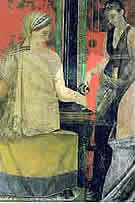


| So, we're going through ideas Christianity shares with other ancient religions, and we're up to the human soul. Christianity shares a theology of the soul that was popular among Paganism at the time Christianity began. People are more than physical bodies; they are animated by souls that live on after physical death. The souls of good people are rewarded, the souls of bad people are punished. The point here is not that the Christian idea of the soul squares up with Pagan ideas (although it does). The point is that the idea itself, the idea of the human soul, is Pagan. Pagans had it first; Christians got is second. Christianity is a product of its time and place. |
Reasons preview |
|
Every culture believes in the human soul, so maybe the divine human soul is real and we know about it because God beamed the idea into our DNA. Could be. Can't prove it ain't so. Of course like all magical "explanations" this one isn't really an explanation at all. Maybe Christianity and Judaism came up with the idea of the soul all on their own. OK. So, how'd they do that? How do you come up with an idea all on your own that everybody else already has, and you know about? How do you grow up in America and then invent hamburgers, all on your own? Also, the notion of the soul was all over the place. By what criteria can we decide which Hellenized ancient countries borrowed Hellenized ideas, and which ones invented the same Hellenicalistical ideas all on their own? |
 While
you're going through the basic facts about ancient ideas of the soul,
here is some cogitatulation that will help out when we get to POCM's
Reasons tab. We'll be looking for a
While
you're going through the basic facts about ancient ideas of the soul,
here is some cogitatulation that will help out when we get to POCM's
Reasons tab. We'll be looking for a History
of the soul Early Greek ideas about the soul are weird. To us. Of course they are, these are not the ideas we inherited. The earliest surviving Greek books, Homer's Iliad and Odyssey, have life souls, and death souls, dream souls, like that, on and on, a zoology of animating spirits. It's all too involved to detail here, but it is very cool history-of-western-ideas-wise. If you're interested, have a gawk at Dr. Bremmer's book. For now, from the many available, an example or two. From Homer, in the 8th century BC... |
In this bit a lady in Troy, I can't remember her name but I think maybe Mary Queen of Scots, sees her fella' Hector being dragged by a chariot. She faints. As she faints her spirit = psyche ψυχη leaves her. For Homer consciousness came from having a thing, a psyche, inside you. When you lost consciousness, the psyche left. Mary QoS revives, and her spirit, this time called a thumos, returns. Also, did you notice how in Homer's day after they died people went to the place under the earth, aka Hades? They did. |
|||||
|
But when she revived, and her spirit [thumos = θυμος] was returned into her breast, then she lifted up her voice, in wailing, and spake: " Ah Hector.... Now thou unto the house of Hades beneath the deeps of earth art departing... |
|||||
Homer, Iliad, Book 22, line 460 ff (8th century BC),
-- which you can find in: Murray, A. T. Homer;
The Iliad I, Loeb Classical Library #170 (1925/ 1985), pg. 489
|

 But
when she was come to the wall... she stopped and looked, and was ware
of him as he was dragged before the city; and swift horses were dragging
him ruthlessly toward the hollow ships of the Achaeans.
But
when she was come to the wall... she stopped and looked, and was ware
of him as he was dragged before the city; and swift horses were dragging
him ruthlessly toward the hollow ships of the Achaeans. Same book, different scene. Guy is willing to die, which he puts poetically, "let life depart from me." That's the translation. He doesn't really say "life," he says "aion"—aion being another one of / term for a human life giving, animating spirit. Lose that ensouling spirit, and you're a gonner. And vice versa. As far as Homer knew. |
Then glad at his coming was Sarpedon, son of Zeus, and spake to him a piteous word: "Son of Priam, suffer me not to lie here a prey to the Danaans, but bear me aid; thereafter, if need be, let life [aion = αιων ] depart from me in your city." |
| Homer, Iliad, 5.685 (8th century BC), -- which you
can find in: Murray, A. T. Homer;
The Iliad I, Loeb Classical Library # 171, (1928/ 1988), pg. 245
|
All the way back to the edge of prehistory, western people believed in the human soul. |
| By the time of Plato (early afternoon), the soul, aka psyche, had become the thing that gives people life. >> |
“Now answer,” said
he. “What causes the body in
which it is to be alive?” |
|
And by now (later in the afternoon) the soul was immortal. >> |
“Is there anything that
is the opposite of life?” |
One good thing about being Socrates was, people generally came around to seeing things your way. >> |
“Yes.” |
 |
Plato, Phaedo,
105c ff Loeb Classical Library 1999
|
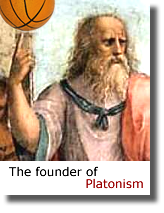
| Aristotle believed the human soul was immortal. Aristotle also wrote a whole book on the soul, called On the Soul, (Aristotle had a very orderly mind) which I will spare you quotes from. |
...man lives in virtue of himself, because the soul is a part of the man, and life is directly contained in it |
| Aristotle. Metaphysics section 1022a, Loeb Classical Library #271, 1979
|
By the fourth century AD the archaic Greek idea of several life-force souls had evolved into the idea of an immortal human soul that was the substance of human life. Pagans had the soul first. Christians got it second. Christianity is a product of its time and place. |
The
destiny of the soul, Pagan and Jewish |
Pagan
Souls of good, just men were rewarded after death. >> |
These receive the good, just men who have lived virtuously, and when many have been collected, send them off, as if to a colony, to the Elysian Fields to take part in the best life. |
Souls of bad people were punished in Hades. >>
|
|
| But those of the middle way in life, and they are many, wander about in the meadow without their bodies, in the form of shadows that vanish like smoke in your [119] fingers. They get their nourishment, naturally, from the libations that are poured in our world and the burnt-offerings at the tomb; so that if anyone has not left a friend or kinsman behind him on earth, he goes about his business there as an unfed corpse, in a state of famine. |
|
| [Lucian, On Funerals, (second century
AD), -- which you can find in: Harmon, A. M.
Lucian Volume IV (Loeb #162) (1953 / 1999), pg. 117- 9]
|
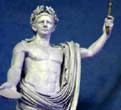 Well,
Pluto and Persephone, as these people said, are the rulers and have
the general over-lordship, with a great throng of understrappers and
assistants in administration-Furies, Tormentors, Terrors, and also Hermes,
who, however, is not always with them. As prefects, moreover, and satraps
and judges, there are two that hold court, Minos and Rhadamanthus of
Crete, who are sons of Zeus.
Well,
Pluto and Persephone, as these people said, are the rulers and have
the general over-lordship, with a great throng of understrappers and
assistants in administration-Furies, Tormentors, Terrors, and also Hermes,
who, however, is not always with them. As prefects, moreover, and satraps
and judges, there are two that hold court, Minos and Rhadamanthus of
Crete, who are sons of Zeus.  But if they come upon any
 |
Jewish
ideas about the immortal soul
Like the Pagans, the Pharisees believe in souls. Like the Pagans, the Pharisees believe souls are immortal. Like the Pagans, the Pharisees believe souls of good people are rewarded after death .Like the Pagans, the Pharisees believe souls of bad people are punished after death—in the bad place under the earth. These, says Josephus, were the most common Jewish beliefs. |
18.1.3. Now, for the Pharisees,
they live meanly, and despise delicacies in diet; and they follow the
conduct of reason; and what that prescribes to them as good for them
they do; and they think they ought earnestly to strive to observe reason's
dictates for practice... |
Like the Pagans, the Sadducee Jews believed in souls, but not that the soul is immortal. |
18.1.4. But the doctrine of the Sadducees is this: That souls die with the bodies; nor do they regard the observation of any thing besides what the law enjoins them.... |
Like the Pagans and the Pharisees, the Essene Jews belived in rewards for the immortal soul. |
18.1.5. The doctrine of the Essens is this: That all things are best ascribed to God. They teach the immortality of souls, and esteem that the rewards of righteousness are to be earnestly striven for.... |
|
[Josephus,
Antiquities of the Jews, book 18, Chapter 1]
|
 18.1.2.
The Jews had for a great while had three sects
of philosophy peculiar to themselves; the sect of the Essens, and the
sect of the Sadducees, and the third sort of opinions was that of those
called Pharisees; of which sects, although I have already spoken in
the second book of the Jewish War, yet will I a little touch upon them
now.
18.1.2.
The Jews had for a great while had three sects
of philosophy peculiar to themselves; the sect of the Essens, and the
sect of the Sadducees, and the third sort of opinions was that of those
called Pharisees; of which sects, although I have already spoken in
the second book of the Jewish War, yet will I a little touch upon them
now.  .They
also believe that
.They
also believe that Reasons preview |
|
|
How'd that happen do you suppose? Please give an answer that is consistent and comprehensive . |
|
|
|||||
 People
are complex.
People
are complex. Purposeful. Our instinct for cause and effect makes us figure
anything purposeful has an ordered cause. A cause we can spot
and understand. When you start with that idea, but the actual
physical cause is too complex for you to see, it's pretty much
a sure thing you're going to end up "reasoning" your
way to some sort of magical force or power or being. The soul:
psyche ψυχη , thumos θυμος,
aion αιων .
Purposeful. Our instinct for cause and effect makes us figure
anything purposeful has an ordered cause. A cause we can spot
and understand. When you start with that idea, but the actual
physical cause is too complex for you to see, it's pretty much
a sure thing you're going to end up "reasoning" your
way to some sort of magical force or power or being. The soul:
psyche ψυχη , thumos θυμος,
aion αιων .|
Is our religion the pinnacle of refinement? Ha! The meaning of our stories is the meaning invented by the illiterate, innumerate, (occasionally) cannibal stone age American indians. Here are the facts, from a book by a 19th century white captive who went native.. |
| Like us, the indians reasoned their way to resurrection.
and the human soul. |
|
| and God who created the heavens and the earth
and a bad place for the souls of the wicked
and a nice place for the souls of the good. |
They believe in God, a great spirit, who created and governs
the earth, sun, moon, and stars. |
| Lee, Nelson. Three
Years Among the Comanches (1859/ 2001), pg. 123- 4
|
 They
[the
They
[the 
 the
soul of the
the
soul of the |
When you start with the idea that every complex event has a cause you can understand, it's pretty much a sure thing you're going to end up "reasoning" your way to some sort of magical force or power or being. The soul is not a thing. The soul is a concept. Fuckin' A. |
Good Books for this section
|
The Early Greek Concept of the Soul
|
What you'll find:
|





|
|
Life After Death by Alan Segal
|
What you'll find:
|

|
|
|
|
|