|  |
||||||||||||||||||||||||||||||||
 |
|||||||||||||||||||||||||||||||||













| Facts > Pagan Christs > Glycon | |||||
| Glycon | Simon | Apollonius of Tyana | Pythagoras | Orpheus | |
| Isis / Osiris | Dionysus | Zalmoxis | Kore | Samothrace | |
| Heroes | Attis | Adonis | Mithras | Other godmen |
 |
Glycon shows the ideas behind Pagan religion |  |
By now he [Alexander, prophet of
the God Glycon]... healed the sick, and in some cases had actually raised the dead. |
|
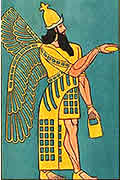
|
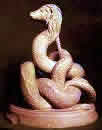
The ancients didn't have televangelists, but that's only because they didn't have teles. What they did have, like us, was charismatic flim-flam fellows who made a big living preying on the faith of believers. In the middle of the 100s AD, out along the south coast of the Black Sea, a handsome smooth-talker named Alexander got rich inventing a new God, Glycon, and setting up a prophetic oracle to Him. The whole thing is recorded for us first-hand, by a skeptic named Lucian of Samosata. Lucian, who went to Glycon's oracle, and spoke with Alexander, and
tested his prophetic power, leaves no doubt that Alexander was a con
man who made up a new God specifically to fit the religious beliefs
of the faithful—so he could take their money. It worked. Alexander
got rich. Glycon worship spread around the near east and into sophisticated
aristocratic circles in Rome. Glycon gives us a picture of what
a God looked like when He was specifically made up to fit the religious
ideas of ancient culture. Glycon was the son of the God Apollo,
who ... |
| Reasons |
| Now, nobody supposes Jesus was a xerox copy of Glycon. And like you, I know Glycon was a phony, made up God. That's the point. Glycon was made up to fit the religious stereotypes of his age. What we're going to do is turn the works around. We're going to start with Glycon, and find in Him exactly what the stereotypes were. Then we'll see how those stereotypes line up with our Jesus stories. POCM's point is that there is no comprehensive, consistent analysis of the ancient evidence that can conclude anything other than that, like the Glycon stories, our Jesus stories—the prophecy fulfilling, miraculously born Son of God, who healed the sick, raised the dead, and gave his believers the power of prophecy and speaking in tongues—like the Glycon stories, our Jesus stories were also made up to fit the religious stereotypes of the age. See the pages under the Borrowing tab for details. |
|
Alexander began his ministry by faking a prophecy. At the temple of Apollo he buried bronze tablets prophesying the arrival in Abnoteichus of the Earthly manifestation of Asclepius, the son of the God Apollo >> It's easy to see why Alexander made up a prophecy. The ancients believed in prophecy. As soon as the bronze tablets were "discovered," folks in Abnoteichus got so excited about the coming manifestation of God that they right away started to build Him a temple. >>
|
...Alexander won, and going to Chalcedon, since after all that city seemed to them to have some usefulness, in the temple of Apollo, which is the most ancient in Chalcedon, they buried bronze tablets which said that very soon Asclepius, with his father Apollo, would move to Pontus and take up his residence at Abnoteichus. The opportune discovery of these tablets caused this story to spread quickly to all Bithynia and Pontus, and to Abnoteichus sooner than anywhere else. Indeed, the people of that city immediately voted to build a temple and began at once to dig for the foundations. |
Lucian, Alexander the False Prophet,
Chapter 10 (2d Century AD), -- which you can find in: Harmon, A. M. Lucian
Volume IV (Loeb #162) (1953 / 1999), pg. 189
|

|
Glycon was a God, and his prophet was divine too. Alexander was a divine descendent of the God Perseus >>
A fact confirmed by the oracle. >>
And proven by they Sibyl's prophecy >> |
It was Alexander who was sent in first; he now wore his hair long, had falling ringlets, dressed in a parti - colored tunic of white and purple, with a white cloak over it, and carried a falchion like that of Perseus, from whom he claimed descent on his mother's side. And although those miserable Paphlagonians knew that both his parents were obscure, humble folk, they believed the oracle when it said : "Here in your sight is a scion
of Perseus, dear unto Phoebus ; [page 191] ....An oracle
by now had turned up which purported to be a prior prediction by the
Sibyl : |
| Lucian, Alexander the False Prophet,
Chapter 11 (2d Century AD), -- which you can find in: Harmon, A. M. Lucian
Volume IV (Loeb #162) (1953 / 1999), pg. 189- 91
|

Men, normal men, could be—were—divine. Alexander was the divine descendent of the God. Prophecy was widely and fervently believed. That's how ancient religions worked. When you made up a new religion, these are the things you included. Nothing about Christianity was new or unique. Christianity was a product of its place and time. |
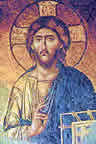
Miracles |
| Glycon's big power, which he passed along to His priest Alexander, was prophecy. >> The reason Alexander chose that miracle power was that's where the money was. >>
Although Glycon and his prophet Alexander had other powers too. Stuff like healing the sick and raising the dead. >> |
[Chapter 22] Well, as I say, Alexander made predictions and gave oracles, employing great shrewdness in it and combining guesswork with his trickery. .... [Chapter 23] A price had been fixed for each oracle, a drachma and two obols. I do not think that it was low, my friend, or that the revenue from this source was scanty! He gleaned as much as seventy or eighty thousand a year, since men were so greedy as to send in ten and fifteen questions each. [Chapter 24] By now he was even sending men abroad to create rumors in the different nations in regard to the oracle and to say that he made predictions, discovered fugitive slaves, detected thieves and robbers, caused treasures to be dug up, healed the sick, and in some cases had actually raised the dead. |
| Lucian, Alexander the False Prophet,
Chapter 22- 4 (2d Century AD), -- which you can find in: Harmon, A. M. Lucian
Volume IV (Loeb #162) (1953 / 1999), pg. 206- 7
|
Glycon and his prophet had the power to do miracles. Stuff like making and fulfilling prophesy, healing the sick, raising the dead. Sound familiar? I thought so. |
|
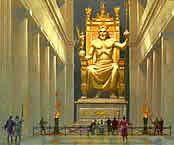
God-sent dreams |
|
Alexander asked for Gods' heavenly blessing. >> |
[Chapter 49] As by this time throngs upon throngs were pouring in and their city was becoming overcrowded on account of the multitude of visitors to the shrine, so that it had not sufficient provisions, he devised [page 239] the so-called "nocturnal " responses. Taking the scrolls, he slept on them, so he said, and gave replies that he pretended to have heard from the god in a dream ; which, however, were in most cases not clear but ambiguous |
| Lucian, Alexander the False Prophet, Chapter 49 (2d Century AD), -- which you can find in: Harmon, A. M. Lucian Volume IV (Loeb #162) (1953 / 1999), pg. 237- 9 |
|
|
|
Nothing about Christianity was new or unique. Christianity was a product of its place and time. |
|
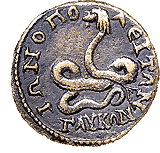 The
con man Alexander made up a God designed to look real to the faithful.
Back then religious people believed Gods spoke to people in magic dreams.
Dreams like, say, the one in ...
The
con man Alexander made up a God designed to look real to the faithful.
Back then religious people believed Gods spoke to people in magic dreams.
Dreams like, say, the one in ... ...
our Gospel of Matthew (1:18 ff), where God's angel appears to Joseph
and speaks in concise detail "Matthew" is somehow able to
quote word for word. Joseph wakes up, follows the instructions the God
gave in the dream, and things turn out swell.
...
our Gospel of Matthew (1:18 ff), where God's angel appears to Joseph
and speaks in concise detail "Matthew" is somehow able to
quote word for word. Joseph wakes up, follows the instructions the God
gave in the dream, and things turn out swell.| Divine possession. |
|
which, Lucian confirms, persuaded the locals. >>
Alexander reinforced the idea by imitating the famous frenzy of the divinely possessed devotees of the Great Mother. >>
|
[Chapter 12] Well, upon invading his native land with all this pomp and circumstance after a long absence, Alexander was a man of mark and note, affecting as he did to have occasional fits of madness and causing his mouth to fill with foam. This he easily managed by chewing the root of soapwort, the plant that dyers use; but to his fellow - countrymen even the foam seemed supernatural and awe - inspiring. .... [Chapter 13] In the morning he ran out into the market - place naked, wearing a loin - cloth (this too was gilded) carrying his falchion, and tossing his unconfined mane like a devotee of the Great Mother in the frenzy. |
| Lucian, Alexander the False Prophet,
Chapter 11 (2d Century AD), -- which you can find in: Harmon, A. M. Lucian
Volume IV (Loeb #162) (1953 / 1999), pg. 189- 91, 193
|
|
When Alexander wanted to show his connection with his made up God Glycon, he acted as if he was taken over by miraculous divine possession. A silly superstition ... |
Nowadays we follow the practice of the ancient first Christians, and call our own divine possession, "Filled with the Holy Spirit." |
Nothing about Christianity was new or unique. Christianity was a product of its place and time. |
|
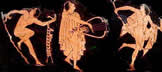 The
con man Alexander made up a God designed to look real to the faithful.
Back then religious people believed Gods, or the Gods' power, entered
the believer and drove them wild. The Greeks called it ατη
[at/e, "atay"]. Dionysus was famous for possessing his believers,
so were Cybele, Magna Mater (the Great Mother), and other Gods from
the middle east.
The
con man Alexander made up a God designed to look real to the faithful.
Back then religious people believed Gods, or the Gods' power, entered
the believer and drove them wild. The Greeks called it ατη
[at/e, "atay"]. Dionysus was famous for possessing his believers,
so were Cybele, Magna Mater (the Great Mother), and other Gods from
the middle east. 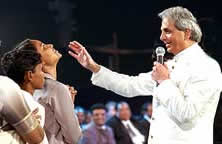
Foreign language skills |
|
Early in his ministry, while in his God- possessed frenzy, Alexander spoke to the crowd in an unintelligible foreign language >> |
Uttering a few meaningless words like Hebrew or Phoenician, he [Alexander] dazed the creatures [people in the crowd] who did not know what he [page 195] was saying save only that he everywhere brought in Apollo and Asclepius. |
| Lucian, Alexander the False Prophet, Chapter 11 (2d Century AD), -- which you can find in: Harmon, A. M. Lucian Volume IV (Loeb #162) (1953 / 1999), pg. 193- 5 |
| And later
Alexander set up his prophecy center so it looked like the God allowed
him to answer believers' questions in barbarian languages
he himself could not understand. >> Lucian explains how the trick was done >>
Like the Pythia at Delphi, and like the Sibyls, Alexander also gave prophetic answers in gibberish that his attendants later translated. >> |
[Chapter 51] I may say too that he often gave oracles to barbarians, when anyone put a question in his native language, in Syrian or in Celtic; since he readily found strangers in the city who belonged to the same nation as his questioners. That is why the time between the presentation of the scrolls and the delivery of the oracle was long, so that in the interval the questions might be unsealed at leisure without risk and men might be found who would be able to translate them fully. Of this sort was the response given to the Scythian : "Morphen eubargoulis eis skian chnechikrage leipsei phaos" [page 243] [Chapter 53] Let me also tell you a few of the responses that were given to me. When I asked whether Alexander was bald, and sealed the question carefully and conspicuously, a "nocturnal" oracle was appended : '' Sabardalachou malachaattealos en." |
| Lucian, Alexander the False Prophet, Chapter 52- 3
(2d Century AD), -- which you can find in: Harmon, A. M. Lucian
Volume IV (Loeb #162) (1953 / 1999), pg. 241- 3
|
|
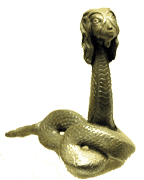
The con man Alexander made up a God designed to look real to the faithful. Back then religious people believed Gods had special superhuman powers, which they could share with their faithful. One of those powers was the ability to speak languages you yourself don't understand. |
|
Nothing about Christianity was new or unique. Christianity was a product of its place and time. |
|
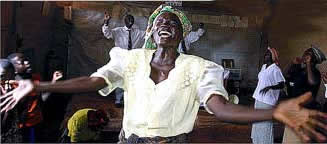
Prayers, hymns, Gods on Earth |
|
Alexander sang hymns, prayed, and asked for Gods' heavenly blessing. >>
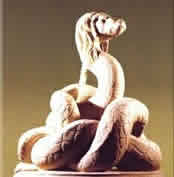
And brought out...a baby snake... Which the crowd welcomed as an Earthly form of the God. >> |
[Chapter 14] Then he [Alexander] ran at full speed to the future temple, went to the excavation and the previously improvised fountain - head of the oracle, entered the water, sang hymns in honor of Asclepius and Apollo at the top of his voice, and besought the god, under the blessing of Heaven, to come to the city. Then he asked for a libation saucer, and when somebody handed him one, deftly slipped it underneath and brought up, along with water and mud, that egg in which he had immured the god; the joint about the plug had been closed with wax and white lead. Taking it in his hands, he asserted that at that moment he held Asclepius! They gazed unwaveringly to see what in the world was going to happen; indeed, they had already marveled at the discovery of the egg in the water. But when he broke it and received the tiny snake into his hollowed hand, and the crowd saw it moving and twisting about his fingers, they at once raised a shout, welcomed the god, congratulated their city, and began each of them to sate himself greedily with prayers, craving treasures, riches, health, and every other blessing from Him....And the whole population followed, all full of religious fervor and crazed with expectations. |
| Lucian, Alexander the False Prophet, Chapter 11 (2d Century AD), -- which you can find in: Harmon, A. M. Lucian Volume IV (Loeb #162) (1953 / 1999), pg. 195 |
|
Glycon spoke of God the Father as, "my Father." >> |
[Chapter 29] As he was aware that the priests at Clarus and Didymi and Mallus were themselves in high repute for the same sort of divination, he made them his friends by sending many of his visitors to them, saying : "Now unto Clarus begone, to the voice of my Father to hearken." |
| Lucian, Alexander the False Prophet,
29 (2d Century AD), -- which you can find in: Harmon, A. M. Lucian
Volume IV (Loeb #162) (1953 / 1999), pg. 215
|
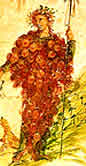
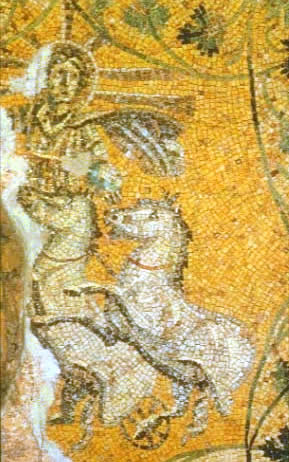
The con man Alexander made up a God designed to look real to the faithful. Back then religious people prayed to their Gods. Back then people sang hymns to their Gods. Back then people believed Gods came to Earth in mortal form, as Sons of other Gods. And when they did, the on-Earth Gods called God the Father, "My Father." Nothing about Christianity was new or unique. Christianity was a product of its place and time. |
Gods lived in heaven. |
|
Gods, says Lucian, are from Heaven (επουρανιων).
|
[Chapter 9] ... whenever a man but turned up with someone at his heels to play the flute or the tambourine or the cymbals, telling fortunes with a sieve, as the phrase goes they [the Paphlagonians] were all agog over him on the instant and stared at him as if he were a god from Heaven. |
| Lucian, Alexander the False Prophet, Chapter 9 (2d Century AD), -- which you can find in: Harmon, A. M. Lucian Volume IV (Loeb #162) (1953 / 1999), pg. 187- 9 |
|
Alexander asked for Gods' heavenly blessing. >> |
[Chapter 14] Then he [Alexander]...sang hymns in honor of Asclepius and Apollo at the top of his voice, and besought the god, under the blessing of Heaven, to come to the city. |
| Lucian, Alexander the False Prophet, Chapter 11 (2d Century AD), -- which you can find in: Harmon, A. M. Lucian Volume IV (Loeb #162) (1953 / 1999), pg. 195 |
And when Alexander set up the mysteries of Glycon, he again sought the blessings of Heaven. >> |
[Chapter 38] ....let those who believe in the god perform the mysteries, under the blessing of Heaven." |
In the mystery play ceremony, the Goddess Selene (played by Rutilia) came down as if from Heaven >> |
[ch 39] In conclusion there was the amour of Selene and Alexander, and the birth of Rutilianus' wife. The torch-bearer and hierophant was our Endymion, Alexander. While he lay in full view, pretending to be asleep, there came down to him from the roof, as if from heaven, not Selene but Rutilia, a very pretty woman, married to one of the Emperor's stewards. |
| Lucian, Alexander the False Prophet,
Chapter 38- 40 (2d Century AD), -- which you can find in: Harmon, A. M.
Lucian
Volume IV (Loeb #162) (1953 / 1999), pg. 225-7
|
The root word is "ouranos," ουρανος, the same Greek word God uses in our bible to tell us where He and Jesus live. We translate it "heaven." It meant "sky," which is why Pagan Gods, and Jesus, are all the time coming down and going up. When Alexander made up the God Glycon, he put Him in the cosmos as the ancients understood it. In heaven, in the sky. |
Nothing about Christianity was new or unique. Christianity was a product of its place and time |
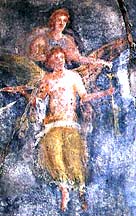 The con man Alexander made up a God designed to look real to the faithful.
Back then religious people believed Gods lived in heaven.
The con man Alexander made up a God designed to look real to the faithful.
Back then religious people believed Gods lived in heaven.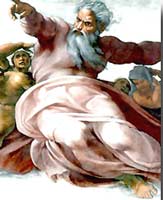
Hades |
| Epicurus was a famous Greek philosopher whose followers were critical of all religion, including the one Alexander made up about Glycon. Alexander made this divine observation about Epicurus in Hades. >> |
[page 209] [Chapter 25] About Epicurus, moreover, he delivered himself of an oracle after this sort ; when someone asked him how Epicurus was doing in Hades, he replied : "With leaden fetters on his feet in filthy mire he sitteth." |
| Lucian, Alexander the False Prophet,
Chapter 25 (2d Century AD), -- which you can find in: Harmon, A. M. Lucian
Volume IV (Loeb #162) (1953 / 1999), pg. 209
|
|
Nothing about Christianity was new or unique. Christianity was a product of its place and time and place. |
 The
con man Alexander made up a God designed to look real to the faithful.
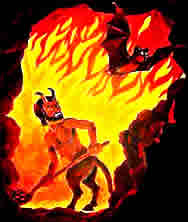
Back then religious people believed that after death they would live
on forever in the place of the dead—Hades.
The
con man Alexander made up a God designed to look real to the faithful.
Back then religious people believed that after death they would live
on forever in the place of the dead—Hades.Divine Births |
| We've already seen that Glycon got his divinity by being the Earthly manifestation of Asclepius, who got his divinity by being the son of the God Apollo >>
|
.. very soon Asclepius, with his father Apollo, would move to Pontus and take up his residence at Abnoteichus. |
| Lucian, Alexander the False Prophet, Chapter 10 (2d Century AD), -- which you can find in: Harmon, A. M. Lucian Volume IV (Loeb #162) (1953 / 1999), pg. 189 |
| And Alexander was a divine descendent of the God Perseus >> |
Alexander ...carried a falchion like that of Perseus, from whom he claimed descent on his mother's side. And although those miserable Paphlagonians knew that both his parents were obscure, humble folk, they believed the oracle when it said : "Here in your sight is a scion
of Perseus, dear unto Phoebus ; |
| Lucian, Alexander the False Prophet, Chapter 11 (2d Century AD), -- which you can find in: Harmon, A. M. Lucian Volume IV (Loeb #162) (1953 / 1999), pg. 189 |
| And even Alexander's daughter was born divine—her mother was the goddess Selene. >> |
[ch 39] On the third day...there was the amour of Selene and Alexander, and the birth of Rutilianus' wife. The torch-bearer and hierophant was our Endymion, Alexander. While he lay in full view, pretending to be asleep, there came down to him from the roof, as if from heaven, not Selene but Rutilia, a very pretty woman, married to one of the Emperor's stewards. She was genuinely in love with Alexander and he with her; and before the eyes of her worthless husband there were kisses and embraces in public. .... |
| Lucian, Alexander the False Prophet, Chapter 9 (2d Century AD), -- which you can find in: Harmon, A. M. Lucian Volume IV (Loeb #162) (1953 / 1999), pg. 227 |
| And >> |
[Ch34] When one
time he [Rutilianus] enquired about getting married, Alexander said
explicitly : He had long before given out a story to the effect that his daughter was by Selene; for Selene had fallen in love with him on seeing him asleep once upon a time-it is a habit of hers, you know to, adore handsome lads in their sleep! |
| Lucian, Alexander the False Prophet,
Chapter 34- 5 (2d Century AD), -- which you can find in: Harmon, A. M. Lucian
Volume IV (Loeb #162) (1953 / 1999), pg. 221
|
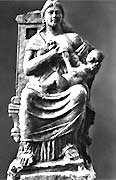 |
The con man Alexander made up a God designed to look real to the faithful. Back then religious people believed divinity was a property, something that could be acquired or inherited. People who had Gods as parents inherited divinity. In the Glycon myths, Glycon inherited divinity from Apollo.
|
. |
Nothing about Christianity was new or unique. Christianity was a product of its place and time and place. |
||
Teaching moments |
| Alexander, or at least Lucian, recorded this question and answer dialogue in which Alexander explained his theology. >> |
[Chapter 43] !
I want to include in my tale a dialogue
between Glycon and one Sacerdos, a man of Tius, whose intelligence
you will be able to appraise from his questions. I read the conversation
in an inscription in letters of gold, at Tius, in the house of Sacerdos.
That was Glycon's conversation with Sacerdos. |
| Lucian, Alexander the False Prophet,
Chapter 43 (2d Century AD), -- which you can find in: Harmon, A. M. Lucian
Volume IV (Loeb #162) (1953 / 1999), pg. 229-31
|
The story of Alexander's Glycon religion (at least when Lucian recorded it), includes just such a teaching moment. |
|
||
Nothing about Christianity was new or unique. Christianity was a product of its place and time and place. |
|||
 The
con man Alexander made up a God designed to look real to the faithful.
Back then religious people believed religious figures imparted wisdom
in discussions with believers and unbelievers.
The
con man Alexander made up a God designed to look real to the faithful.
Back then religious people believed religious figures imparted wisdom
in discussions with believers and unbelievers. 
Mysteries |
The mysteries
of Glycon. |

Alexander set up the mysteries of Glycon, . >> I'm including this extended bit because it's a rare look at the details of how mystery religions worked, so it's worth your time to read. Note that Alexander copied his mysteries after the famous Eleusinian initiation mysteries of the Athenians.
|
[Chapter 38] |
[ch 39] On the third day there was the union of Podaleirius and the mother of Alexander —it was called the Day of Torches, and torches were burned. In conclusion there was the amour of Selene and Alexander, and the birth of Rutilianus' wife. The torch-bearer and hierophant was our Endymion, Alexander. While he lay in full view, pretending to be asleep, there came down to him from the roof, as if from heaven, not Selene but Rutilia, a very pretty woman, married to one of the Emperor's stewards. She was genuinely in love with Alexander and he with her; and before the eyes of her worthless husband there were kisses and embraces in public. .... |
|
Alexander xerox-copied myths the Christians didn't. >> |
[Chapter 40] Often in the course of the torchlight ceremonies and the gambols of the mysteries his thigh was bared purposely and showed golden. No doubt gilded leather had been put about it, which gleamed in the light of the cressets. There was once a discussion between two of our learned idiots in regard to him, whether he had the soul of Pythagoras, on account of the golden thigh, or some other soul akin to it. They referred this question to Alexander himself, and King Glycon resolved their doubt with an oracle : |
"Nay, Pythagoras' soul
now waneth and other times waxeth ; |
|
| Lucian, Alexander the False Prophet,
Chapter 38- 40 (2d Century AD), -- which you can find in: Harmon, A. M.
Lucian
Volume IV (Loeb #162) (1953 / 1999), pg. 225-7
|
Some ancient Gods had mysteries. Some didn't. |
| Reasons |
Is Jesus a copy of Glycon? No, He isn't. Jesus is not a knock of Glycon. Jesus is not a knock off of any one Pagan God. Jesus is a knock off of every Pagan God. Like everyone else away back then, the first Christians knew what a God was. The first Christians knew what origins and powers and abilities Gods had. The first Christians knew what Gods were like, and they believed Jesus was one, so when they thought about Jesus and told each other about Jesus they naturally put in all the goodies that culture associated with Gods. Jesus was a God; He must have made and fulfilled prophesies.
Jesus was a God; He must have had a divine birth. Jesus was a God; His
story must involve God-sent dreams. Jesus was a God; Gods come down
and go up to heaven. Hell. Miracles. Healing the sick, raising the dead.
On and on. Like the ancient God Glycon, the ancient God Jesus
is a product of His time and place. Jesus is not a snake! Not everyone sees it this way. Here's a roundup of points nice people use to refute the idea that Jesus is related to Glycon.
|
 Consistency
|
If only it were that easy. |



 But that doesn't keep them from writing to let me know Glycon
copied from Jesus.
But that doesn't keep them from writing to let me know Glycon
copied from Jesus. |
|
Good Books for this section
| Lucian,
Volume IV
|
What you'll find:
|





|
|