Start here >   Slavery Dreams Demons Soul God Heaven
Hell Miracles Prophecy Eternal Life Divine men Godmen
Virgin Birth Phony quotes Secret Logos Monotheism Ethics
Angels Sacrifice Baptism Eucharist Stuff we forgot Mystery Religions
Dying and Rising Gods Raised from Dead
Christianity and Paganism share fundamental ideas
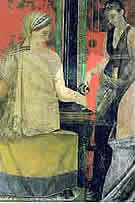
Pagan baptism  the sacrament of water purification during initiation into the Mysteries of Isis         
Pompei


Here at POCM by reading what the ancients wrote about their own religions, you'll discover that ancient western culture had standard ideas about the eternal destiny of the human soul, and Gods and their powers and place in the universe—and that Christianity adopted those ideas.


This Pagan Ideas tab is POCM's most important section, the one that lays out things that ancient Pagan religions had that Christianity has too.

Remember POCM's prime directive? In this Facts area all I'm allowed to do is give the simple evidence. Pagan religions had godmen, heaven, salvation, miracles, etc. The analysis of whether Christianity really did borrow any of this stuff I have to put off till the Reasons section.

But for you to get the most out of Facts, it helps if you understand what "borrowing" means, POCM-style. Let's start there.

By the way

There's a logic to POCM's presentation of the Pagan Ideas facts. To see that logic, you'll want to start with the first row of menu choices: Slavery, then Dreams, then Demons, etc.

Borrowing is NOT direct copying   Jesus as a copycat Pagan God
You've maybe come across web sites or even books listing amazing coincidences between our Jesus stories and stories about other ancient Gods. Born in a manger (or cave) on December 25th, with a virgin mother and a father named Joseph. Had twelve disciples. Died on a cross, arose on day three. Like that.

Trouble is, it ain't so. The only place you find these similarities is in modern books where an ernest amateur quotes someone quoting someone. Trace these claims back to their 19th century origins, and you'll discover some wild eyed fellow just made them up. Just made them up. The ancient evidence simply does not include Gods with twelve disciples born in mangers on December 25th, or any of this identical-myth stuff. Jesus was not an element-by-element, myth-by-myth direct copy of any other ancient Gods.

At POCM we are NOT talking about Christianity's Pagan origins as a direct copy of some Pagan religion.


Sir James Frazier

Borrowing is NOT dying and rising God number 47
Back in the late 1800s, and into the '20s and '30s of the twentieth century, "mythicist" scholars had this theory that lots of ancient peoples had dying and rising Gods. Adonis. Attis. Osiris. Mithras. Tamuz. Dying and rising gods were supposedly a common cultural convention, and, said the mythicists, our stories about Jesus were invented to fit the patterns of the DARG convention.

Eventually, enthusiasm for the dying and rising God theory fizzled out, supposedly for lack of evidence, although scholarly prejudice contributed. I myself don't morn its fizzulation. The evidence for a DARG convention is weak, and the whole thing seems too clever by half. And Christianity- borrowing-from-Paganism-wise, the DARG business is unnecessary. You don't need myth-by-myth DARG parallels to see that the Jesus stories fit nicely with ancient culture's pervasive religious conception of the world.

At POCM we are NOT talking about Christianity's Pagan origins as another example of a DARG cultural convention.

 
Borrowing IS adopting ideas common to the culture
Go shopping for the healthful and refreshing beverage Mountain Dew, and up on the grocery shelf you'll see a number of drinks that are pretty similar to Dew. Sugar water drinks. Fizzy drinks. In aluminum cans. Twelve ounce cans. With pop tops.

Did the fine people at Mountain create Dew by copying the idea of putting fizzy sugar water in a twelve-ounce pop-top aluminum can from anyone in particular? From Coke? From Pepsi? Fanta? No they didn't. Fizzy sugar water in a twelve-ounce pop-top aluminum can is soda. The idea of soda is part of our culture. Dew looks like all the other soda drinks, not because it is a direct copy of any one of them, but because our modern culture has the idea of soda, and Dew is just another one. When a modern person makes a new soda, these are the things we put in.


At POCM, that's what "borrowing" is.
Borrowing just means "Accepting and incorporating the ideas of your culture," or, "Absorbing the ideas of your culture."

POCM isn't about a sneaky ancient conspiracy. I haven't uncovered the hidden key to the True Meaning of the bible. POCM's answer is simple and pedestrian: Christianity was the social product of its time and place. It didn't invent its core concepts —heaven, hell, souls, eternal life, miracles, prophecies, angels, Gods, sons of God, walking talking godmen, etc.—it got them from the culture in which it developed. When ancient people made a new religion, these are the things they put in.

By the way: Different

Is Dew different from Coke? Sure. Coke is dark; Dew is light. Coke's can is red; Dew's is green. Coke tastes like ... Coke. Dew tastes like Dew. But Dew and Coke are both sodas.

Our idea "soda" describes only some features of a drink—fizzy sugar water in a can. Other features are not part of the "soda" concept—flavor, color, can color, price, etc. This means that every soda is different from every other soda. Coke is different from Pepsi, is different from Fanta, is different from Dew.

Jesus' apologists like to argue that Jesus is not a Pagan God because Jesus is different is some detail or other from other Pagan Gods. We'll talk about this more later.

Facts you'll learn, and questions to ask yourself

You are going to learn facts. You're going to read ancient writers to learn what the ancients thought about Gods and souls and the shape of universe.

If it's in a blue box, it was written by an ancient.

Don't believe me, believe the ancients themselves.

You'll learn it is a fact ancient Pagans owned slaves. You know that. But did you know it is a fact ancient Jews kept salves? God told them that was OK. Did you know it is a fact the first Christians kept slaves, and the bible says God told them that was OK? They did. Those are facts.

You'll learn it is a fact ancient Pagans believed dreams were messages sent from God(s). So did Jews. So did Christians. Those are facts.

You'll learn it is a fact ancient Pagans believed demons were real beings, with miraculous powers. So did Jews. So did Christians. Those are facts.

You'll learn it is a fact ancient Pagans believed miracles happened through of divine power. So did Jews. So did Christians. Those are facts.

You'll learn it is a fact ancient Pagans believed in God, and the eternal life of the human soul. So did (some) Jews. So did Christians. Those are facts.

Questions to think about as you read POCM > Pagan Ideas

POCM's basic question is, Where did Christianity get it's ideas? Lets start with slavery. Pagans believed in slavery first. The first Christians grew up knowing about Pagan slavery. Christians had slavery second. Will you agree with me that the first Christians did not reinvent slavery on their own? Of course you will. We agree Christians borrowed slavery from Pagans (and Judaism).

Have you spotted the trajectory here? I mean the trajectory of the facts, and POCM's reasoning. See how it progresses from something Christianity certainly borrowed, slavery, through strange (to us) stuff Christianity must also have borrowed—magic dreams, demons—to not-strange (to us) stuff at the core of our faith.

As you read POCM > Pagan Ideas the questions to ask yourself are,
What reasoning supports our conclusion that Christianity borrowed slavery?
And when we apply that same reasoning to dreams, demons, miracles, God and the eternal life of the human soul, don't we get the same answer: Christianity borrowed?
If not, why not?

We'll chat more about POCM's reasoning at POCM > Borrowing

Greggy's Guesses

At POCM > The End, I'll tell you what I think. For completeness. I know you don't care what I think. I don't want you to care what I think. I want you to learn the facts, think about the reasons, and decide for yourself.

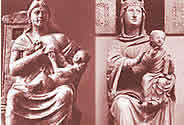
Isis
and Child
Mary
and Child

Did the fellows who wrote our Christian New Testament sit down with the Revised Standard Version of the Gospel of Mithras open on their desk, so they could sneak in the best stuff, point by point? No they didn't. Don't be silly.

Christianity doesn't have Pagan origins in the sense that early Christians copied legends and myths. Christianity has Pagan origins in the sense that the religious ideas around which Christianity was built are exactly the religious ideas common at the time Christianity began. Core Christian theologies are core Pagan theologies; early Christians simply adopted the religious preconceptions of their culture. Did they rearrange some things, innovate even? Sure. Everyone who ever started a religion did. But Christianity's most basic ideas—God, the Son of God, miracles as a sign of divinity, salvation, baptism, eucharist, souls, morality, Heaven, Hell, and many many more—are all Pagan ideas.

Christianity is an ancient Pagan religion.

Chock-a-block with goodies for the dead guy

What you'll learn here at POCM > Pagan Ideas is is that many (but not all) ancient religions were religions of salvation. In general, ancient Mediterranean people believed they would live on after death, with good people having happier afterlives than bad people. Many religions were set up to give believers a better deal after death. What that better deal was depended on the religion: in some Greek mysteries it was the Elysian Fields; for followers of Isis and Osiris it was eternity with Osiris in Underground Heaven; for many philosophy/ religions it was return of the disembodied soul to the One God in the sky. Some ancient religions even called this "salvation." And it all predated Christianity by generations—by hundreds and hundreds of years.

What you questions will convince you of is there is no consistent, reasoned analysis of the evidence that can pick out Christianity as fundamentally different from other ancient Pagan religions. Christianity is an ancient Pagan religion.


The next time you're in Church
ask yourself:"What about what I'm hearing was new and unique with Christianity, and what was already part of other religions in a culture where over and over again new religions were built with old parts?"Next time you're in church...

When they get to the part about Joseph learning of Jesus' birth in a magical God-sent dream, and the part about the divine man Jesus casting out demons, and doing miracles, and going up and down from heaven remember the ancient Pagan dreams and Pagan Godmen and ancient Pagan demons and Pagan heaven up in the sky you read about here at POCM.

You'll know you're hearing about stuff that predated Christianity by hundreds of years—in a culture where over and over people built new religions out of old parts.

Wow!

What other people think about POCM
Interesting website and well done. I do however completely disagree with you. Thanks for the challenge.

top
  
You are free to copy and paste any words you find at POCM, as long as
1 You don't charge anyone for the stuff you borrow
2

Every time you borrow, you tell folks it came from POCM and
link back to the page you got it from, or just to:  www.pocm.info

3 You really really promise to live with goodness and goodwill in your heart.

A scholarly and handsome reader Kicks POCM's Ass

Can you Kick POCM's Ass?

My name is Wade Duroe and I like to think about stuff.
to which Greg says

For some people the story of Jesus is nothing more than myths and tales borrowed from other cultures and religions and adapted to a Jewish-Christian world view.

But just because a story is repeated from one time to another, or from one culture to another, or from one religion to another, does not determine whether any specific example of the story is true or not. Each story, as told or retold, must stand on its own merits

Wade's analysis misses POCM's point.
1. Christianity did not copy myths. Christianity copied the ancient western conceptual model of the universe, including the religious ideas around which each ancient religion built it's own myths.

2. POCM asserts more than repetition. POCM asserts direct copying.

3. POCM does not address whether the myths are true or not, only whether they are copied.

It’s possible that the very frequency of repetition, from one time, culture and religion to another, lends credibility to a core of truth within the story line.

Christians do not deny that elements from Jesus Christ’s birth and life have appeared in the stories and tales of other religions and cultures. We do not argue that everything that occurred in Jesus’ life was unique.

But we do argue that the repetition of these stories and tales adds substance and credibility to a core of truth, which we find fulfilled in Jesus Christ.

We argue that the other stories, tales and myths from other cultures and religions were only hinting at the revelation made in Jesus Christ.

We argue that the sheer volume of these stories all told within the life of Christ add credibility to His story. He was born to a virgin as the special creative act of God the Father. His forerunner, John the Baptist, shared a similarly miraculous birth announce-ment and birth. A star marked Jesus’ birth. He was hailed by foreign wise men as well as the angels of heaven. He healed the sick. He raised the dead. He cast out demons. He made the lame to walk and the blind to see. He walked upon the water. He fed 5000 with a few loaves and fish. He claimed authority to forgive sins. He called Himself the Lord of the Sabbath. He predicted His own suffering and death. He was crucified, dead and buried. He was raised from the dead. He appeared to His followers. He ascended into heaven. He predicted that He would return someday.

I accept Wade's admission that the Christian myths are essentially the same as the earlier Pagan myths.

Wade and I basically agree. POCM's point is there is no consistent, reasoned analysis of the evidence that can pick out Christianity as fundamentally different from other ancient Pagan religions. Christianity is an ancient Pagan religion.

Wade agrees. He is unable to give a rational, cause and effect, actually-possible explanation of the facts that preserves the truth of his myths. His solution is to explain the facts with God's magic. Wade says the similarities happened on account of some sort of magical pre-revelation revelation.

I do not know if Wade is correct or not. Magical solutions like his can not be analyzed rationally. "God is omnipotent." God can do anything. God's magic can overcome any set of contrary facts.

By the way, Wade's analysis dates back to Justin Martyr, in the second century AD. Like Wade, Justin saw the deep similarities between Christianity and Paganism, and like Wade Justin saw that a rational analysis demanded the conclusion that Christianity borrowed. Like Wade, Justin and other early fathers found their way around that inevitable conclusion by dreaming up a magical solution, in their case "Demonic imitation."

From the gods and men of other times, cultures and religions you can find isolated examples of many of these events. But you do not find them altogether in the story of one Man. In the life of Jesus Christ, the stories and myths that appeared in part in other cultures and religions have been fulfilled. Wade repeats his magical analysis, but offers no evidence or rational analysis to support it. Because there is none.

The stories about Jesus Christ have been grounded in history by the gospel writers, predicted in the Old Testament by the prophets and supported by the findings of archaeology.

Truth is stranger than fiction. The old tales and mythological stories that were told at various times and places pointed to something far greater than anyone could imagine: Jesus Christ, the Son of God, the Messiah, our Savior.

Wade repeats his magical analysis, in support of which he asserts the gospels are history, and the magic stories in them are true. Wade can offer no evidence, or facts, or analysis in support of the claims


Wade's analysis is a striking example of Christianity's decline. 170 years of critical scholarship, dating back at least to J. Strauss' Life of Jesus Critically Examined (1835), have demolished any possible rational defense of the gospels as history. Conservative believers are unable to refute Strauss' analysis, but they are able to ignore it. And they do.

Conservative scholarship generally begins with the axiom that the bible stories are true, and "reasons" from there. Fine. We can all be friends. But the result is

1. Conservative believers—Wade is an example—are unaware of the most basic facts and reasons supporting the conclusions of critical scholarship. It's not that they don't believe the reasoning; it's that they don't even know what it is.

2. Conservative "scholarship" fails to address critical facts and reasons, making conservative "scholarship" an in-house exercise, persuasive only to the already persuaded.

3. Conservative apologetics often, as in Wade's case, boils down simply to pep-rally boosterism, repeating what you believe, over and over, as if really really meaning what you say will make it true.

Stubborn insistence on the truth of the ancient myths is, in my opinion, is a recipe for the decline and fall of the religion. Makes you look silly. The greater culture laughs at you. The crappy thing is that as they ride their myths into irrelevance, conservative believers are taking with them the values—the morality, the belief in right and wrong and goodness and evil—that have been at the center of our culture and success.

That's a bad thing.

Christianity and Paganism share fundamental ideas