|
 |
||||||||||||||||||||||||||||||||
 |
|||||||||||||||||||||||||||||||||













| Reasons > Borrowing > Different |
|
Reasons >
|
Choices | Borrowing | Different | The Bible is true | Faith |
| First | Independently | From Judaism | Xerox copying | Different |
 |
the Any-Difference-Proves-No-Borrowing rule |  |
 |
The ancient world was a virtual cornucopia
of myths of gods and heroes. Comparative studies
in religion and literature require sensitivity
to their similarities and differences, or distortion
and confusion inevitably result. |
|
||
|
"Similar" does not mean "identical." |
||||

|
Here's where we are. The ancient texts quoted in POCM's Facts section show lots of Pagan-Christian similarities. In this Reasons part of POCM we're thinking about possible explanations of those similarities. Which are comprehensive and consistent? Which are not?
Borrowing > Absorbing describes POCM's highly insightful explanation of Christian-Pagan similarities: Christianity absorbed its ideas from ancient Pagan Mediterranean culture. Christian ideas are Pagan ideas. This wonderful explanation is comprehensive and consistent. And smart. And handsome. Hooray! The page you are at now, Borrowing > Different, is about the apologists' most favoritest argument against Christian-Pagan borrowing —Christianity could not have borrowed, because our Christian story is different from all those Pagan stories. So, let's talk about the apologists' Any-Difference-Proves-No-Borrowing rule: If a Christian story is different in any detail from seventeen similar Pagan stories, then borrowing did not happen. |
||||
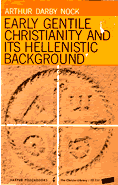
Defense of the faith wise, the ADPNoB rule has been a big deal for generations. Reverend A.D. Nock used it in the 1920s. Reverend B. M. Metzger relied on it in his famous essay in 1955. In the 1980s and '90s, professor Ronald Nash pretty much based his celebrated no-borrowing career on it. In our internet age ADPNoB is almost catechism, spoken by every apologist, repeated by every believer. |
|
The Any-Difference-Proves-No-Borrowing rule Here's the ADPNoB rule (pronounced "ADPNoB rule") in action, direct from the able keyboard of Noted Philosopher Professor Dr. W. L. Craig, PhD, DTh. |
|
Noted Philosopher Dr. Dr. Craig is writing about similarities ("parallels" is the artful term) between Jesus stories and other Pagan stories.
According to Noted Philosopher Dr. Dr. Craig,
Pagan stories that are unparallel to
the Jesus event include: 1. Pagan people ("heroes") die and ascend to heaven, 2. Pagan wisdom teachers disappear and ascend to heaven, 3. Pagan Gods die (each year) and come back to life, 4. Roman (political) emperors die and ascend to heaven. |
Many of the alleged parallels to this event are actually apotheosis stories, the divinization and assumption of the hero into heaven (Hercules, Romulus). Others are disappearance stories, asserting that the hero has vanished into a higher sphere (Apollonius of Tyana, Empedocles). Still others are seasonal symbols for the crop cycle, as the vegetation dies in the dry season and comes back to life in the rainy season (Tammuz, Osiris, Adonis). Some are political expressions of Emperor worship (Julius Caesar, Caesar Augustus). |
|
All this Pagan dying, and coming back to life, and ascending to heaven has nothing to do with Jesus' dying, and coming back to life, and ascending to heaven, explains Noted Philosopher Dr. Dr. Craig, because the event of Jesus dying, and coming back to life, and ascending to heaven is related to, or concerned with, or associated with, or motivated by, or understood as, or anyhow has something to do with Jewish ideas of resurrection. That difference —the association with Jewish ideas of resurrection— means that Jesus' dying, and coming back to life, and ascending to heaven is unrelated to all those Pagan stories about dying, and coming back to life, and ascending to heaven. See? |
None of these is parallel to the Jewish idea of the resurrection of the dead. |
|
Noted Philosopher Professor
Dr. W. L. Craig, PhD, DTh,
Jesus and Pagan Mythology, Q & A
|
 Or
consider the Gospel event of most interest
to me: Jesus' resurrection from the dead.
Or
consider the Gospel event of most interest
to me: Jesus' resurrection from the dead.
|
How the ADPNoB theory works Noted Philosopher Professor Dr. Dr. Craig notes a difference between |
|
|
 Myth
then, myth now
Myth
then, myth now
|
April 2015. I am re-smartifying this page. I have gotten this far. |
 |
|
Ideas that are similar share features. Julius Caesar died and ascended to heaven. Jesus died and ascended to heaven. The stories share features. They are similar. The way apologists use the word, parallel
means "copied." Ideas or stories
are parallel when they share features AND
one idea
was the source of the other.
Caesar died and ascended to heaven. Jesus
died and ascended to heaven. But the story
of Caesar's death and ascent to heaven has
nothing whatsoever to do with of the story
of Jesus' death and ascent to heaven. The
stories are not "parallel." In apologist-talk, similar is about facts, parallel depends on the apologist's conclusion. And since apology begins with the conclusion (that's pretty much what "apology" means), this fast talking nuanced use of "parallel" has great rhetorical power. It let's apologists give people their conclusion,"Pagan ideas are not the source of (similar) Christian ideas," without letting people know the ideas themselves are really really similar. |
 If
you read elsewhere about Christian-Pagan borrowing,
you'll want to keep in mind that apologist
talk distinguishes
If
you read elsewhere about Christian-Pagan borrowing,
you'll want to keep in mind that apologist
talk distinguishes
Here are a few reasons the Any-Difference-Proves-No-Borrowing rule doesn't work. It confuses similarity and identity.
The problem is this reasoning answers the wrong question. The question
isn't "How does an airplane compare with something it didn't
borrow from?" The question is, "How does an airplane
compare with something it did borrow from?" What's more, airplane wings stay still. Bird wings flap. Airplane wings work differently from bird wings—and yet airplane wings were copied from bird wings.
When you borrow an idea from someone, you borrow just that: an
idea. You don't borrow every idea. Your idea-thing then shares a characteristic
with her idea-thing. But generally, her thing and your thing have other
ideas that are different, ideas you didn't borrow from her. Your thing
and her thing are similar in some details, different in others.
What's more, it's likely that having borrowed her idea, you'll adapt it to your own needs. Even the idea you borrowed from her will be different, in some detail or another, from her idea. Bird wings are made of bone and sinew. The Airbus 380s wings are made of metal. |
||||||||||||||||||




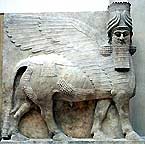
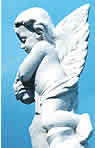


|
Lets try out the ADPNoB rule and see how well it works |
 |
West Side Story is completely unrelated to Romeo and Juliet. We know this because a number of details in the stories differ. |
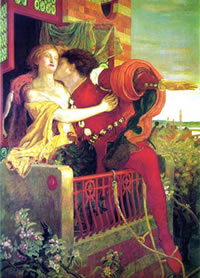 |
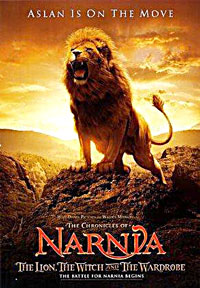 |
The Chronicles of Narnia are completely unrelated to the NT. We know this because a number of details in the stories differ. |
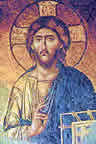 |
 |
Christianity is completely unrelated to Judaism. We know this because a number of details in their theologies differ.
|
 |
The ADPNoB rule in action: Reverend Bruce Manning Metzger |
|
Consider one of Reverend Metzger's Any-Difference-Proves-No-Borrowing forays in his famous essay >>
Reverend Metzger goes on to imagine that one difference means Christianity didn't borrow from the Mystery religions. This is so obvious to him, he doesn't have to spell it out. its got tits. its a cow. Move on. |
...a most profound difference between Christianity and the Mysteries was involved in the historical basis of the former and the mythological character of the latter. Unlike the deities of the Mysteries, who were nebulous figures of an imaginary past, the Divine Being whom the Christian worshipped as Lord was known as a real Person on earth only a short time before the earliest documents of the New Testament were written. |
B.M. Metzger, Methodology
in the Study of the Mystery Religion |
 Yes,
the ancient Mystery religions were so ancient they fade into prehistory.
So did their godmen, naturally. Yes, Christianity was new religion,
with a newish godman [an incarnation, so the story goes, of a nebulous
God-figure of an imaginary past]. Reverend Metzger identifies
one way, the new godman way, Christianity and other
Pagan religions were different.
Yes,
the ancient Mystery religions were so ancient they fade into prehistory.
So did their godmen, naturally. Yes, Christianity was new religion,
with a newish godman [an incarnation, so the story goes, of a nebulous
God-figure of an imaginary past]. Reverend Metzger identifies
one way, the new godman way, Christianity and other
Pagan religions were different. |
Reverend Metzger left this
bit out of his famous essay. Reverend Metzger
wasn't shooting at the enemy, he was cheering
up the troops in his own trench.
|
* The non-mystery parts of ancient religion had plenty of new divine men. |
 You
remember the
You
remember the 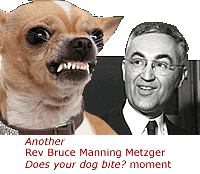
 Which
is strange. It seems to me if you were going
to come up with a new godman, and you specifically
and intentionally intended Him to borrow from
the old godmen, you'd pretty much
come up with a godman like Jesus.
And even if you didn't borrow on purpose,
if all that happened was your ancient world
view already had a notion about what a saving
godman was like (and if you lived back then,
it did), and you cut your new godman to that
pattern, you'd still pretty much come up with
a godman like Jesus.
Which
is strange. It seems to me if you were going
to come up with a new godman, and you specifically
and intentionally intended Him to borrow from
the old godmen, you'd pretty much
come up with a godman like Jesus.
And even if you didn't borrow on purpose,
if all that happened was your ancient world
view already had a notion about what a saving
godman was like (and if you lived back then,
it did), and you cut your new godman to that
pattern, you'd still pretty much come up with
a godman like Jesus.|
The ADPNoB rule is not comprehensive. It is not consistent with itself. Even if the ADPNoB rule didn't confuse similarity with identity, it would still fail to explain the ancient evidence. Not comprehensive. We're looking for a theory of religious origins that is comprehensive,
that can explain not just Jesus- Osiris similarities, but also Osiris-
Mithras- Adonis- Attis, Kore similarities.
The rule that asks you to believe this silly result must be
wrong. When someone gives you a "reason" that only works in the one place it has to work for their theory to be true, and that on other situations gives a completely different answer, you should not believe their analysis. |

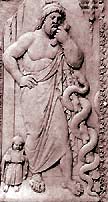


Not
consistent -- even the people who believe it don't believe
it.
Apply the apologists' Any-Difference-Proves-No-Borrowing rule to Judaism, and you learn that Christianity is free of the taint of Jewish origins. Which is silly. The rule that asks you to believe this silly result must be wrong. When someone gives you a "reason" that only works in the one place it has to work for their theory to be true, and that on other situations gives a completely different answer, you should not believe their analysis. |
 We
talked about this before. Let's test the ADPNoB rule by applying it not
to Christianity and Osiris-ism, but to Christianity and Judaism.
We
talked about this before. Let's test the ADPNoB rule by applying it not
to Christianity and Osiris-ism, but to Christianity and Judaism. How
does the Any-Difference-Proves-No-Borrowing rule apply to Christianity and
Judaism?
How
does the Any-Difference-Proves-No-Borrowing rule apply to Christianity and
Judaism? The Any-Difference-Proves-No-Borrowing rule doesn't work. Not even a little bit. Don't get fooled. |
|
Testing the ADPNoB rule: Pagan origins
of the XXX
myth |
|
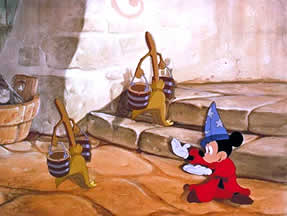
"At last he persuaded me to leave all my servants behind in Memphis and to go with him quite alone, for we should not lack people to wait upon us; and thereafter we got on in that way. But whenever we came to a stopping-place, the man would take either the bar of the door or the broom or even the pestle, put clothes upon it, say a certain spell over it, and make it walk, appearing to everyone else to be a man. It would go off and draw water and buy provisions and prepare meals and in every way deftly serve and wait upon us. Then, when he was through with its [page 375] services, he would again make the broom a broom or the pestle a pestle by saying another spell over it. ''Though I was very keen to learn this from him, I could not do so, for he was jealous, although most ready to oblige in everything else. But one day I secretly overheard the spell - it was just three syllables - by taking my stand in a dark place. He went off to the square after telling the pestle what it had to do, and on the next day, while he was transacting some business in the square, I took the pestle, dressed it up in the same way, said the syllables over it, and told it to carry water. When it had filled and brought in the jar,
I said, 'Stop! don't carry any more water:
be a pestle again!' But it would not obey
Meanwhile Pancrates appeared on the scene, and comprehending what had happened, turned them into wood again, just as they were before the spell, and then for his own part left me to my own devices without warning, taking himself off out of sight somewhere.'' "Then you still know how to turn the pestle into a man? " said Deinomachus. " Yes," said he: "only half way, however, for I cannot bring it back to its original form if it once becomes a water [page 377] carrier, but we shall be obliged to let the house be flooded with the water that is poured in! " |
Lucian, Lover of Lies, 34-36 (2d century AD), --
which you can find in: Henderson, Jeffrey. Lucian
III (1921/ 2004), pg. 373- 7
|
 "I
recognized that he was a holy man, and by
degrees, through my friendly behavior, I became
his companion and associate, so that he shared
all his secret knowledge with me.
"I
recognized that he was a holy man, and by
degrees, through my friendly behavior, I became
his companion and associate, so that he shared
all his secret knowledge with me.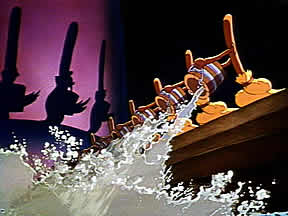 me
now: it kept straight on carrying until it
filled the house with water for us by pouring
it in! At my wit's end over the thing, for
I feared that Pancrates might come back and
be angry, as was indeed the case, I took an
axe and cut the pestle in two ; but each part
took a jar and began to carry water, with
the result that instead of one servant I had
now two.
me
now: it kept straight on carrying until it
filled the house with water for us by pouring
it in! At my wit's end over the thing, for
I feared that Pancrates might come back and
be angry, as was indeed the case, I took an
axe and cut the pestle in two ; but each part
took a jar and began to carry water, with
the result that instead of one servant I had
now two. | |
|
Good Books for this section
The
Gospel and the Greeks
|
What you'll find:
Because he was a Christian writing for other Christians, Nash (who seems like a smart, likable fellow) was able to write an apologist genre book—one whose tendentious reasoning betrays no expectation of unfriendly critical analysis. His analysis was basically: 1. To ignore similar fundamental ideas (soul, heaven, salvation, godman), and to attack outdated mid-20th century Jesus as a myth-by-myth analogue theories, 2. To bring up differences between Pagan myths and Christian myths, and then apply the apologists' Any-Difference-Proves-No-Borrowing rule.
|


 Available used at Amazon .com
|
|

| |
|

| |
|