|  |
||||||||||||||||||||||||||||||||
 |
|||||||||||||||||||||||||||||||||













|
Getting Started |
Reasons > Borrowing > Getting Started |
| Reasons
> |
Choices | Borrowing | Faith | The Bible is true | |
| First | Independently | From Judaism | Xerox copying |
 |
Facts, reasons, conclusions |  |
My
purpose is to discuss the doctrines I have
expounded rather than to pronounce judgment
upon them. We
gotta 'splain not just the narrow fact Christianity
began, but the wider fact Christianity
began in the middle of ancient western culture
where lots of people had similar ideas.
|

|
|
Here's where we are. In POCM's Facts section you read ancient texts and discovered that Christianity and Paganism shared lots of ideas. Idea wise, Christianity and Paganism were similar. In this Reasons part of POCM we're thinking about possible explanations of those similarities. The different menu items here —Choices, Borrowing, Faith, etc.— look at various possible explanations of those similarities. |
|
One possibility is that Christianity borrowed from Paganism? Let's be clear what "borrowing" means, POCM-style.
|



|
|
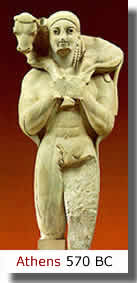
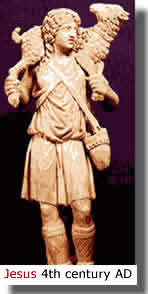

|
We want to explain all the facts. We want to explain more than just Christianity had a miracle working, prophecy fulfilling godman, and salvation, and heaven and hell, and initiation rituals, and dreams, and demons, etc.; we want to explain how lots of religions back then had those things. We want to explain how Christianity and Dionysus-ism, and Isis-ism, and Mithras-ism, and Adonis-ism, and Eleusis-ism had miracle working, prophecy fulfilling godmen (and goddessgals), and salvation, and heaven and hell, and initiation rituals, and dreams, and demons, etc. Explanations that are not comprehensive can not explain all the facts. Theories that are unable to explain the facts are not to be believed. |
 1.
Comprehensive
1.
Comprehensive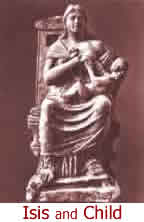
|
Does the need for consistency sound far fetched? It isn't. It comes up a lot. Checking for consistency is a good way to spot reasoning that sounds good at first, but that when you think harder turns out not to work. Take for example the apologists' Difference Proves No Borrowing Rule: Christianity is different in some detail from Paganism, therefore Christianity did not borrow from Paganism.
The ADPNoB rule is the go-to argument filling up many famous To be clear, apologists say the ADPNoB rule works like this: Fact: The stories about Jesus are different in some detail from the stories about Osiris. Conclusion: Jesus was not borrowed from Osiris. |
|
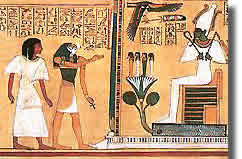
 "refutations" of Christianity's Pagan origins. It works like
this: The religion about Jesus--the walking, talking,
miracle working godman who died and came back to life and lives in heaven
where he judges the dead—didn't borrow from the older religion
about Osiris--the walking, talking, miracle working godman who died
and came back to life and lives in heaven where he judges the dead—because
those forty days Jesus came back to life on Earth, before he
went to heaven, are missing from the Osiris story.
That one difference proves no borrowing happened at all,
not one teensy bit. That's what "scholars" say. I am not making
this up.
"refutations" of Christianity's Pagan origins. It works like
this: The religion about Jesus--the walking, talking,
miracle working godman who died and came back to life and lives in heaven
where he judges the dead—didn't borrow from the older religion
about Osiris--the walking, talking, miracle working godman who died
and came back to life and lives in heaven where he judges the dead—because
those forty days Jesus came back to life on Earth, before he
went to heaven, are missing from the Osiris story.
That one difference proves no borrowing happened at all,
not one teensy bit. That's what "scholars" say. I am not making
this up.|
Let's see if the apologists believe their own ADPNoB rule. We'll test the rule by applying it not to Christianity and Osiris-ism, but to Christianity and Judaism. Lets list the first few facts that come to mind: The Christian three-headed God is different from Judaism's one-headed God. Christian salvation is different from Jewish salvation. Christian baptism is different from Jewish baptism. The Christian Eucharist is different from Judaism's Eucharist—does Judaism even have baptism and a Eucharist? |
By the way |
|
The very smart, very educated, very famous
arch apologist |

|
Apply the apologists' Any-Difference-Proves-No-Borrowing rule to these facts, and you reach this conclusion: Christianity is free from the taint of Jewish origins. 
Now, people argue about how much Christianity inherited from Judaism, but no one argues it got nothing from Judaism. The ADPNoB rule has taken us to a conclusion that is wrong. Let's recap. Our search for consistency led us to apply the ADPNoB rule to a different pair of ancient religions, and when we did that we discovered the ADPNoB rule gives an answer that is wrong. Silly. The ADPNoB rule itself does not work. The rule does not work. The conclusions suggested by the rule can not be trusted. In the apologists' ADPNoB analysis of Jesus and Osiris, the real difference between Jesus and Osiris isn't the basic facts about the two walking, talking, miracle working godmen who died, came back to life, and now live in heaven where they judge the dead. The real difference comes from the simple fact that the ADPNoB analysis is rigged so that overwhelmingly similar sets of facts are imagined to be unrelated. When someone gives you a "reason" that only works in the one place it has to work for their theory to be true, and that on other situations gives a completely different answer, you should not believe their analysis. |
|
|
|
 This
need for an analysis to be consistent is
This
need for an analysis to be consistent is | Greggy's Guesses |
You'll see later that my guess is that like other ancient religions, Christianity had daemons, miracles, Gods, godmen, heaven, hell, etc., and that that means Christianity picked those ideas up from the culture around it. I say it, but you shouldn't believe it—unless my reasoning also works in other similar situations. Unless, for example I say the other ancient religions, Dionysus-ism, Mithras-ism, Attis-ism, Osiris-ism, etc., all picked up their similar ideas from the culture around them, rather than that they all invented heaven, hell, godmen, daemons, etc., all on their own. POCM's analysis does say each of these religions borrowed—absorbed—their ideas from the culture around them. POCM's analysis is comprehensive and consistent. Hurray Greg! Hurray! |
| What other people think about POCM |
|
Tim Spalding |
 Your
site certainly demonstrates that you are better educated than this sorry
lot. (I won't speculate if they exceed you in other virtues, but it
is certainly possible.) But, in the world of people with the
requisite intellectual and technical skills to make sound and convincing
arguments on this topic,
Your
site certainly demonstrates that you are better educated than this sorry
lot. (I won't speculate if they exceed you in other virtues, but it
is certainly possible.) But, in the world of people with the
requisite intellectual and technical skills to make sound and convincing
arguments on this topic, |
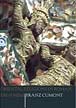
Oriental Religions in Roman Paganism
|
What
you'll find:
SEE! how religious borrowing actually happened in the Roman empire!
|



|
|
|
| A NEW FEATURE: A
scholarly and handsome reader Kicks POCM's Ass |
|
 |
< YOUR brainiac opinion here! > |
 |
|