|  |
||||||||||||||||||||||||||||||||
 |
|||||||||||||||||||||||||||||||||













Getting
Started |
Facts > Triumph > Getting Started |

|
Hellenism | Syncretic Judaism | Jesus legend | Jesus Scholarship |

|
Apostolic Legend | Apostolic Scholarship | Over Paganism | Over other Christianities |
 |
The facts about what we think we know about Jesus |  |
|
Sixteen
hundred years ago, Roman guys with swords
decided what will go in in your church this Sunday.
|
|
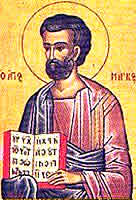
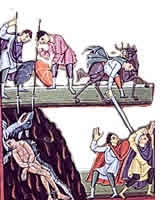
One itsy problem with the claim Christianity borrowed from Paganism is the New Testament. The histories of Jesus' life written by people who knew Him don't mention Him lifting salvation from Osiris, so why should we? POCM > Triumph reviews the facts, not about Jesus, but about what we think we know about Jesus.The history we believe: where does that history come from, and how did it get to us? Why do we care about all this? Because if the New Testament stories are not historical, POCM's version of Christian origins looks a lot more reasonable, that's why. |
|
 The
The
 The
The

|
|
 The Scholarship Split
|

Greggy's Guesses |
All I know is, the myth of apostolic succession (as scholars call it)
is a phony. |
 Does
this mean that I, Greg, know how Christianity began, Who Jesus was,
which gospels are closest to Him, and which of His sayings in the NT
are truly His? Nope. It doesn't. I don't know these things. And I don't
think there is any way to know them. Too much information has been lost.
Does
this mean that I, Greg, know how Christianity began, Who Jesus was,
which gospels are closest to Him, and which of His sayings in the NT
are truly His? Nope. It doesn't. I don't know these things. And I don't
think there is any way to know them. Too much information has been lost.
That's it for the POCM
> Triumph intro. Here's a riff on the historicity
of the New Testament |

|
Reasons: The words of Jesus and the historicity of the gospel |
We saw earlier how ancient authors tarted up their history scrolls with made up phony quotations—"quotations" that looks a lot like the "quotations" in our gospels. Let's revisit our gospels' quotations, and see what they tell us about the gospel authors' commitment to historical accuracy. You've heard people say, "Jesus said..." this or that. You've
maybe said that yourself, quoting the bible. The conservative orthodox
theory of Liberal scholars have a theory of their own: oral tradition. Our gospels' writers didn't know Jesus personally, they got what He said from a chain of tradition, oral tradition (some written down before it got to the gospelers), leading back to Jesus Himself. Our gospels' words of Jesus are real in the sense that they (or some of them maybe) originated with Him, although they got to us in a half-assed imprecise sort of way.
Or did the gospel writers get all those "quotations" by just making them up? Is it more likely that "Matthew" knew the words Herod spoke in a secret meeting, or did "Matthew" probably, like everyone else back then, just make up quotes because that was the standard way to tell a story? And if the only reasonable non-magical explanation is that the gospel writers got their "quotations" by making them up, then .... our gospel writers made stuff up. Just made it up. And it is not true the gospels are historical, not in the sense that the sayings and events we read about in them actually happened. |
 Christian
origins is that the words of Jesus in our gospels are real,
written by people who knew Jesus, or at least (Mk and Lk) who
got their stuff from people who got their stuff on the spot. The events
are real. The words of Jesus are real.
Christian
origins is that the words of Jesus in our gospels are real,
written by people who knew Jesus, or at least (Mk and Lk) who
got their stuff from people who got their stuff on the spot. The events
are real. The words of Jesus are real.  The
thing you maybe haven't noticed, probably haven't noticed unless someone
suggested you do the exercise, is how often our gospels' writers
"quote" other people. Besides Jesuses's the gospels
also record words of the disciples, Herod, angels, demons, satan, tax
collectors, and crowds of people all saying the same words all together.
The gospels even record long speeches spoken in dreams, and verbatim
accounts of inner thoughts that were never spoken, but that Jesus knew
because He could read minds.
The
thing you maybe haven't noticed, probably haven't noticed unless someone
suggested you do the exercise, is how often our gospels' writers
"quote" other people. Besides Jesuses's the gospels
also record words of the disciples, Herod, angels, demons, satan, tax
collectors, and crowds of people all saying the same words all together.
The gospels even record long speeches spoken in dreams, and verbatim
accounts of inner thoughts that were never spoken, but that Jesus knew
because He could read minds.  Here's
our historical accuracy question:
Here's
our historical accuracy question: |
To get you going, I'll do the first eight chapters of Matthew. |
 The
exercise
The
exerciseMt Ch 1: Dream angel, word for word |
| An angel
spoke to Jesus' step-Pa in a dream. And "Matthew"
was able to get the conversation, the dream conversation, down verbatim.
Word for word. Decades later. How did "Matthew" do that? What steps could "Matthew" have possibly taken to access the exact words spoken in a dream decades earlier? First of all, how does "Matthew" know it was an actual angel, a magic messenger from God that actually appeared in Joseph's dream—a deeply pagan idea—rather than just Joseph had a normal, non-magical dream about an angel? Second, remembering dreams at all is difficult, who can remember dream conversations word for word? |
20 But after he
had considered this, an angel of the
Lord appeared to him in a |
Gospel of Matthew, Chapter 1
|
 dream
and
dream
and Third, who can recount the exact words spoken in any conversation decades later? I can't. You can't. And we're supposed to believe Joseph could? Or "Matthew" -- or who? |
|
|
Go ahead, read this through and get back with me about how accurately you yourself can recount spoken words. QED. |
 
|
| Gospel of Matthew, Chapter 1
|
 The
case is stronger when you consider the original >>
The
case is stronger when you consider the original >>| Mt Ch 2: Magi, Prophesies fulfilled Next chapter and "Matthew" has the Magic men describing their trip in chorus. >> How does the historicist imagine "Matthew" was able to get these words exactly right—as "Matthew" claims to do—all those decades later, and "Matthew" not being there when they were said? |
|
| And right away the chief priests and teachers of the law reply to King Herod all together, in a chorus, citing Christian doctrine, quoting the Septuagint version of the Old Testament exactly. One is reminded of Ovid's country folk declaiming to each other in trochaic hexameter.
|
3 When King Herod heard this he was disturbed, and all Jerusalem with him. 4 When he had called together all the people's chief priests and teachers of the law, he asked them where the Christ was to be born. 5 "In Bethlehem in Judea," they replied, "for this is what the prophet has written: 6 "'But you, Bethlehem, in the land of Judah, are by no means least among the rulers of Judah; for out of you will come a ruler who will be the shepherd of my people Israel.'" |
 1
After Jesus was born in Bethlehem in Judea, during the time of King
Herod,
1
After Jesus was born in Bethlehem in Judea, during the time of King
Herod,
|
"Matthew" has King Herod call the wise men into a secret meeting, up at the castle, doors closed, phone off the hook, mum's the word. "Matthew" reports the doings of the secret meeting word for word >> Herod speaks concisely, exactly the words "Matthew" needs to move his plot along.
|
|
| Again with dream angels. Same problems as before. |
14 So he got up, took the child and his mother during the night and
left for Egypt, 15 where he stayed until the death of Herod.
And so was fulfilled what the Lord
had said through the prophet: "Out of Egypt I called my
son." |
|
More dream angels. Same problems. |
16 When Herod
realized that he had been outwitted by the Magi, he was furious, and
he gave orders to kill all the boys in Bethlehem and its vicinity who
were two years old and under, in accordance with the time he had learned
from the Magi. 17 Then what
was said through the prophet Jeremiah was fulfilled:
18 "A voice is heard in Ramah, weeping and great mourning,
Rachel weeping for her children and refusing to be comforted, because
they are no more." |
| Gospel of Matthew, Chapter 2
|
 7
Then
7
Then  13
When they had gone, an angel of the
13
When they had gone, an angel of the
|
 "Matthew"
thought Jesus was divine—a pagan idea. "Matthew"
knew divine men
"Matthew"
thought Jesus was divine—a pagan idea. "Matthew"
knew divine men  Only
it cannot be so. What "Matthew" claims to do is
not possible. "Matthew" made these conversations
up. The "facts" in "Matthew" are not facts
at all. The "facts" in "Matthew" are
made up.
Only
it cannot be so. What "Matthew" claims to do is
not possible. "Matthew" made these conversations
up. The "facts" in "Matthew" are not facts
at all. The "facts" in "Matthew" are
made up.Mt Ch 3: John the Dipper |
| Credulous "scholarship" explains away the improbability of the New Testament's direct quotations with the invention that Jesuses's disciples cherished and memorized the master's core teaching. Here in the third chapter of the Gospel of Matthew we find quotations
not of Jesus but John the Baptist.
Are we supposed to believe Jesuses's disciples cherished and memorized John's words too? And Herod's? And the Magic men's? Here's an exercise. I'm about to ask you to record the words of John the Baptist. Read these words to yourself once, then write them down exactly. Or, to be more realistic, have someone read them to you once, then write them down exactly. Check your work. How'd you do? What "Matthew" claims to do is not possible. |
1 In those days John the Baptist came, preaching in the Desert of Judea 2 and saying, "Repent, for the kingdom of heaven is near." 3 This is he who was spoken of through the prophet Isaiah: "A voice of one calling in the desert, 'Prepare the way for the Lord, make straight paths for him.'" 4 John's clothes were made of camel's hair, and he had a leather belt around his waist. His food was locusts and wild honey. 5 People went out to him from Jerusalem and all Judea and the whole region of the Jordan. 6 Confessing their sins, they were baptized by him in the Jordan River. 7 But when he saw many of the Pharisees and Sadducees coming to where he was baptizing, he said to them: "You brood of vipers! Who warned you to flee from the coming wrath? 8 Produce fruit in keeping with repentance. 9 And do not think you can say to yourselves, 'We have Abraham as our father.' I tell you that out of these stones God can raise up children for Abraham. 10 The ax is already at the root of the trees, and every tree that does not produce good fruit will be cut down and thrown into the fire. 11 "I baptize you with water for repentance. But after me will come one who is more powerful than I, whose sandals I am not fit to carry. He will baptize you with the Holy Spirit and with fire. 12 His winnowing fork is in his hand, and he will clear his threshing floor, gathering his wheat into the barn and burning up the chaff with unquenchable fire." |
| Gospel of Matthew, Chapter 3
|
|
Chapter 4 of the Gospel of Matthew records a long conversation between Jesus and the Devil, who were at the time alone in the desert. "Matthew" was able to record their conversation, alone in the desert, word for word.
|
1 Then Jesus was led by the Spirit into the desert to be tempted by the devil. 2 After fasting forty days and forty nights, he was hungry. 3 The tempter came to him and said, "If you are the Son of God, tell these stones to become bread." 4 Jesus answered, "It is written: 'Man does not live on bread alone, but on every word that comes from the mouth of God.'" 5 Then the devil took him to the holy city and had him stand on the highest point of the temple. 6 "If you are the Son of God," he said, "throw yourself down. For it is written: "'He will command his angels concerning you, and they will lift you up in their hands, so that you will not strike your foot against a stone.'" 7 Jesus answered him, "It is also written: 'Do not put the Lord your God to the test.'" 8 Again, the devil took him to a very high mountain and showed him all the kingdoms of the world and their splendor. 9 "All this I will give you," he said, "if you will bow down and worship me." 10 Jesus said to him, "Away from me, Satan! For it is written: 'Worship the Lord your God, and serve him only.'" 11 Then the devil left him, and angels came and attended him. |
| Gospel of Matthew, Chapter 4
|
|
| 18 As Jesus was walking beside the Sea of Galilee, he saw two brothers, Simon called Peter and his brother Andrew. They were casting a net into the lake, for they were fishermen. 19 "Come, follow me," Jesus said, "and I will make you fishers of men." 20 At once they left their nets and followed him. |
|
| Gospel of Matthew, Chapter 4
|
Mt Ch 5 - 8: Sermon up on the mountain |
| Jesus sat down up on the mountain and spaketh He these words, in English translation 2,400 in their numberédness. He spakethed them once, and "Matthew" did wryte them downe. Decades later. Verbatim. Readeth them now you. >>
|
1 Now when he
saw the crowds, he went up on a mountainside and sat down. His disciples
came to him, 2 and he began to teach them, saying:
|
| 11 "Blessed are you when people insult you, persecute you and falsely say all kinds of evil against you because of me. 12 Rejoice and be glad, because great is your reward in heaven, for in the same way they persecuted the prophets who were before you. 13 "You are the salt of the earth. But if the salt loses its saltiness, how can it be made salty again? It is no longer good for anything, except to be thrown out and trampled by men. 14 "You are the light of the world. A city on a hill cannot be hidden. 15 Neither do people light a lamp and put it under a bowl. Instead they put it on its stand, and it gives light to everyone in the house. 16 In the same way, let your light shine before men, that they may see your good deeds and praise your Father in heaven. 17 "Do not think that I have come to abolish the Law or the Prophets; I have not come to abolish them but to fulfill them. 18 I tell you the truth, until heaven and earth disappear, not the smallest letter, not the least stroke of a pen, will by any means disappear from the Law until everything is accomplished. 19 Anyone who breaks one of the least of these commandments and teaches others to do the same will be called least in the kingdom of heaven, but whoever practices and teaches these commands will be called great in the kingdom of heaven. 20 For I tell you that unless your righteousness surpasses that of the Pharisees and the teachers of the law, you will certainly not enter the kingdom of heaven. 21 "You have heard that it was said to the people long ago, 'Do not murder, and anyone who murders will be subject to judgment.' 22 But I tell you that anyone who is angry with his brother will be subject to judgment. Again, anyone who says to his brother, 'Raca,' is answerable to the Sanhedrin. But anyone who says, 'You fool!' will be in danger of the fire of hell. 23 "Therefore, if you are offering your gift at the altar and there remember that your brother has something against you, 24 leave your gift there in front of the altar. First go and be reconciled to your brother; then come and offer your gift. 25 "Settle matters quickly with your adversary who is taking you to court. Do it while you are still with him on the way, or he may hand you over to the judge, and the judge may hand you over to the officer, and you may be thrown into prison. 26 I tell you the truth, you will not get out until you have paid the last penny. 27 "You have heard that it was said, 'Do not commit adultery.' 28 But I tell you that anyone who looks at a woman lustfully has already committed adultery with her in his heart. 29 If your right eye causes you to sin, gouge it out and throw it away. It is better for you to lose one part of your body than for your whole body to be thrown into hell. 30 And if your right hand causes you to sin, cut it off and throw it away. It is better for you to lose one part of your body than for your whole body to go into hell. 31 "It has been said, 'Anyone who divorces his wife must give her a certificate of divorce.' 32 But I tell you that anyone who divorces his wife, except for marital unfaithfulness, causes her to become an adulteress, and anyone who marries the divorced woman commits adultery. 33 "Again, you have heard that it was said to the people long ago, 'Do not break your oath, but keep the oaths you have made to the Lord.' 34 But I tell you, Do not swear at all: either by heaven, for it is God's throne; 35 or by the earth, for it is his footstool; or by Jerusalem, for it is the city of the Great King. 36 And do not swear by your head, for you cannot make even one hair white or black. 37 Simply let your 'Yes' be 'Yes,' and your 'No,' 'No'; anything beyond this comes from the evil one. 38 "You have heard that it was said, 'Eye for eye, and tooth for tooth.' 39 But I tell you, Do not resist an evil person. If someone strikes you on the right cheek, turn to him the other also. 40 And if someone wants to sue you and take your tunic, let him have your cloak as well. 41 If someone forces you to go one mile, go with him two miles. 42 Give to the one who asks you, and do not turn away from the one who wants to borrow from you. 43 "You have heard that it was said, 'Love your neighbor and hate your enemy.' 44 But I tell you: Love your enemies and pray for those who persecute you, 45 that you may be sons of your Father in heaven. He causes his sun to rise on the evil and the good, and sends rain on the righteous and the unrighteous. 46 If you love those who love you, what reward will you get? Are not even the tax collectors doing that? 47 And if you greet only your brothers, what are you doing more than others? Do not even pagans do that? 48 Be perfect, therefore, as your heavenly Father is perfect. "Matthew" 6 2 "So when you give to the needy, do not announce it with trumpets, as the hypocrites do in the synagogues and on the streets, to be honored by men. I tell you the truth, they have received their reward in full. 3 But when you give to the needy, do not let your left hand know what your right hand is doing, 4 so that your giving may be in secret. Then your Father, who sees what is done in secret, will reward you. 5 "And when you pray, do not be like the hypocrites, for they love to pray standing in the synagogues and on the street corners to be seen by men. I tell you the truth, they have received their reward in full. 6 But when you pray, go into your room, close the door and pray to your Father, who is unseen. Then your Father, who sees what is done in secret, will reward you. 7 And when you pray, do not keep on babbling like pagans, for they think they will be heard because of their many words. 8 Do not be like them, for your Father knows what you need before you ask him. 9 "This, then, is how you should pray: "'Our Father in heaven, hallowed be your name, 10 your kingdom come, your will be done on earth as it is in heaven. 11 Give us today our daily bread. 12 Forgive us our debts, as we also have forgiven our debtors. 13 And lead us not into temptation, but deliver us from the evil one.' 14 For if you forgive men when they sin against you, your heavenly Father will also forgive you. 15 But if you do not forgive men their sins, your Father will not forgive your sins. 16 "When you fast, do not look somber as the hypocrites do, for they disfigure their faces to show men they are fasting. I tell you the truth, they have received their reward in full. 17 But when you fast, put oil on your head and wash your face, 18 so that it will not be obvious to men that you are fasting, but only to your Father, who is unseen; and your Father, who sees what is done in secret, will reward you. 19 "Do not store up for yourselves treasures on earth, where moth and rust destroy, and where thieves break in and steal. 20 But store up for yourselves treasures in heaven, where moth and rust do not destroy, and where thieves do not break in and steal. 21 For where your treasure is, there your heart will be also. 22 "The eye is the lamp of the body. If your eyes are good, your whole body will be full of light. 23 But if your eyes are bad, your whole body will be full of darkness. If then the light within you is darkness, how great is that darkness! 24 "No one can serve two masters. Either he will hate the one and love the other, or he will be devoted to the one and despise the other. You cannot serve both God and Money. 25 "Therefore I tell you, do not worry about your life, what you will eat or drink; or about your body, what you will wear. Is not life more important than food, and the body more important than clothes? 26 Look at the birds of the air; they do not sow or reap or store away in barns, and yet your heavenly Father feeds them. Are you not much more valuable than they? 27 Who of you by worrying can add a single hour to his life? 28 "And why do you worry about clothes? See how the lilies of the field grow. They do not labor or spin. 29 Yet I tell you that not even Solomon in all his splendor was dressed like one of these. 30 If that is how God clothes the grass of the field, which is here today and tomorrow is thrown into the fire, will he not much more clothe you, O you of little faith? 31 So do not worry, saying, 'What shall we eat?' or 'What shall we drink?' or 'What shall we wear?' 32 For the pagans run after all these things, and your heavenly Father knows that you need them. 33 But seek first his kingdom and his righteousness, and all these things will be given to you as well. 34 Therefore do not worry about tomorrow, for tomorrow will worry about itself. Each day has enough trouble of its own. "Matthew" CHAPTER 7 7 "Ask and it will be given to you; seek and you will find; knock and the door will be opened to you. 8 For everyone who asks receives; he who seeks finds; and to him who knocks, the door will be opened. 9 "Which of you, if his son asks for bread, will give him a stone? 10 Or if he asks for a fish, will give him a snake? 11 If you, then, though you are evil, know how to give good gifts to your children, how much more will your Father in heaven give good gifts to those who ask him! 12 So in everything, do to others what you would have them do to you, for this sums up the Law and the Prophets. 13 "Enter through the narrow gate. For wide is the gate and broad is the road that leads to destruction, and many enter through it. 14 But small is the gate and narrow the road that leads to life, and only a few find it. 15 "Watch out for false prophets. They come to you in sheep's clothing, but inwardly they are ferocious wolves. 16 By their fruit you will recognize them. Do people pick grapes from thornbushes, or figs from thistles? 17 Likewise every good tree bears good fruit, but a bad tree bears bad fruit. 18 A good tree cannot bear bad fruit, and a bad tree cannot bear good fruit. 19 Every tree that does not bear good fruit is cut down and thrown into the fire. 20 Thus, by their fruit you will recognize them. 21 "Not everyone who says to me, 'Lord, Lord,' will enter the kingdom of heaven, but only he who does the will of my Father who is in heaven. 22 Many will say to me on that day, 'Lord, Lord, did we not prophesy in your name, and in your name drive out demons and perform many miracles?' 23 Then I will tell them plainly, 'I never knew you. Away from me, you evildoers!' 24 "Therefore everyone who hears these words of mine and puts them into practice is like a wise man who built his house on the rock.25 The rain came down, the streams rose, and the winds blew and beat against that house; yet it did not fall, because it had its foundation on the rock. 26 But everyone who hears these words of mine and does not put them into practice is like a foolish man who built his house on sand. |
Here's the quiz. You read these 2,400 words once. Now, write them down exactly. Check your work. How'd you do? What "Matthew" claims to do is not possible. |
27 The rain came down, the streams rose, and the winds blew and beat against that house, and it fell with a great crash." 28 When Jesus had finished saying these things, the crowds were amazed at his teaching, 29 because he taught as one who had authority, and not as their teachers of the law. |
| Gospel of Matthew, Chapter 5- 7
|
|
 |
1 When he came down from the mountainside, large crowds followed him. 2 A man with leprosy came and knelt before him and said, "Lord, if you are willing, you can make me clean." 3 Jesus reached out his hand and touched the man. "I am willing," he said. "Be clean!" Immediately he was cured of his leprosy. 4 Then Jesus said to him, "See that you don't tell anyone. But go, show yourself to the priest and offer the gift Moses commanded, as a testimony to them." |
| Gospel of Matthew, Chapter 8
|
| |
5 When Jesus had entered Capernaum, a centurion came to him, asking for help. 6 "Lord," he said, "my servant lies at home paralyzed and in terrible suffering." 7 Jesus said to him, "I will go and heal him." 8 The centurion replied, "Lord, I do not deserve to have you come under my roof. But just say the word, and my servant will be healed. 9 For I myself am a man under authority, with soldiers under me. I tell this one, 'Go,' and he goes; and that one, 'Come,' and he comes. I say to my servant, 'Do this,' and he does it." 10 When Jesus heard this, he was astonished and said to those following him, "I tell you the truth, I have not found anyone in Israel with such great faith. 11 I say to you that many will come from the east and the west, and will take their places at the feast with Abraham, Isaac and Jacob in the kingdom of heaven. 12 But the subjects of the kingdom will be thrown outside, into the darkness, where there will be weeping and gnashing of teeth." 13 Then Jesus said to the centurion, "Go! It will be done just as you believed it would." And his servant was healed at that very hour. |
| Gospel of Matthew, Chapter 8
|
| |
23 Then he got into the boat and his disciples followed him. 24 Without warning, a furious storm came up on the lake, so that the waves swept over the boat. But Jesus was sleeping. 25 The disciples went and woke him, saying, "Lord, save us! We're going to drown!" 26 He replied, "You of little faith, why are you so afraid?" Then he got up and rebuked the winds and the waves, and it was completely calm. 27 The men were amazed and asked, "What kind of man is this? Even the winds and the waves obey him!" |
| Gospel of Matthew, Chapter 8
|
| |
28 When he arrived at the other side in the region of the Gadarenes, two demon-possessed men coming from the tombs met him. They were so violent that no one could pass that way. 29 "What do you want with us, Son of God?" they shouted. "Have you come here to torture us before the appointed time?" 30 Some distance from them a large herd of pigs was feeding. 31 The demons begged Jesus, "If you drive us out, send us into the herd of pigs." 32 He said to them, "Go!" So they came out and went into the pigs, and the whole herd rushed down the steep bank into the lake and died in the water. 33 Those tending the pigs ran off, went into the town and reported all this, including what had happened to the demon-possessed men. 34 Then the whole town went out to meet Jesus. And when they saw him, they pleaded with him to leave their region. |
| Gospel of Matthew, Chapter 8
|
Good Books for this section
The scholarly disassembly of the orthodox legend has an oceanic literature. Here's a non-representative smattering:
Introduction
to the New Testament
|
This book is a treasure—an excellent place for new students to start and a valuable reference if you already know plenty. A clearly written, readable roundup of modern New Testament scholarship by a giant in the field. Includes the history of who wrote what, when—and who copied from whom. Not just the canonical books, but also Q, the Gospels of Thomas, Hebrews, etc. etc. Wow. Also details the history of which sects developed in each region, when. Not what you learned in Sunday school. Highly recommended for any serious student.
|

|
|

Gospel Truth
|
Instead of pushing his own theories and opinions, Shorto describes the spectrum of modern scholarly opinion, from Jesus-is-a-myth to the-gospels-are-history. You get the names leading scholars in each camp, with a synopsis of their opinions—a great aid to your further reading. Absolutely the best introduction to modern New Testament scholarship, because it's written not by a scholar with an opinion to sell, but by an interested but dispassionate professional magazine writer who researched all sides of the issue and who knows how to write clearly. The result is a clear and easy to read overview of modern New Testament scholarship, from Old Testament prophecy through resurrection and on to how modern pastors include, or ignore, NT scholarship in their daily ministry.
|

|
|
| The Life
of Jesus Critically Examined
|
What you'll find:
|


|
|
| The Quest
of the Historical Jesus
 |
What you'll find:
You can't understand 20th century scholarship NT scholarship unless you read this famous and influential book.
|
|
|
|
The Formation of Q
|
What you'll find:
Q is the document Matthew and Luke used as the source for many of their Jesus sayings.
|
|
|
Christianizing
the Roman Empire (A.D. 100-400)
|
A solid scholarly look at the reasons Pagans converted to Christianity in the period before Christianity took over the central government of the Roman Empire. You'd think the main tool of conversion was preaching, or maybe people telling how their conversion had changed their lives. It wasn't. The main tool of conversion was magic! The ancient evidence shows the first Christian evangelism was based on miracle working and miracle healing—basically saying 'Hey Presto! My God is stronger than your Gods.' By the end of this period about ten percent of the Empire was Christian. By a famous Yale historian. Highly recommended for serious
students.
|
|
|
| The Historical
Evidence for Jesus |
What you'll find:
|
||||||||
|
|||||||||
|
|
| Pagans
& Christians in Late Antiquity
|
What you'll find:
|
|
|
|
The Homeric Epic and the Gospel of Mark
|
What you'll find:
Sound nutty? Yes it does. Which is why the professor supports his thesis with oodles of ancient evidence, and a meticulous, rigorous reasoning. There's so much evidence, it's can be tough to keep going. You may well groan, "Enough already, you've convinced me!"
|
|
|
|
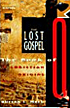
The Lost Gospel: The
Book of Q & Christian Origins
|
What you'll find:
Basically another Jesus Theories book.
|
|
|
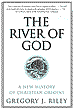
| The River
Of God
|
What you'll find:
If this book had been around in 1998, POCM would have been unnecessary.
|
|
|
|
|


| |
What other people think about POCM | |
|
||
 The
truth is that the plan of salvation was shown to Adam in what is called
the Mazzaroth (Hebrew Zodiac) before any books were written. The
Mazzaroth was later perverted by satan into occultic astrology. In the
book of Genesis we see evidence that Levitical rules were in place when
Cain and Abel brought there sacrifices before God. What I am saying
is the religion that Jesus taught was the same as that God commanded
in the Torah (old testament). The pagan religions that
you repeatedly refer to are a corruption of what God told His people
6,000 years ago. God creates, satan counterfeits and deceives.
Paganism started at the tower of Babel when satan influenced
nimrod and he rebelled against God. All the nations had
known the truth about Messiah but it was perverted with sun worship
orchestrated by satan. You refer to "ancients"
that overnight developed civilization, mathematics, etc.; not so, they
were influenced by fallen angels (read Genesis 6 and the book
of Enoch) and that is were "myths" about giants and titans
come from. One of his greatest weapons is appealing to the arrogance
of man. He has people believe they are so sophisticated, that
it is silly to believe he exists. The problem with Christianity
is that it lost its Hebraic roots soon after the resurrection
due to persecution, that is why Jesus warned us about false doctrine.
Rev 2:9 "I know the blasphemy of them which say they are Jews,
and are not, but are the synagogue of Satan." You have been duped
by a master deceiver, he has been active for thousands of years, he
plants seeds of doubt in minds, his hatred for you is without limit,
he will laugh at you throughout eternity.
The
truth is that the plan of salvation was shown to Adam in what is called
the Mazzaroth (Hebrew Zodiac) before any books were written. The
Mazzaroth was later perverted by satan into occultic astrology. In the
book of Genesis we see evidence that Levitical rules were in place when
Cain and Abel brought there sacrifices before God. What I am saying
is the religion that Jesus taught was the same as that God commanded
in the Torah (old testament). The pagan religions that
you repeatedly refer to are a corruption of what God told His people
6,000 years ago. God creates, satan counterfeits and deceives.
Paganism started at the tower of Babel when satan influenced
nimrod and he rebelled against God. All the nations had
known the truth about Messiah but it was perverted with sun worship
orchestrated by satan. You refer to "ancients"
that overnight developed civilization, mathematics, etc.; not so, they
were influenced by fallen angels (read Genesis 6 and the book
of Enoch) and that is were "myths" about giants and titans
come from. One of his greatest weapons is appealing to the arrogance
of man. He has people believe they are so sophisticated, that
it is silly to believe he exists. The problem with Christianity
is that it lost its Hebraic roots soon after the resurrection
due to persecution, that is why Jesus warned us about false doctrine.
Rev 2:9 "I know the blasphemy of them which say they are Jews,
and are not, but are the synagogue of Satan." You have been duped
by a master deceiver, he has been active for thousands of years, he
plants seeds of doubt in minds, his hatred for you is without limit,
he will laugh at you throughout eternity. | |
|
| A scholarly and handsome
reader Kicks POCM's Ass |
|||||||||||||||||||
 |
|
||||||||||||||||||
|
|||||||||||||||||||
 The
The