|  |
||||||||||||||||||||||||||||||||
 |
|||||||||||||||||||||||||||||||||













| Reasons > Scholarship > Getting Started |
| Scholar or Myth maker? | Yes! | History of Scholarship | Amateur Scholarship | |
| Con: J. Z. Smith | Con: AD Nock | Con: BM Metzger | Sourcebooks | |
| Con: Habermas |
 |
Scholars
& Myth Makers |
 |
 |
We
affirm that the Bible, both Old and New Testaments,
though written by men, was supernaturally inspired
by God so that all its words are the written true
revelation of God; it is therefore inerrant in the
originals and authoritative in all matters |
|
|
The easy way |
|
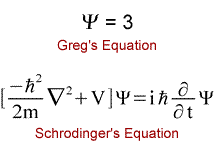
Believing what we're told sounds like a good idea. It's what we do for physics and chemistry. And like those sciences, Christian origins is a complicated subject. Lots of people way smarter than me have spent years learning facts about Schrodinger's equation, and stochastic equilibrium, and Jesus. They know buckets of stuff you and I will never know. For quantum mechanics and polymer chemistry the easiest, quickest thing for us to do is find out what the smart fellows say. If we do the same for Christian origins, then the answers we learn will be just as good as science's, right? |
Man up |
|
Choosing to believe what we're told, rather than thinking for ourselves, is servile and immoral. Man up. Read the evidence. Decide for yourself. |
As good as this idea sounds—and
in Christian apologetics "scholarship" is
the coin of the realm—Christian origins is different
from science in an important way: Science can be
tested. For example, Greg's equation and Schrodinger's equation both predict Ψ, the quantum wave function describing the kinematics of elementary particles. Smart people might argue over which equation is correct, but they can do more than argue, they can do experiments to check. Those experiments have been done. Schrodinger's equation correctly predicts and describes the results of experiments, Greg's does not. So, although it is possible to develop grand theories of physics based on Greg's equation, no one does—because, again, Greg's equation contradicts observation. 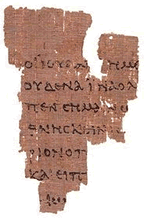
Christian origins are different. Christian origins theories can't be tested by experiment. New Testament scholar Colin Roberts says the writing on papyrus fragment p52 indicates this copy of the Gospel of John was written in the first half of the 100's AD. New Testament scholar Brent Nongbri says the writing doesn't do that. Who's right? There is no straightforward real world observation available to tell. Not only is it possible to spin theologies based on NT scholar Robert's silly claim, people do. This creates problems for folks trying to decide about Chrisitian origins the easy way. |
|
There is no consensus. It is not possible to find out what all the smart people believe, because, on lots and lots of basic stuff, they don't all believe the same thing.
|
 First, smart people disagree with each other.
  Second,
people make stuff up about what "scholars believe."
Second,
people make stuff up about what "scholars believe."
Problem number C: lots of New Testament scholarship is not distinguishable from mythology. Remember, POCM-wise "myth" means facts somebody made up to fit the answer they already knew is true. Re-read the Liberty University Doctrinal statement at the top of this page. Lots of nice self-styled scholars doing New Testament history pick up their old books already knowing that Jesus was real and the bible is true. As they do what they imagine to be scholarship, they line up each new fact to the conclusion they started with, and if the fit isn't maybe perfect, they invent facts to fill in the empty spaces. This isn't dishonest. Remember, they already know the answer. They're just filling stuff in the way it must have happened. You think I'm making this up? Here's a true story. |
Scholarship
by myth makers
In 1935 a New Testament
scholar guy named Colin Roberts came out with an article,
An Unpublished
Fragment of the Fourth Gospel in the John Rylands Library,
about P52, That's how P52 entered New Testament scholarship. To this day Colin Roberts' P52 date, 125 AD (± 25 years), is given out as the received wisdom of settled science in NT Studies 101 syllabuseses, graduate thesisuseses, academic articles, Sunday sermons, and Is The Resurrection of Jesus Real? debates.
P52—the date of P52—is a big deal. "Scholars of the New Testament have
used and abused papyrological evidence"
Colin Roberts came up with his P52 date with handwriting analysis, "...this claim rests solely upon considerations of paleography," (page 12). Roberts came up with his number by comparing the letters, α-β-γ-etc., on P52 with the letters on five, count 'em five, samples of datable early second century handwriting, and one sample from 153 AD. That's it. His report mentions no handwriting samples from the late 2d century. His report mentions no handwriting samples from the 3d century. On this basis, we know Jesus is real.
|
Because if they called it, "The Supreme Court of Zimbabwe" people would get confused. Now shut up and listen. |
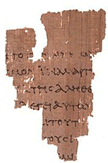
 an itsy scrap of ancient paperus on which he'd found
fragments of our Gospel of John. Ho hum. Recognizing
gospel scrap spit-billion three puts you at the back
of a long line. The big deal about Professor Roberts'
scrap is that he gave it a date—125 AD
(± 25 years) —that was generations
closer to Jesus than any other known New Testament
fragment (about 200 AD, if you're taking notes).
an itsy scrap of ancient paperus on which he'd found
fragments of our Gospel of John. Ho hum. Recognizing
gospel scrap spit-billion three puts you at the back
of a long line. The big deal about Professor Roberts'
scrap is that he gave it a date—125 AD
(± 25 years) —that was generations
closer to Jesus than any other known New Testament
fragment (about 200 AD, if you're taking notes). P52
comes up a lot because its early date proves Jesus is real. Honest.
The Gospel of John dates from no later than 125 AD, maybe as early as
100 AD. P52 proves that. What's more P52 comes from Egypt and Jesus
from Galilee, so allowing time for social diffusion probably John must
almost certainly have been written decades earlier, very close to the
time of Jesus himself, meaning the gospel was probably almost certainly
written by a disciple of Jesus, meaning it is first hand, or almost
certainly no later than second hand, proving the stuff in the gospel
is probably mostly true, meaning Jesus is real.
P52
comes up a lot because its early date proves Jesus is real. Honest.
The Gospel of John dates from no later than 125 AD, maybe as early as
100 AD. P52 proves that. What's more P52 comes from Egypt and Jesus
from Galilee, so allowing time for social diffusion probably John must
almost certainly have been written decades earlier, very close to the
time of Jesus himself, meaning the gospel was probably almost certainly
written by a disciple of Jesus, meaning it is first hand, or almost
certainly no later than second hand, proving the stuff in the gospel
is probably mostly true, meaning Jesus is real.  1
1  Professor
Roberts does not describe his scientific method. Because
he didn't have one. Again, according to his paper what he did
was he felt that in a general way P52 looked like a couple undated
maybe [!!] early second century documents, and in a general way
like four documents datable to 94, 98, 117, and 127 AD. Also,
some of the A's looked similar. And in a general way P52, he thought,
looked not like one [!] letter from 153 AD. That's it.
Professor
Roberts does not describe his scientific method. Because
he didn't have one. Again, according to his paper what he did
was he felt that in a general way P52 looked like a couple undated
maybe [!!] early second century documents, and in a general way
like four documents datable to 94, 98, 117, and 127 AD. Also,
some of the A's looked similar. And in a general way P52, he thought,
looked not like one [!] letter from 153 AD. That's it.
|
And >>
|
|
|
Brent Nongbri, 2005. The Use and Abuse of P52: Papyrological Pitfalls in the Dating of the Fourth Gospel. Harvard Theological Review 98:23-52. Get your own pdf copy.
|
 ...What
emerges from this survey is nothing surprising to paleographers: paleography
is not the most effective method for dating texts, particularly those
written in a literary hand. Roberts himself noted this point in his
edition of P52. The real problem is the way
...What
emerges from this survey is nothing surprising to paleographers: paleography
is not the most effective method for dating texts, particularly those
written in a literary hand. Roberts himself noted this point in his
edition of P52. The real problem is the way 
|
Was P52 written in 125 AD, or 225 AD, or 1925 AD? I wouldn't have a clue. The point isn't the date of P52, the point is what Colin Roberts' story tells us about the institutions of New Testament scholarship. The news isn't good. |
|
|
The date of the oldest gospel is a big deal. New Testament scholar Colin Roberts imagined he'd found a scrap generations earlier than all the others—but he did not, could not say what letters, in what variations, in what frequencies led him to his conclusion. New Testament scholar Colin Roberts concluded the handwriting in P52 did not look like handwriting from the late 2d or early 3d century. But in reaching his conclusion New Testament scholar Colin Roberts did not look at any—any—handwriting from those years. This is so hard to believe, I know you won't believe me till you've read the original article yourself.
Listen, you get to believe and be impressed by whatever you want. I myself find it hard to take seriously New Testament "scholarship" that works on a silly claim for, did I mention seventy years, without thinking it would maybe be a good idea to see the fucking data. And nowadays when New Testament scholars tell you they still believe P52 is early, remember these guys had the same opinion before someone else bothered to look at the actual facts. As New Testament scholars, they believe what they believe. They don't need no stinkin' facts. |
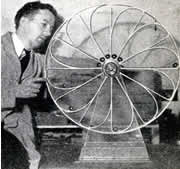

The point of the P52 story is that when the institutions of NT scholarship say "New Testament Scholarship" they include stuff whose facts have been invented and adjusted whatever way it takes to make Jesus real. And that, POCM-wise, is exactly what "mythology" means. |
||||||||
|
Colin Roberts made up the "fact" that
New Testament scholars who repeat, and after Nogbri cling to, New Testament scholar Roberts' P52 dates are doing what myth makers do—uncritically repeating silly impossible tales that confirm what they know to be true. |
||||||||
|
Doesn't bother me a bit. But let's keep in mind what's going on. |
 Notice
that modern New Testament Scholar myth makers do just
what ancient myth makers did
—they make up "facts" that
fit the ideas everyone believes in their time and place.
Ancient people believed in prophesies, dreams, miracles,
and magic godmen, and those are the "facts"
ancient myth makers made up. We modern people believe
science works and sure enough, the "facts"
modern myth makers make up are scientific. Cool, huh?
Notice
that modern New Testament Scholar myth makers do just
what ancient myth makers did
—they make up "facts" that
fit the ideas everyone believes in their time and place.
Ancient people believed in prophesies, dreams, miracles,
and magic godmen, and those are the "facts"
ancient myth makers made up. We modern people believe
science works and sure enough, the "facts"
modern myth makers make up are scientific. Cool, huh?| Greggy's Guesses |
I don't want you to care what I believe, but I don't suppose I'll damage you much by telling you what it is. Here we go: |
|
I've come to see that scholarship about religion is often religion first and scholarship second. Even smart people adjust their scholarly conclusions to fit the religious ideas they started with. Religious institutions promoting religious "scholarship" have religious agendas. So, although there are smart people who know lots more facts about Christian origins than I do, trying to pick out who the smart people actually are, and what they really believe, and how much their scholarship depends, or doesn't, on their religious convictions, is harder than just taking a while to read the primary ancient evidence yourself, and coming to your own conclusions. |
|
The New Testament story includes magic dreams, invisible angels, a godman whose magic powers include mind reading, shriveling trees, raising dead people, foreseeing the future, and traveling up and down through the sky. Are you really surprised that the "scholars" who tell you this stuff is real are myth makers? |
Trying to shortcut the ancient evidence doesn't work. Studying the scholarship is even murkier than studying the primary evidence. POCM's purpose is not to tell you what smart people to believe. POCM's purpose is to help you identify the evidence, so you can decide on your own. |
A roundup of the content of Christian origins scholarship |
 |
bet you're thinking, if Christianity really had Pagan origins, Greg would just open a college book and copy out the section saying so. And if I can't give you a quote like that, probably Christianity doesn't have Pagan origins. Right? |
|
Things aren't that simple. Sure, I can do the quote authority thing: Scholarship > Yes quotes scholars, Harvardous and otherwise, saying Christianity borrowed from Paganism; and Good Books > Yes links you to scholars' books explaining how it happened. But what I can't do is quote a scholar saying all scholars agree with my theory of what happened, Jesus wise. No one can. Jesus wise, scholars don't agree on much. The truth is, "scholarship" about Christianity is not a rigorous deal. Scholars won't even agree on basic stuff, like what ancient source materials to take seriously. Is it all ancient writings about Jesus, or just the canonical books? "Scholars" don't agree. Scholars write huge long books about Jesus and Christian origins, hundreds of pages, full of this claim and that claim, on and on, and never a mention of the facts that led them to the claims, or that support the claims, or that confirm the claims. Because, here's the secret, the claims aren't based on facts. |
|
The first point,
since you're reading this on the wacky web, is that the Pagan origins
of Christianity are not wacky bug- eyed- aliens- at- the- Trilateral-
Commission- are- reading- our- mail stuff. The
Pagan origins of Christianity The bug- eyed- aliens- at- the- Trilateral- Commission- are- reading- our- mail stuff—that's true too. Only don't tell. It's a secret. |

|


 Then,
in 1835, this German kid (at 27 already a university
lecturer, fluent in ancient languages and expert in
NT scholarship) genamened David Strauss came
out with a book he called
Then,
in 1835, this German kid (at 27 already a university
lecturer, fluent in ancient languages and expert in
NT scholarship) genamened David Strauss came
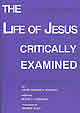
out with a book he called | Dr. Strauss' buch went through the gospels story by story, analyzing the best rationalist explanations of each of them. What his book shows, over and over, is that the rationalist explanations were so contrived and self contradictory and far fetched, they couldn't be believed. That was a very big deal, because everybody now saw that the "history" in the gospels could not be real history. The unavoidable implication of David Friedrich Strauss' The Life of Jesus Critically Examined was that—is that—the gospel writers got their "history" by making it up. The gospel stories are not history, they are myth. Oops. Here's where the relevance to modern scholarship comes in. Not everyone was willing to accept Dr. Strauss' results. |
Stubborn bible literalists couldn't out-reason David Strauss, but they could refuse to think about his ideas. They put their fingers in their ears and insisted the bible is history. La, la, la, la la la la. The nice folks at Liberty, and Biola, and Talbot go here. |

|
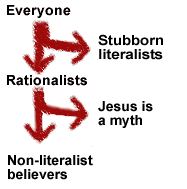 |
Stubborn denial isn't for everyone. Scholarship split. People who preferred reason over comforting results dealt with Strauss' analysis, in different ways. Jesus is a myth scholars, in the late 19th and early 20th century, worked out theories of the pagan origins of the Christ myth. The bible is myth. The New Testament has no meaningful history. Jesus is a myth explained by His parallels with other ancient myths. Believing scholars who were not bible-literalists preserved the meaning of Christianity by re-imagining the New Testament as history filtered through the beliefs and circumstances of the ancient church. Jesus was a real person. He can be rooted out by picking through the gospel stories for the historical kernel. Thus the Jesus Seminar and much of 20th century academic New Testament scholarship. |
Two Ways Strauss' Life of Jesus changed Christian scholarship—and the world
|
 Irrelevance
of Christian stories
Irrelevance
of Christian storiesSplitsville
My answer to these emails runs, "Please list exactly
the evidence you have in mind. List the evidence for
Washington (Plato / Caesar / etc.). List the evidence
for Jesus." They can't, of course. Checking the
facts has honestly never occurred to them. And that's
the point. That's what Splitsville does to "scholarship."
It splits the thinking up into little camps of like
minded people, camps where fundamental-axiom-wise everyone
agrees with everyone else, and no one checks
the facts. Or challenges the basic reasons. The scholarship of Christian believers isn't about whether the Jesus stories are true, it's about how the Jesus stories are true. It's the same for the other side. Fashionable academic scholarship isn't about whether the Jesus People theory is true, it's about how the Jesus People theory is true. Does this mean Ronald Nash, and Arthur Darby Nock are bad people? Are the Jesus Seminar professors out to cheat and lie? No it doesn't. No they're not. The Christian origins question is a tough one. Honest people disagree, honestly. What it does mean is that fundamentally none of the scholarship is rigorous, and you can't depend on this scholar, or that one, to tell you what to think. |


Good Books for this section
| The Life
of Jesus Critically Examined
|
What you'll find:
|



|
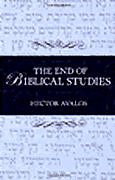
| The
The End of Biblical Studies
|
What you'll find:
|
|
|
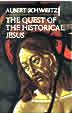
| The Quest
of the Historical Jesus
  |
What you'll find:
You can't understand 20th century scholarship NT scholarship unless you read this famous and influential book.
|
|
|
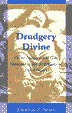
| Drudgery
Divine
|
You'll find:
But, because Professor Smith thinks obscure is clever,
the writing is terrible. This book will not make sense until you've
read A.D. Nock's Early Gentile Christianity and Its Hellenistic
Background.
|
|
Here's a sample >> Jesus, admits Professor Smith quoting
the Christian-borrowing scholar Loisy, was a savior-God like Osiris,
Attis and Mithras. He was a god who came to earth, died, and
saves, etc. etc. from which, opines Professor Smith,
Professor Smith is famous for his anti-borrowing agenda—which is why he's quoted a lot. |
"[Jesus] was a savior-god, after the manner
of Osiris, and Attis, a Mithra. Like them, he belonged by his
origin to the celestial world; like them, he had made
his appearance on the earth; like them, he had accomplished
a work of universal redemption, efficacious and typical;
like Adonis, Osiris, and Attis he ha died a violent death,
and like them he had returned to life; like them, he
ad prefigured in his lot that of the human beings who should take part
in his worship, and commemorate his mystic enterprise; like them, he had
predetermined, prepared, and assured the salvation of
those who became partners in his passion." [Quoting A.
Loisy, The Christian Mystery, in: The Hibbert Journal, 10(1911 - 12),
51]
|
|
|
| |
What other people think about
POCM
|
|
|
What I find stunning is the huge number of early christians that would die at the hands of animals rather than deny an association with Jesus. Based on the innate need to survive and the fact that no one would die voluntarily for something they don't truly believe, I suspect that it might be a little presumptuous on our part to try to 'wash away' this Jesus guy by arranging a comparison between his group and pagans. I don't see history being written by priests either. Many of the early historians were not christians. I think Josephus was, but he wasn't even mentioned in the Western civ books I studied in college. Actually, I think there may be something to this Jesus thing. I'm gonna check it out cause all the people I've met who say they "believe in him", whatever that means, seem to have an inner peace that the rest don't have. I'll write again after I've learned more about it. |
||
 What
a delightful site. I've read recently some of the writings of
Tacitus, the Roman historian, who was obviously a non-christian.
He mentions Jesus of Nazareth and his crucifixion.
What
a delightful site. I've read recently some of the writings of
Tacitus, the Roman historian, who was obviously a non-christian.
He mentions Jesus of Nazareth and his crucifixion. |
|


| |
|
| A NEW FEATURE: A
scholarly and handsome reader Kicks POCM's Ass |
|
 |
< YOUR brainiac opinion here! > |
|
|