|  |
||||||||||||||||||||||||||||||||
 |
|||||||||||||||||||||||||||||||||













| Reasons > Scholarship > Sourcebooks |
| Scholar or Myth maker? | Yes! | History of Scholarship | Amateur Scholarship | |
| Con: J. Z. Smith | Con: AD Nock | Con: BM Metzger | Sourcebooks | |
| Con: Habermas |
 |
Who
you gonna trust? Sourcebooks |
 |
  .
.
Who can you trust? Christianity's Pagan origin is something people take sides over. It's hard to trust someone who's sat down on one side of a question. And as to academics, well, faith trumps fact, and modern academic orthodoxy is dominated by believing scholars whose faith tells them Christianity is unique and true. Who you trust is up to you. I trust the ancients. |
Were miracles an important part of pre-Christian religion? Personally I can listen to modern writers grinding their axes on one side or the other, and not be sure. But when I read the ancients themselves, and over and over, hundreds and hundreds of times, they write about Asclepius healing the sick, Apollo prophesying, and Dionysus turning water into wine, then I don't have any doubt. Pagan's believed in miracles. Pagans believed in lots of miracles. Pagans believed in lots of miracles generations before Jesus was born. The good news is a number of folks have put together sourcebooks focused on Pagan religion and Christian origins. For a few dollars and a few evenings reading, you can find out about pre-Christian ideas, myths, and rituals, right from the pens of the ancients themselves. |
| The Life
of Apollonius of Tyana
|
What you'll find:
|



|
|

| Lucian,
Volume IV
|
What you'll find:
|

Miracles
in Greco-Roman Antiquity
|
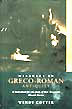
Lousy with miracles Like chocolate chips in mama's cookies, miracles were a basic ingredient in ancient people's understanding of how the world works. Every bite—another miracle. The ancient world was lousy with miracles. Don't believe me, believe the ancients. This excellent sourcebook gives hundreds of examples—250 pages—of ancient miracles recorded by the pens of ancients themselves. You'll read short excerpts from ancient texts describing Pagan Gods who healed the sick (blindness, paralysis, lameness), raised the dead, exorcised demons, controlled nature, turned water into wine, walked on water, calmed storms, and more. Well organized, easy to read. Highly recommended.
|


|
|
|
| Porphyry's
Against the Christians
|
What you'll find:
Porphyry if Tyre was a third century (c 232 - 305 AD) Pagan scholar. His Kata Christianon (Against the Christians), an ass-kicking look at the illogic of early Christianity, was widely read and eventually (448 BC) burned by the church. Unlike Celsus' critique, most of which survives in Origins refutation, Porphyry's work was so feared that even its refutations were burned. It survives only in "fragments," and of course people argue about which fragments are real and which aren't.
|

|
|
|
|
The Complete Dead Sea Scrolls in English
|
What you'll find:
|

|
|
|
|
The Error of the Pagan Religions
|
What you'll find:
Firmicus was a rich Roman Pagan who converted to Christianity some time in the fourth century AD, after which he wrote this book telling everyone how vile and ridiculous Pagan religions were.
|
|
The Nag Hammadi Library
|
What
you'll find:
|
| Collected
Ancient Greek Novels
|
What you'll find:
|

|
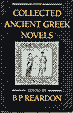
The ancients had novels—who knew? If you're used to "ancient literature" as excruciating trochaic hexameter, you'll be happily surprised by this collection. Here's a sample >> You see it, don't you? And you want to know what comes next. These so'm bitches could write. |
The smile of daybreak was just beginning to brighten
the sky, the sunlight to catch the hilltops, when a group of men in brigand
gear peered over the mountain that overlooks the place where the Nile
flows into the sea at the mouth that men call the Heracleotic. They stood
there for a moment, scanning the expanse of the sea beneath them: first
they gazed out over the ocean, but as there was nothing sailing there
that held out hope of spoil and plunder, their eyes were drawn to the
beach nearby. This is what they saw: a merchant ship was riding there,
moored by her stern, empty of crew but laden with freight. This much could
be surmised even from a distance, for the weight of her cargo forced the
water up to the third line of boards on the ship's side. But the beach!—a
mass of newly slain bodies, some of them quite dead, other half-alive
and still twitching, testimony that the fighting had only just ended…. |

|

|
|
|
|
The Egyptian Book
of the Dead
|
This is the original text of a famous and revealing collection of ancient spells the Egyptians put in tombs along with the dead guy. The idea was for the dead guy to use the power of the magic spells as a guide and tool in the complicated Egyptian afterlife. Yes I know that sounds sounds silly, but the book tells us a lot about Egyptian religion—including the Egyptian savior Gods Ra and Osiris. The famous Chapter 125 describes Osiris' believers standing before Osiris after death, to be judged according to the life they lead, seeing if they would to make it into Egyptian Heaven or end up suffering in Egyptian Hell.
|

| 1 Enoch |
What you'll find:
Enoch is a Jewish hero who gets just a line or two in our Old Testament. In intertestamental Judaism his legend was puffed up with new myths that sound right familiar to folks who've read the Bible. Adds plausibility to the theory that the Jesus stories are
mythic elaborations of old Jewish legends (Isaiah).
|
| Celsus
On the True Doctrine
|
What you'll find:
Celsus was a Pagan. In the second century AD he wrote a book pointing out flaws in Christianity. Of course Celsus points up the same contradictions and illogicalities in the Christian myth that people point up today. Ignore those. They aren't the point. The point is the things Celsus doesn't complain about—the things he takes for granted because they're part of his Pagan culture and his Pagan religion. Celsus doesn't attack Christians for believing in God, or in a godman, for the idea of a human soul, for Heaven or Hell or prayer or salvation or eternal life, etc., etc. Pay attention, while you read, to all the Pagan things in Christianity that Celsus doesn't attack—your ideas about Christianity will change forever. Wow. Highly recommended.
The original version of On the True Doctrine was
written in the second century AD by a Pagan guy named
Celsus. The Christains burned it; no copies sruvive. So where does this
book come from? In the third century one of the Church Fathers,
a fellow named Origen, wrote a long rebuttal (he called
it Against Celsus) that quoted Celsus idea by idea and often
word for word. Against Celsus does survive. This book uses it's long quotes
to reconstruct Celsus' book. Is it perfect? No. Is it pretty good? Yes.
|
|
|
|
|
|
What you'll find:
Who you gonna trust? The ancients. Believing scholars shade the facts in favor of the myth. Non-believers exaggerate and make up facts and connections as a way to attack the church. So who are you going to trust? That's up to you. I trust the ancients—people alive back when Christianity began, and before. That's what this book is about. This is a sourcebook, a collection of primary documents—excerpts from ancient authors who wrote about Pagan religion and early Christianity. It's a great collection, with the original text of most of the standard ancient references to the pagan mystery religions. This is a powerful book. You'll discover firsthand, right from the pens of the ancients themselves, that Dionysus came to earth "incognito, disguised as a man"; that Pagan Gods died and were reborn with the meaning that "the God is saved, and we shall have salvation."; that pagans had initiation ceremonies seen as "a voluntary death", sacred meals shared with the God, ceremonial washing, Pagan miracles, a Godman who changed water into wine, and a Pagan version of the great flood. And much more. An important book that no serious student will be without. Highly recommended.
|
|
|
Isis
and Osiris
|
This is the same Plutarch who wrote Plutarch's Lives. Like Solon, Plato and Pythagoras before him, when he wasn't biographying Plutarch traveled to Egypt and studied the mysteries of Isis and Osiris—probably even got initiated (though he doesn't say for sure). Isis and Osiris, at just over 90 pages, is modern scholarship's main source for the goodies on one of the ancient world's big name Pagan religions. This Loeb translation is pretty easy to read. And fun. You'll discover "accounts of the dismemberment of Osiris and his revivification and regenesis" [Isis and Osiris, 365]—His death and resurrection! Wow. Be careful, there are a bunch of P's Moralias in print at Loeb and elsewhere. For Isis and Osiris, you want number V, which is Loeb #306.
|
|
|
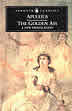
The
Golden Ass
|
The ancients had novels (who knew?!), and this is one of them. And, believe it or not, it's a fun read, lighthearted, funny, and well written. The story moves. For the boys: it even has explicit sex. Amazing. Who knew?! The story is about Lucius' adventures after he gets turned into a donkey. The first ten chapters are just fun, not related to the Pagan origins. Chapter eleven is about Lucius in Egypt, and his study and initiation into the mysteries of Isis and Osiris (he's a man again by this point). For the ancients these mysteries were sacred secrets—believers would and did die rather than reveal them. Apuleius' novel is the only surviving text that comes close to describing the mystery initiation ceremony. Apuleius also says initiation brought salvation: "The keys of hell and the guarantee of salvation were in the hands of the goddess, and the initiation ceremony itself a kind of voluntary death and salvation through divine grace."
|
|
|
|
The New Complete Works of Josephus
|
What you'll find:
|
|
|
| The Pythagorean
Sourcebook and Library
|
A sourcebook of ancient writings about Pythagoras and the Pythagoreans, everything from full biographies to one-line fragments. SEE Pythagoras perform miracles. All from the pens of the ancients themselves. Ooh yeah. (Guthrie collected and translated most of the stuff here, publishing a small run in 1920. Fideler dug up and added more Pythagorean stuff for the 1987 and 1988 editions—say that three times fast.)
|
|
|
|
|
