|  |
||||||||||||||||||||||||||||||||
 |
|||||||||||||||||||||||||||||||||













| Reasons > Scholarship > History of Pagan Origins Scholarship |
| Scholar or Myth maker? | Yes! | History of Scholarship | Amateur Scholarship | |
| Con: J. Z. Smith | Con: AD Nock | Con: BM Metzger | Sourcebooks | |
| Con: Habermas |
 |
Pagan
Origins scholarship in the 20th century |
 |
|
|
Here's a short history of Pagan origins scholarship: 1835: Strauss shows Jesus stories are myths 20th Century
|
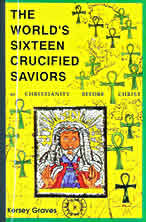

 Conservative
Direct copying -- late 1800s, early 1900s OK, so it's obvious where the Jewish myths come from. How about the
Jesus stories, The truth is, it wasn't so simple. People got carried away. Sure, some of what the mythicist scholars found was sort of similar to Jesus. But other stuff wasn't. In the rush of discovery, excited scholars filled in gaps in the copycat mythicist theory with facts that weren't really there. Nowadays we remember Sir James Frazier as the professional scholar behind this copycat dying and rising god theory of Jesus. There were several others.
Later, well into in the 20th century, a German guy named Bultmann, and a French fellow named Loisy tossed away the copycat mythicists' un-factual factual details, and found enough similarities left over to write influential books going through the New Testament in excruciating (I choose this word carefully) detail, laying out (among other things) grand theories of a mythic Christ. It takes about an hour sitting with Frazier, Bultmann, Loisy et pals to spot the trouble with their theories. No footnotes. They drone on page after page, claiming this, asserting that. The only thing missing is rigor. And, for most of their shtick, evidence. Mid 20th century. Conservative counterpunch:
different/ first / independent. In 1928 a christian journal published the Reverend Arthur Darby Nock's long article "refuting" the then popular idea that Jesus' myth derived from Pagan mystery religions: Early Gentile Christianity and Its Hellenistic Background. (details at Con: AD Nock.) Nock's analysis is not comprehensive or consistent; the mere pretence of refutation satisfied conservatives.
The conservative Christian reply to the notion of a mythic Christ is generally breaks down to different/ first/ independent. The reply comes out in books and articles written by one believer for other believers. Everyone in the target audience picks up the magazine already believing the "refutation's" conclusion. Because no readers will argue with the conclusions, the refuting "scholar" doesn't have to be rigorous. And they never are. They all repeat silly reasoning, and move the facts around so they fit the preordained conclusion. [Details at Different / First / Independent / etc under the Borrowing tab.] Mid 20th century, Liberal scholarship's
"Historical Jesus"
The results of this grand theory are mixed. Some of it's fact-based conclusions are way cool, particularly stuff about which gospel writers copied which other gospel writers, and details about the now lost but reconstructable gospel sayings source called Q. But when it comes to finding the Historical Jesus, literary criticism has failed. Some scholars see a Jewish rabbi. Others see a nutter millenialist. Or a magician. Or a cynic philosopher. The list goes on and on. The reason literary criticism gives twenty Historical Jesoi and not one Historical Jesus is, literary criticism does not work. Christian-Pagan similarities-wise, academic scholarships' answer is basically to ignore theories of meaningful Christian borrowing. Sure, there are peripheral cultural similarities. But associate professors know, because they assumed it, that the New Testament stories and quotations go back to a historical Jesus. Because of that there is no possibility of a fundamental connection between our stories and their myths. Individual parallels
Wild ass theories 1) There was maybe a Historical Jesus, but our gospel stories about
Him are not based entirely on a historical record of His life. The gospels
were written later, by folks who filled in missing bits with theological
"facts" that made the story come out the way their theology
said it had to. I.e., they made it up.
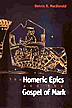
For example, Professor MacDonald's Homeric Epic and the Gospel
of Mark explains how the Gospel of Mark borrowed its structure
and ideas from Homer's Iliad. 2) There was no Historical Jesus. Paul and the other first Christians
believed in a mythic Jesus who fulfilled old Jewish prophecies; the
gospels were written later by people who took the old myths literally
and wrote the gospels stories to fill in details they figured must have
happened. Sort of like how the 19th century mythicist scholars invented
facts to fill in details they figured must have happened..
The famous advocates of theory 2 are are GA Wells and Earl Doherty.
|
 and,
for the first time, translated ancient Assyro-Babylonian-Akkadian-Sumerian
cuneiform texts. Turns out ancient Mesopotamian people told
stories way similar to stories in our bible. Gods like our
God, breathing life into first men and first women created from clay.
Floods like our flood, all the way down to plot details like sending
out birds from the ark, and God enjoying the smoke of the sacrifice
Utnapishtim—and, centuries later, Noah—burned at an altar.
And so on. You get the picture. Point by point, myth by myth, religious
idea by religious idea, ancient Judaism fits neatly into the
flow of ancient middle eastern culture.
and,
for the first time, translated ancient Assyro-Babylonian-Akkadian-Sumerian
cuneiform texts. Turns out ancient Mesopotamian people told
stories way similar to stories in our bible. Gods like our
God, breathing life into first men and first women created from clay.
Floods like our flood, all the way down to plot details like sending
out birds from the ark, and God enjoying the smoke of the sacrifice
Utnapishtim—and, centuries later, Noah—burned at an altar.
And so on. You get the picture. Point by point, myth by myth, religious
idea by religious idea, ancient Judaism fits neatly into the
flow of ancient middle eastern culture. the
ones Strauss had convinced people were myths? The simple answer, the
one that looked obvious to free thinkers at the time, was that like
Judaism Jesus was also a knock-off copy of ancient pagan religions.
Enthusiastic amateur and ernest but undisciplined professional
scholars went searching for myths like the Jesus myth. And,
they said, they found them. Point by point, fact by fact, they found
dying and rising savior Gods, born on the 25 of December,
of virgin mothers, with 12 disciples. Like that.
the
ones Strauss had convinced people were myths? The simple answer, the
one that looked obvious to free thinkers at the time, was that like
Judaism Jesus was also a knock-off copy of ancient pagan religions.
Enthusiastic amateur and ernest but undisciplined professional
scholars went searching for myths like the Jesus myth. And,
they said, they found them. Point by point, fact by fact, they found
dying and rising savior Gods, born on the 25 of December,
of virgin mothers, with 12 disciples. Like that.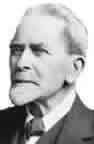

 Facts
are stubborn things. In spite of believers' definitive refutations,
the notion that Christianity has Pagan origins remains popular. By the
1990s, and in a reprint in 2003, Christian popularist professor Ronald
Nash's The Gospel and The Greeks was able not only
to outdo Nock and Metzger's uncritical reasoning (Nash's trick is to
dig deep enough to find some difference of detail between our stories
and their myths), but also to ignore the last fifty years of modern
scholarship, and adjust away unfavorable facts—seventy-five years
after Nock, believing scholarship has simply forgotten the basic evidence.
Facts
are stubborn things. In spite of believers' definitive refutations,
the notion that Christianity has Pagan origins remains popular. By the
1990s, and in a reprint in 2003, Christian popularist professor Ronald
Nash's The Gospel and The Greeks was able not only
to outdo Nock and Metzger's uncritical reasoning (Nash's trick is to
dig deep enough to find some difference of detail between our stories
and their myths), but also to ignore the last fifty years of modern
scholarship, and adjust away unfavorable facts—seventy-five years
after Nock, believing scholarship has simply forgotten the basic evidence. The
fashion in modern academic NT scholarship is to work within a Grand
Theory that assumes some sort of at least half-assed historical
connection between the gospel sayings and the assumed founder of Christianity,
Jesus. Several generations of associate professors have thrown their
lives at nit picking "literary criticism"
imagined to tease out the real "historical" Jesus.
The
fashion in modern academic NT scholarship is to work within a Grand
Theory that assumes some sort of at least half-assed historical
connection between the gospel sayings and the assumed founder of Christianity,
Jesus. Several generations of associate professors have thrown their
lives at nit picking "literary criticism"
imagined to tease out the real "historical" Jesus.


 Enthusiastic
amateurs
Enthusiastic
amateurs| Drudgery
Divine
| You'll find:
But, because Professor Smith thinks obscure is clever,
the writing is terrible. This book will not make sense until you've
read A.D. Nock's Early Gentile Christianity and Its Hellenistic
Background.
|


|
Here's a sample >> Jesus, admits Professor Smith quoting
the Christian-borrowing scholar Loisy, was a savior-God like Osiris,
Attis and Mithras. He was a god who came to earth, died, and
saves, etc. etc. from which, opines Professor Smith,
Professor Smith is famous for his anti-borrowing agenda—which is why he's quoted a lot. |
"[Jesus] was a savior-god, after the manner
of Osiris, and Attis, a Mithra. Like them, he belonged by his
origin to the celestial world; like them, he had made
his appearance on the earth; like them, he had accomplished
a work of universal redemption, efficacious and typical;
like Adonis, Osiris, and Attis he ha died a violent death,
and like them he had returned to life; like them, he
ad prefigured in his lot that of the human beings who should take part
in his worship, and commemorate his mystic enterprise; like them, he had
predetermined, prepared, and assured the salvation of
those who became partners in his passion." [Quoting A.
Loisy, The Christian Mystery, in: The Hibbert Journal, 10(1911 - 12),
51]
|

|
|

| The Life
of Jesus Critically Examined
|
What you'll find:
|
|
|
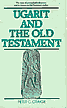
| Ugarit
and the Old Testament (1983)
|
A nice little (110 page) general-audience introduction to Ugarit (modern Ras Shamara in Syrian), where clay tablets discovered in 1929 revealed a pre-Israelite Semitic civilization with gods and myths similar to, but earlier than, Old Testament gods and myths. If you can find it cheap, read this before you read Smith's Origins of Biblical Monotheism.
|

|
|
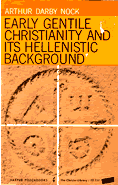
| Early Gentile
Christianity and Its Hellenistic Background
| You'll find:
First published in 1928 and reissued and updated in 1964,
this is the canonical refutation of the late 19th and
early 20th century scholarly claims that Christianity borrowed
from Paganism. This essay is widely cited as an authority, "Dr.
Nock has refuted the German School. . .", and the arguments Nock
developed here are the same ones believers use today.
|
  | Nock was a Harvard professor who read and understood the scholarship. He did not—could not, in that generation when scholars knew better—deny the deep similarities between Christianity and the Pagan mysteries. For example >> | The Eucharist ...
is in line with contemporary mysteries, which purported to represent the
sufferings and triumph of a god, in which his worshipers sympathized and
shared....The Eucharist
is a mystery, as mysteries were then understood, and Christianity, the
heir of Judaism, has also an essential spiritual continuity with Hellenistic
religion.
|
|
|
Nock was also a committed Christian, a Doctor of Divinity who wasn't about to admit Christianity borrowed from Paganism, so for every similarity he comes up with a reason the similarity doesn't count. The 1964 Harper Torchbook edition is expanded
with Nock's later thoughts and arguments. It is out of print, but often available used through Amazon
|
|
|
The
Gospel and the Greeks
|
What you'll find:
Because he was a Christian writing for other Christians, Nash (who seems like a smart, likable fellow) was able to write an apologist genre book—one whose tendentious reasoning betrays no expectation of unfriendly critical analysis. His analysis was basically: 1. To ignore similar fundamental ideas (soul, heaven, salvation, godman), and to attack outdated mid-20th century Jesus as a myth-by-myth analogue theories, 2. To bring up differences between Pagan myths and Christian myths, and then apply the apologists' difference-proves-no-borrowing rule.
|
 Available used at Amazon .com
|
|
|
|
What you'll find:
Who you gonna trust? The ancients. Believing scholars shade the facts in favor of the myth. Non-believers exaggerate and make up facts and connections as a way to attack the church. So who are you going to trust? That's up to you. I trust the ancients—people alive back when Christianity began, and before. That's what this book is about. This is a sourcebook, a collection of primary documents—excerpts from ancient authors who wrote about Pagan religion and early Christianity. It's a great collection, with the original text of most of the standard ancient references to the pagan mystery religions. This is a powerful book. You'll discover firsthand, right from the pens of the ancients themselves, that Dionysus came to earth "incognito, disguised as a man"; that Pagan Gods died and were reborn with the meaning that "the God is saved, and we shall have salvation."; that pagans had initiation ceremonies seen as "a voluntary death", sacred meals shared with the God, ceremonial washing, Pagan miracles, a Godman who changed water into wine, and a Pagan version of the great flood. And much more. An important book that no serious student will be without. Highly recommended.
|
|
|
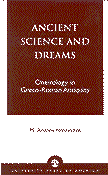
| Ancient
Science and Dreams
 |
What you'll find:
An excellent, readable, evidence based survey of the basic facts. Highly recommended.
|
|
|
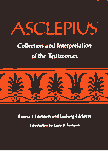
| Asclepius
|
What you'll find:
Primary evidence assembled in the 1940s, still in print because no one since has done better.
|
|
|
| Born Divine
|
What you'll find:
|
|
|
Death and the Afterlife
in Ancient Egypt
|
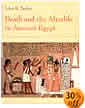
A glossy coffee table book full of beautiful pictures of Egyptian Gods taken from surviving papyruses, etc., and, who'd a thunk it, of lots of fun scholarly information about ancient Egyptian religion. Surviving ancient texts, including Egyptian book of The Dead and the Pyramid Texts, etc. describe an afterlife of happiness for good people and torment for bad people, mediated by the great savior Gods Ra and Osiris. The Egyptians had not one soul, but several—the ba, the ka, the shadow, the name—all of which survived death. A well written, pretty, wonderful book, if you like this sort of thing.
|
|
|
| Demonology
of the Early Christian World
|
What you'll find:
All based on a detailed scholarly review and presentation of the primary ancient evidence. Highly, highly recommended.
|
|
|
|
Life After Death by Alan Segal
|
What you'll find:
|
|
|
| Magika
Heira [Sacred magic]
|
What you'll find:
Poindexter heaven.
|
|
|
| Martyrdom
and Noble Death
|
What you'll find:
|
|
|
Miracles
in Greco-Roman Antiquity
|
Lousy with miracles Like chocolate chips in mama's cookies, miracles were a basic ingredient in ancient people's understanding of how the world works. Every bite—another miracle. The ancient world was lousy with miracles. Don't believe me, believe the ancients. This excellent sourcebook gives hundreds of examples—250 pages—of ancient miracles recorded by the pens of ancients themselves. You'll read short excerpts from ancient texts describing Pagan Gods who healed the sick (blindness, paralysis, lameness), raised the dead, exorcised demons, controlled nature, turned water into wine, walked on water, calmed storms, and more. Well organized, easy to read. Highly recommended.
|
|
|
|
The Early Greek Concept of the Soul
|
What you'll find:
|

|
|
| The
Riddle of Resurrection Dying and Rising
Gods in the Ancient Near East
|
What you'll find:
Ever since Jimmy Frazer wrote the Golden Bough more than a hundred years ago, pointing out that the ancient middle east was hopping with "dying and rising gods," people have argued if Jimmy had things straight. Dr. Mettinger, of the Dept of Theology, Lund U. in Sweden, reviews the scholarship on the issue, through 2000. That's less cool than you'd think for a couple reasons. hklh. sh. lqs. ilm. tlhmn #2 Scholars have defined the issue pretty tightly, so, for example Tammuz isn't a dying and rising god because he's really a demi-god, not a fully vested, tenured god. So, see, there really were no dying and rising gods. QED. Or, yeah, Osiris did die and get resurrected and go to Egyptian heaven, where he judges people and gives his followers eternal life—but his resurrection was to heaven, not to Earth, see, so it wasn't really a resurrection. So there really were no dying and rising gods. QED. Because the scholarship is so narrowly defined, it doesn't touch on questions people like you or me would like answered. Questions like, "Well, is it possible there's a relationship between Osiris—a pre-Christian godman who died and got resurrected and now lives in heaven and judges the dead, and Jesus—a godman who died and got resurrected and now lives in heaven and judges the dead?" Still, none of that is Dr. Metting's fault, and he's written a fine, readable book summarizing the state of the (narrow) scholarship.
|
|
|
|
The Homeric Epic and the Gospel of Mark
|
What you'll find:
Sound nutty? Yes it does. Which is why the professor supports his thesis with oodles of ancient evidence, and a meticulous, rigorous reasoning. There's so much evidence, it's can be tough to keep going. You may well groan, "Enough already, you've convinced me!"
|
|
|
Deconstructing
Jesus
|
What you'll find:
Is this the final word on who Jesus was or wasn't? No, it's not. It is a useful look at the methods and conclusions of modern New Testament scholarship—by an academic who isn't impressed by either. Price is an academic who understands the orthodox scholarly theories, though he doesn't buy them. His theme is that nothing we know about Jesus is historical, everything is mythical. The book follows the regulation scholarship, starting with the "Jesus People," (an academic term for Jesus' first followers; the Jesus People weren't really Christians, since they didn't believe Jesus was God or that he had risen from the dead), on to the first groups who worshiped Jesus as God, the Christ-cults (another academic term), through Jewish Messianic expectations, non-orthodox early Christianities and even ancient novels, which reveal a cultural theme of escape from crucifixion. The point is not one-for-one parallels between Jesus and, say, Mithras or Osiris. The point is that the first Christians took the basic ideas of their culture and adapted them to their new faith. |

|
|
|
The Jesus Puzzle by Earl Doherty
|
What you'll find:
Doherty, like professor G.A. Wells, notices that Paul and the other first century New Testament authors never give details about the Jesus of later Galillean legend. From which Doherty concludes there never was a Galillean Jesus; Christianity started wiht a mythic godman, later generations invented the earthly "history." Good use of primary sources, but this theory can only be correct if a number of odd coincidences explain away evidence that does seem most naturally to point to a real person Jesus.
|
|
|
| The Historical
Evidence for Jesus |
What you'll find:
|
||||||||
|
|||||||||
|
|