|  |
||||||||||||||||||||||||||||||||
 |
|||||||||||||||||||||||||||||||||













| Reasons > Scholarship > Yes! |
| Scholar or Myth maker? | Yes! | History of Scholarship | Amateur Scholarship | |
| Con: J. Z. Smith | Con: AD Nock | Con: BM Metzger | Sourcebooks | |
| Con: Habermas |
 |
What,
you thought I was making this up? |
 |
 |
The Jewish world in which Jesus lived
was awash in Hellenism, and contemporary biblical scholars are finding
its influence everywhere—including, ultimately, in the historical
Jesus. Little by little modern New Testament scholarship is exploring not just the broad fact of Christian borrowing, but also details about the Pagan origins of specific Christian ideas. Here's a smattering. What, you thought I was making this up? |

Borrowing in general |
The Christian myths are Greek myths used to interpret Jewish ideals. |
The myths
it [Paul's church] generated are ultimately
Greek myths, though they were used by Hellenistic Jews to rearticulate
Jewish ideals.
|

The early Christians behaved like every other group in every other era—they adopted and adapted ideas from the culture around them. |
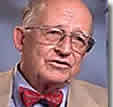
"Richard
Reitzenstein and Wilhelm Bousset were two scholars who did
manage to grasp the relevance of these ancient faiths for the study
of early Christianity. Their conclusion was a simple and seemingly inevitable
one: Once it reached
Hellenistic soil, the story of Jesus attracted to
itself a number of mythic
motifs that were common to
the syncretic religious
mood of the era. Indeed, as people familiar with the other Mystery Religions
came to embrace the Christian savior, it would have been practically
impossible for them not to have clothed him in all the accoutrements
of his fellow Kyrioi."
|
|||||||||


|
Specifics |
Not only did Jesus do the same miracles the earlier Pagan Gods did—the stories of His miracles are told using the old Pagan formula. |
In the healing miracles
the encounter of the sick person with Jesus
is usually followed by a remark about the severity of the disease. The
healing is either accomplished through a word of Jesus (magical terms
from Aramaic are sometimes preserved; (cf Mark 5:41; 7:34), through
some manipulation (Mark 8:23), or a combination of both; the conclusion
tells of the success of the healing and the applause of the bystanders.
All these features correspond to the standard
forms of the telling of exorcisms and healing narratives in
[pagan] antiquity… Nature miracles ... basic form and
narrative schema .., closely correspond
to those of analogous stories from the Greco-Roman world, including
those that can be found in the apocryphal acts of the apostles.
|
|||||||||


Jesus virgin birth was borrowed from Paganism.
|
There is also no virgin birth story in Paul's letters, the earliest written records of Christianity, dating from just fifteen or so years after the crucifixion. While the letters are filled with passionate devotion to the figure of Jesus Christ and point quite distinctly to his death and resurrection as the centerpiece of faith ... they are utterly silent of the subject of divine birth. This part of the story had not yet been necessary. Nor was it necessary in Mark's day, twenty years later. Inventing it became important only as Jesus expanded into a whole new world: God of the Gentiles. To the Hellenized Gentiles [Pagans] of the Empire—people who were used to their gods' having miraculous beginnings to show that, right from the start, they were different from ordinary mortals—this Jesus, this Son of God, if he were worthy of worship, ought to have a divine birth. This is where we see a variation on the Jewish
practice of creative borrowing
from ancient writings, for virgin birth was not a tradition in
Jewish history. No Jewish story or
legend spoke of the coming Messiah being born of a virgin. But there
were dozens of precedents for divine-mortal coupling and virgin birth
in Greek culture. Many Greek heroes were sired by gods, either
through old-fashioned penetration or something more grandiose, such
as (28)... Etc. etc.
|
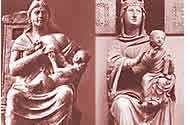
The Judeo-Christian notion of Heaven was borrowed from the Greeks.
|
Sometime in the mid-second century BCE, it appears, the Jews found heaven. But where did they find it? Uta Ranke-Heinemann notes that the Greeks believed in immortality of the soul long before the Jews did. She points out that Josephus was quite certain where the Essene [Jewish] belief in immortality came from: "Sharing the belief of the sons of Greece," Josephus writes of the Essenes, "they maintain that for virtuous souls there is reserved an abode beyond the ocean, a place which is not oppressed by rain or snow or heat, but is refreshed by the ever-gentle breath of the west wind (76) coming from the ocean; while they relegate base souls to a murky and tempestuous dungeon, big with never-ending punishments." [Josephus, The Jewish War, 2.8.11] So here, suddenly, and probably as a result of Greek
influence on Judaism, we have heaven and hell.
|
Jesus death was understood as a martyr's "nobel death"
|
The logic
behind both views of Jesus' crucifixion can
be traced to contemporary conceptions of martyrdom.
There is now a strong consensus among
New Testament scholars that
martyrological ideas were used
by early Christians at some time to
understand Jesus' death.….The ideas of 'vicarious, expiatory
suffering, death, or self-sacrifice," to use [Harvard scholar]
Williams' terms, were not Jewish ideas.
A similar investigation of Greek traditions, however, turned
up many analogies.
|
|
Luke wrote his gospel as a foundational epic—following the traditional Pagan formula. |
[T]he
literary model for Luke's work was the ancient Greek epic ....
The epic is a political and highly charged endeavor to provide a
foundation story for a community. As Virgil's Aeneid
is connected to the legendary events
of ancient Troy...so is the hero of Luke- Acts, Jesus of Nazareth, presented
as the heir of Israel's ancient prophecies. Divine
providence guides the course of his activity and the activity
of the apostles.... The course of events demonstrated divine
legitimation for a new nation that, in spite of adversity,
is destined to set the stage for a new era of history that
is seen as the eschatological fulfillment of ancient prophecy.
|
Mark and John's Gospels follow the old Pagan formula of an 'aretalogy,' listing the miracles and great deeds of the god.
|
The
literary genre of another early written source for the extant
gospels of the New Testament
can also be recognized: one or several collections of miracle stories
of Jesus, which were used by the Gospel of Mark and
also by the Gospel of John. This type of literature
enumerates the great deeds of a god, hero, or famous person; it must
be properly designated as an 'aretalogy.'
|
| |
|
Good Books for this section
|
Gospel Fictions
|
What you'll find:
|




|
|
The Homeric Epic and the Gospel of Mark
|
What you'll find:
Sound nutty? Yes it does. Which is why the professor supports his thesis with oodles of ancient evidence, and a meticulous, rigorous reasoning. There's so much evidence, it's can be tough to keep going. You may well groan, "Enough already, you've convinced me!"
|
|
|
| Born Divine
|
What you'll find:
|
|
|
| Bandits
Prophets & Messiahs
|
What
you'll find:
|

|
|
|
Cynics
and Christian Origins
|
What
you'll find:
Even if it weren't true, Downing's book would be a fascinating look at a niche of ancient history/ thought you didn't know existed. Would be, that is, if Downing could write a coherent paragraph, and organize his ideas. He can't. I've read hundreds of books about Christian origins — this one is absolutely the worst, coherence-wise. I wonder if Downing was sampling some of Allegro's Jesus mushroom.
|
|
|
| The Origins
of Biblical Monotheism
|
What you'll find:
For example: "[T]he priestly theological treatment of Israel's early religious history in Exodus 6:2-3 identifies the old god El Shadday with Yahweh:
This passage shows that Yahweh was unknown to the patriarchs. Rather, they are depicted as worshipers of El. In Israel El's characteristics and epithets became part of the repertoire of descriptions of Yahweh. Like El in the Ugaritic texts, Yahweh is described as an aged, patriarchal god ..., enthroned amidst the assembly of divine beings" [pg 141] It helps to know a bit about Ugarit before you start. Exhaustive, exhausting. Expensive—but worth every penny. HIghly re commented.
|

|
|
| The River
Of God
|
What you'll find:
If this book had been around in 1998, POCM would have been unnecessary.
|
|
|
| The
Scepter and the Star
|
What
you'll find:
|

|
|
|
|
Gospel Truth
|
Instead of pushing his own theories and opinions, Shorto describes the spectrum of modern scholarly opinion, from Jesus-is-a-myth to the-gospels-are-history. You get the names leading scholars in each camp, with a synopsis of their opinions—a great aid to your further reading. Absolutely the best introduction to modern New Testament scholarship, because it's written not by a scholar with an opinion to sell, but by an interested but dispassionate professional magazine writer who researched all sides of the issue and who knows how to write clearly. The result is a clear and easy to read overview of modern New Testament scholarship, from Old Testament prophecy through resurrection and on to how modern pastors include, or ignore, NT scholarship in their daily ministry.
|

|
|
| The Life
of Jesus Critically Examined
|
What you'll find:
|
|
|
| Ancient
Science and Dreams
  |
What you'll find:
An excellent, readable, evidence based survey of the basic facts. Highly recommended.
|
|
|
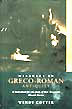
Miracles
in Greco-Roman Antiquity
|
Lousy with miracles Like chocolate chips in mama's cookies, miracles were a basic ingredient in ancient people's understanding of how the world works. Every bite—another miracle. The ancient world was lousy with miracles. Don't believe me, believe the ancients. This excellent sourcebook gives hundreds of examples—250 pages—of ancient miracles recorded by the pens of ancients themselves. You'll read short excerpts from ancient texts describing Pagan Gods who healed the sick (blindness, paralysis, lameness), raised the dead, exorcised demons, controlled nature, turned water into wine, walked on water, calmed storms, and more. Well organized, easy to read. Highly recommended.
|
|
|
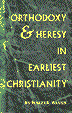
| by Walter Bauer
|
For hundreds of years everyone assumed that the earliest Christians were orthodox New Testament Roman Christians, and"heretical" Christianities—like Gnosticism and Marcionism—developed later, branches off the original orthodox trunk. Then in the 1930s this German guy named Walter Bauer decided to actually look at the evidence. Imagine! What he discovered was that pretty much everywhere he looked—Syria, Palestine, Egypt, etc.—the "heresies" weren't branches off any trunk, they were the original local Christianities. And they weren't small marginal sects, they were the main local Christianities. The evidence shows that all around the Mediterranean, outside Rome, the orthodox New Testament Roman Christianity was a secondary sect, a sect that became dominant only after the conversion of Constantine gave it the advantage of Roman swords. Wow. No wonder the big boys call this as a paradigm shattering book. Scholarly and technical, especially in the tedious first section of chapter one. Stick with it, because it gets fun and exciting. Out of Print, not available at Amazon. Try a used book seller. |
|
|
| Drudgery
Divine
|
You'll find:
But, because Professor Smith thinks obscure is clever,
the writing is terrible. This book will not make sense until you've
read A.D. Nock's Early Gentile Christianity and Its Hellenistic
Background.
|

|
Here's a sample >> Jesus, admits Professor Smith quoting
the Christian-borrowing scholar Loisy, was a savior-God like Osiris,
Attis and Mithras. He was a god who came to earth, died, and
saves, etc. etc. from which, opines Professor Smith,
Professor Smith is famous for his anti-borrowing agenda—which is why he's quoted a lot. |
"[Jesus] was a savior-god, after the manner
of Osiris, and Attis, a Mithra. Like them, he belonged by his
origin to the celestial world; like them, he had made
his appearance on the earth; like them, he had accomplished
a work of universal redemption, efficacious and typical;
like Adonis, Osiris, and Attis he ha died a violent death,
and like them he had returned to life; like them, he
ad prefigured in his lot that of the human beings who should take part
in his worship, and commemorate his mystic enterprise; like them, he had
predetermined, prepared, and assured the salvation of
those who became partners in his passion." [Quoting A.
Loisy, The Christian Mystery, in: The Hibbert Journal, 10(1911 - 12),
51]
|
|
|
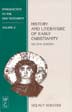
Introduction
to the New Testament
|
This book is a treasure—an excellent place for new students to start and a valuable reference if you already know plenty. A clearly written, readable roundup of modern New Testament scholarship by a giant in the field. Includes the history of who wrote what, when—and who copied from whom. Not just the canonical books, but also Q, the Gospels of Thomas, Hebrews, etc. etc. Wow. Also details the history of which sects developed in each region, when. Not what you learned in Sunday school. Highly recommended for any serious student.
|
|
|
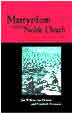
| Martyrdom
and Noble Death
 |
What you'll find:
|
|
|
|
The Jesus Puzzle by Earl Doherty
|
What you'll find:
Doherty, like professor G.A. Wells, notices that Paul and the other first century New Testament authors never give details about the Jesus of later Galillean legend. From which Doherty concludes there never was a Galillean Jesus; Christianity started wiht a mythic godman, later generations invented the earthly "history." Good use of primary sources, but this theory can only be correct if a number of odd coincidences explain away evidence that does seem most naturally to point to a real person Jesus.
|
|
|
| |
|