|  |
||||||||||||||||||||||||||||||||
 |
|||||||||||||||||||||||||||||||||













| Getting Started | |||
| Scholars argue> | Yes | No | Jesus Theories |
| Facts > | Sourcebook Anthologies | Sourcebooks: ancient texts | |
| Background > | Ancient Civilization | Ancient Religion | Early Christianity |
 |
Special topics | Mystery Religions | Ancient Judaism |
| Amateur > | Pagan Origins | Hablo Greek-o | |
 |
Sourcebooks:
ancient texts |
 |
|
| Paganism |
| Documents
For The Study Of The Gospels
|
What you'll find:
Think of this as POCM's blue
boxes in a book, without Greg's annoying commentary.
|
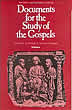

 Highly recommended.
| Paganism |
|

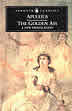
The
Golden Ass
|
The ancients had novels (who knew?!), and this is one of them. And, believe it or not, it's a fun read, lighthearted, funny, and well written. The story moves. For the boys: it even has explicit sex. Amazing. Who knew?! The story is about Lucius' adventures after he gets turned into a donkey. The first ten chapters are just fun, not related to the Pagan origins. Chapter eleven is about Lucius in Egypt, and his study and initiation into the mysteries of Isis and Osiris (he's a man again by this point). For the ancients these mysteries were sacred secrets—believers would and did die rather than reveal them. Apuleius' novel is the only surviving text that comes close to describing the mystery initiation ceremony. Apuleius also says initiation brought salvation: "The keys of hell and the guarantee of salvation were in the hands of the goddess, and the initiation ceremony itself a kind of voluntary death and salvation through divine grace."
|

| Paganism |
|
|
The Error of the Pagan Religions
|
What you'll find:
Firmicus was a rich Roman Pagan who converted to Christianity some time in the fourth century AD, after which he wrote this book telling everyone how vile and ridiculous Pagan religions were.
|

| Paganism |
|
The Egyptian Book
of the Dead
|
This is the original text of a famous and revealing collection of ancient spells the Egyptians put in tombs along with the dead guy. The idea was for the dead guy to use the power of the magic spells as a guide and tool in the complicated Egyptian afterlife. Yes I know that sounds sounds silly, but the book tells us a lot about Egyptian religion—including the Egyptian savior Gods Ra and Osiris. The famous Chapter 125 describes Osiris' believers standing before Osiris after death, to be judged according to the life they lead, seeing if they would to make it into Egyptian Heaven or end up suffering in Egyptian Hell.
|


| Paganism |
|
Isis
and Osiris
|
This is the same Plutarch who wrote Plutarch's Lives. Like Solon, Plato and Pythagoras before him, when he wasn't biographying Plutarch traveled to Egypt and studied the mysteries of Isis and Osiris—probably even got initiated (though he doesn't say for sure). Isis and Osiris, at just over 90 pages, is modern scholarship's main source for the goodies on one of the ancient world's big name Pagan religions. This Loeb translation is pretty easy to read. And fun. You'll discover "accounts of the dismemberment of Osiris and his revivification and regenesis" [Isis and Osiris, 365]—His death and resurrection! Wow. Be careful, there are a bunch of P's Moralias in print at Loeb and elsewhere. For Isis and Osiris, you want number V, which is Loeb #306.
|
| Paganism |
|
|
The Ancient Near East, Volume II)
Ancient Near East in Pictures Relating to the
Old Testament. With Supplement
Ancient Near Eastern Texts Relating to the Old
Testament with Supplement  |
What you'll find:
A famous scholarly work, accessible to laymen.
|
| Paganism |
|
| The
Nature of the Gods by Cicero
|
A readable roundup of ancient ideas about God. If you're like me, you'll be surprised to learn: 1. The ancients could write anything fun to read. 2. Ancient "philosophies" were really religions
|
|
|
|
| On
the Soul by Aristotle
|
Christianity
didn't invent the human soul. Hear are details from the 4th century BC.
|
|
|
|
| The
Works and Days Theogony The Shield of Herakles by Hesiod
|
No more tedious than, say, being locked in a prison cell. Tied down, blindfolded. With water dripping on your head. But a very important record, from maybe the 8th century BC, of the archaic Greek religion. Often quoted by ancient writers and modern scholars. Fortunately it's short and easy to skim.
|
|
|
| Textual
Sources for the Study of Zoroastrianism
|
What
you'll find:
Resurrection of the dead from the people who invented resurrection of the dead.
|
| Paganism |
|
| Magika
Heira [Sacred magic]
|
What you'll find:
Poindexter heaven.
|
| Paganism |
|
| Christianity |
| Eusebius'
Ecclesiastical History
|
What you'll find:
|
|
Christianity
|
|
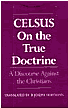
| Celsus
On the True Doctrine
|
What you'll find:
Celsus was a Pagan. In the second century AD he wrote a book pointing out flaws in Christianity. Of course Celsus points up the same contradictions and illogicalities in the Christian myth that people point up today. Ignore those. They aren't the point. The point is the things Celsus doesn't complain about—the things he takes for granted because they're part of his Pagan culture and his Pagan religion. Celsus doesn't attack Christians for believing in God, or in a godman, for the idea of a human soul, for Heaven or Hell or prayer or salvation or eternal life, etc., etc. Pay attention, while you read, to all the Pagan things in Christianity that Celsus doesn't attack—your ideas about Christianity will change forever. Wow. Highly recommended.
The original version of On the True Doctrine was
written in the second century AD by a Pagan guy named
Celsus. The Christains burned it; no copies sruvive. So where does this
book come from? In the third century one of the Church Fathers,
a fellow named Origen, wrote a long rebuttal (he called
it Against Celsus) that quoted Celsus idea by idea and often
word for word. Against Celsus does survive. This book uses it's long quotes
to reconstruct Celsus' book. Is it perfect? No. Is it pretty good? Yes.
|
| Christianity
|
|
| Porphyry's
Against the Christians
|
What you'll find:
Porphyry if Tyre was a third century (c 232 - 305 AD) Pagan scholar. His Kata Christianon (Against the Christians), an ass-kicking look at the illogic of early Christianity, was widely read and eventually (448 BC) burned by the church. Unlike Celsus' critique, most of which survives in Origins refutation, Porphyry's work was so feared that even its refutations were burned. It survives only in "fragments," and of course people argue about which fragments are real and which aren't.
|

|
|
|
| Judaism |
| 1 Enoch |
What you'll find:
Enoch is a Jewish hero who gets just a line or two in our Old Testament. In intertestamental Judaism his legend was puffed up with new myths that sound right familiar to folks who've read the Bible. Adds plausibility to the theory that the Jesus stories are
mythic elaborations of old Jewish legends (Isaiah).
|
|
|
|
|
The New Complete Works of Josephus
|
What you'll find:
|
|
|
|
| Old Testament
Parallels 
|
What you'll find:
There are lots of books like this to choose from. This is one of the clearest, most readable, and most comprehensive. Highly recommended.
|
|
|
| Martyrdom
and Noble Death
|
What you'll find:
|
|
|