|  |
||||||||||||||||||||||||||||||||
 |
|||||||||||||||||||||||||||||||||













| Getting Started | |||
| Scholars argue> | Yes | No | Jesus Theories |
| Facts > | Sourcebook Anthologies | Sourcebooks: ancient texts | |
| Background > | Ancient Civilization | Ancient Religion | Early Christianity |
 |
Special topics | Mystery Religions | Ancient Judaism |
| Amateur > | Pagan Origins | Hablo Greek-o | |
 |
NO!
Christianity did NOT borrow! |
 |
  . .Incredibly not everyone agrees with me about Christianity's Pagan origins. |
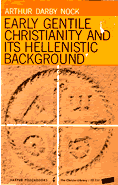
| Early Gentile
Christianity and Its Hellenistic Background
|
You'll find:
First published in 1928 and reissued and updated in 1964,
this is the canonical refutation of the late 19th and
early 20th century scholarly claims that Christianity borrowed
from Paganism. This essay is widely cited as an authority, "Dr.
Nock has refuted the German School. . .", and the arguments Nock
developed here are the same ones believers use today.
|

 |
Nock was a Harvard professor who read and understood the scholarship. He did not—could not, in that generation when scholars knew better—deny the deep similarities between Christianity and the Pagan mysteries. For example >> |
The Eucharist ...
is in line with contemporary mysteries, which purported to represent the
sufferings and triumph of a god, in which his worshipers sympathized and
shared....The Eucharist
is a mystery, as mysteries were then understood, and Christianity, the
heir of Judaism, has also an essential spiritual continuity with Hellenistic
religion.
|

|
|
Nock was also a committed Christian, a Doctor of Divinity who wasn't about to admit Christianity borrowed from Paganism, so for every similarity he comes up with a reason the similarity doesn't count. The 1964 Harper Torchbook edition is expanded
with Nock's later thoughts and arguments. It is out of print, but often available used through Amazon
|

|
|

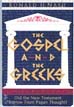
The
Gospel and the Greeks
|
What you'll find:
Because he was a Christian writing for other Christians, Nash (who seems like a smart, likable fellow) was able to write an apologist genre book—one whose tendentious reasoning betrays no expectation of unfriendly critical analysis. His analysis was basically: 1. To ignore similar fundamental ideas (soul, heaven, salvation, godman), and to attack outdated mid-20th century Jesus as a myth-by-myth analogue theories, 2. To bring up differences between Pagan myths and Christian myths, and then apply the apologists' difference-proves-no-borrowing rule.
|

 Available used at Amazon .com
|
|