|  |
||||||||||||||||||||||||||||||||
 |
|||||||||||||||||||||||||||||||||













| Facts > Pagan Ideas > Hell | ||||

 |
Christianity has Hell—Paganism had it first |  |
This is like
the opinion of the Greeks
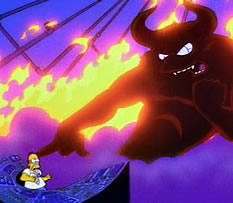
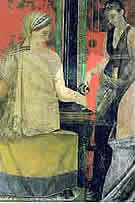
Was Christianity new? Was Christianity unique? The notion of hell dates back to earlier than 3,000 bc. |
|
|

|
[154] For their [the Jewish Essene] doctrine is this: That bodies are corruptible, and that the matter they are made of is not permanent; but that the souls are immortal, and continue for ever; and that they come out of the most subtile air, and are united to their bodies as to prisons, into which they are drawn by a certain natural enticement; but that when they are set free from the bonds of the flesh, they then, as released from a long bondage, rejoice and mount upward. |
|
|
And this is like the opinions of the Greeks, that good souls have their habitations beyond the ocean, in a region that is neither oppressed with storms of rain or snow, or with intense heat, but that this place is such as is refreshed by the gentle breathing of a west wind, that is perpetually blowing from the ocean; while they allot to bad souls a dark and tempestuous den, full of never-ceasing punishments. |
|
|
[156] And indeed the Greeks seem to me to have followed the same notion, when they allot the islands of the blessed to their brave men, whom they call heroes and demi-gods; and to the souls of the wicked, the region of the ungodly, in Hades [καθ αιδου], |
|
|
where their fables relate that certain persons, such as Sisyphus, and Tantalus, and Ixion, and Tityus, are punished; which is built on this first supposition, that souls are immortal; and thence are those exhortations to virtue and dehortations from wickedness collected; whereby good men are bettered in the conduct of their life by the hope they have of reward after their death; and whereby the vehement inclinations of bad men to vice are restrained, by the fear and expectation they are in, that although they should lie concealed in this life, they should suffer immortal punishment after their death. These are the Divine doctrines of the Essens about the soul, which lay an unavoidable bait for such as have once had a taste of their philosophy. |
|
|
Titus Flavius Josephus,
The Jewish War 2.154 (1st century AD) which you
can read at
Perseus |
|
[162] But then as to the two other orders at first mentioned, the Pharisees are those who are esteemed most skillful in the exact explication of their laws, and introduce the first sect. These ascribe all to fate [or providence], and to God, and yet allow, that to act what is right, or the contrary, is principally in the power of men, although fate does co-operate in every action. They say that all souls are incorruptible, but that the souls of good men only are removed into other bodies, - but that the souls of bad men are subject to eternal punishment. |
|
|
But the Sadducees are those that compose the second order, and take away fate entirely, and suppose that God is not concerned in our doing or not doing what is evil; and they say, that to act what is good, or what is evil, is at men's own choice, and that the one or the other belongs so to every one, that they may act as they please. They also take away the belief of the immortal duration of the soul, and the punishments and rewards in Hades. |
|
|
Gospel
of Luke (author unknown) Chapter
16 (2d c A D) |

|
[22] It happened that the beggar died, and that he was carried away by the angels to Abraham's bosom. The rich man also died, and was buried. [23] In Hades [εν τωι αιδηι], he lifted up his eyes, being in torment, and saw Abraham far off, and Lazarus at his bosom. [24] He cried and said, 'Father Abraham, have mercy on me, and send Lazarus, that he may dip the tip of his finger in water, and cool my tongue! For I am in anguish in this flame.' [25] "But Abraham said, 'Son, remember that you, in your lifetime, received your good things, and Lazarus, in like manner, bad things. But now here he is comforted and you are in anguish. |
|
|
Gospel
of Luke,
Chapter 16 (author unknown, 2d century AD) |
|
2.122. |
|
|
Herodotus,
Histories 2.122 (5th century BC), which you can read
at Perseus.
|
|
[3] After this the
Persians who were led by the Trachinian, after making
their way around the difficult terrain, suddenly caught
Leonidas between their forces, and the Greeks, giving
up any thought of their own safety and choosing renown
instead, with one voice asked their commander to lead
them against the enemy before the Persians should learn
that their men had made their way around them. |
|
|
Diodorus
Siculus, Library
11.9.4 (1st century BC) |
|
[25] For David says concerning him, 'I saw the Lord always before my face, For he is on my right hand, that I should not be moved. [26] Therefore my heart was glad, and my tongue rejoiced. Moreover my flesh also will dwell in hope; [27] Because you will not leave my soul in Hades [εισ αιδην], Neither will you allow your Holy One to see decay. [28] You made known to me the ways of life. You will make me full of gladness with your presence.' [29] "Brothers, I may tell you freely of the patriarch David, that he both died and was buried, and his tomb is with us to this day. [30] Therefore, being a prophet, and knowing that God had sworn with an oath to him that of the fruit of his body, according to the flesh, he would raise up the Christ to sit on his throne, [31] he foreseeing this spoke about the resurrection of the Christ, that neither was his soul left in Hades [εισ αιδην], nor did his flesh see decay. [32] This Jesus God raised up, whereof we all are witnesses. |
|
|
New
Testament, Book of Acts Chapter
2 (author unknown) (2d century AD?) |
|
Why the mess? POCM 2012 |  |